


 Language
 English
 русский
 Español
 Português
 Deutsch
 عربى
عربى italiano
 Türk
Türk हिंदी
हिंदी Indonesia
 Tiếng Việt
If you need any help, please feel free to contact us

What are the NEMA Load Class Standards for a Strut Cable Tray, and How Do They Impact Your Project's Safety?
Content
- 1 1. Understanding the NEMA VE 1 Load Class Hierarchy
- 2 2. The Correlation Between Support Spans and Deflection
- 3 3. Material Selection and Environmental Safety Impact
- 4 4. Proper Installation and Grounding for Structural Safety
- 5 5. Conclusion: Engineering for Reliability
- 6 Frequently Asked Questions (FAQ)
- 6.1 1. How do I determine the NEMA load class for my Strut Cable Tray?
- 6.2 2. Can I exceed the cable fill limit if the weight is under the NEMA rating?
- 6.3 3. What are the benefits of aluminum strut cable trays in high-load scenarios?
- 6.4 4. Is proper grounding of strut cable tray systems required for all projects?
- 6.5 5. Why should I choose Jiangsu Youming Group Co., Ltd. for my project?
- 7 Industry References
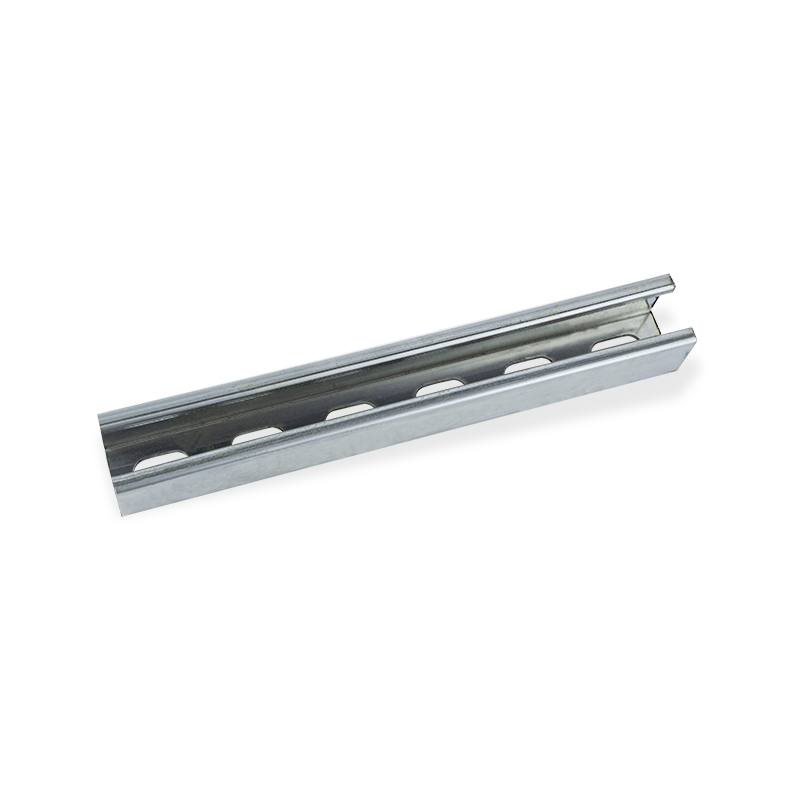
In the realm of industrial electrical infrastructure, the structural integrity of cable management systems is paramount. A Strut Cable Tray system serves as the backbone for power and data distribution, and its ability to withstand mechanical stress is governed by rigorous engineering standards. Jiangsu Youming Group Co., Ltd., a high-tech enterprise based in the Taidong Industrial Park with an annual capacity of 30,000 tons, specializes in the innovation and production of these critical components. With a 26,000 square meter facility equipped with fully automatic longitudinal shearing and laser cutting lines, we ensure that every Strut Cable Tray meets the high-level quality requirements for infrastructure, power, and chemical fields. Understanding the National Electrical Manufacturers Association (NEMA) load classes is essential for ensuring that your installation remains safe under maximum operational stress.
1. Understanding the NEMA VE 1 Load Class Hierarchy
NEMA VE 1 is the primary industry standard that defines the manufacturing and performance requirements for metal cable tray systems. For a Strut Cable Tray, the load class is defined by a combination of the allowable weight per linear foot and the distance between supports (span). While a standard light-duty tray may suffice for communication wiring, heavy-duty industrial applications require heavy duty strut cable tray load capacity ratings that account for high-voltage power cables. Specifically, NEMA uses alphabetical letters (A, B, and C) to represent the weight capacity (50, 75, and 100 lbs/ft respectively) paired with numerical values for the span in feet.
Comparison: NEMA Load Class Weight Ratings
The weight capacity of a tray increases significantly as you move from Class A to Class C, directly impacting the volume of cabling the system can safely support.
| NEMA Load Designation | Weight Capacity (lbs/linear foot) | kg/m Equivalent (Approx.) |
| Class A | 50 lbs/ft | 74.4 kg/m |
| Class B | 75 lbs/ft | 111.6 kg/m |
| Class C | 100 lbs/ft | 148.8 kg/m |
2. The Correlation Between Support Spans and Deflection
One of the most critical safety factors is calculating cable tray fill and weight in relation to support spans. A Strut Cable Tray rated for 100 lbs/ft over an 8-foot span cannot be safely used over a 12-foot span without a significant reduction in its load-carrying capability. When the span increases, the bending moment on the strut increases exponentially, which can lead to excessive deflection or catastrophic structural failure. At Jiangsu Youming Group Co., Ltd., our testing center rigorously verifies the elastic modulus and yield strength of our stainless steel and aluminum alloy series to ensure they meet ISO 9001:2015 standards under specified spans.
Comparison: Standard Spans vs. Load Support
Shorter support spans allow for significantly higher weight densities, whereas long-span systems require specialized structural reinforcements.
| Support Span (Feet) | Typical Industrial Application | Deflection Considerations |
| 8 Feet (2.4m) | Standard Indoor Infrastructure | Minimal deflection; standard Strut Cable Tray designs. |
| 12 Feet (3.7m) | Outdoor Bridges / Commercial | Moderate; requires high-sidewall Strut Cable Tray models. |
| 20 Feet (6.1m) | Heavy Power / Utility Spans | High; requires heavy duty strut cable tray load capacity Class C ratings. |
3. Material Selection and Environmental Safety Impact
Safety is not just about weight; it is about how long the Strut Cable Tray can maintain its load rating in corrosive environments. For example, when performing a stainless steel vs galvanized strut cable tray analysis, engineers must consider the rate of material degradation. In a chemical plant or maritime environment, a galvanized tray might lose its structural integrity over five years due to zinc depletion, whereas a stainless steel 316 series tray from Jiangsu Youming Group Co., Ltd. would maintain its NEMA rating for decades. Our automatic spraying and hot-dip galvanizing lines provide the protective finishes necessary to prevent environmental weakening of the support structure.
4. Proper Installation and Grounding for Structural Safety
The safety of a Strut Cable Tray installation also hinges on the hardware and grounding techniques used. High-performance strut channel cable tray fittings must match the load rating of the tray itself to prevent "weak link" failures at the joints. Furthermore, ensuring proper grounding of strut cable tray systems is mandatory under CE and ISO 45001:2018 standards to prevent electrical faults from energizing the support structure. A poorly grounded tray can become a fire hazard, especially in high-voltage machinery and metallurgy sectors where electromagnetic interference is prevalent.
Safety Checkpoints for Engineering Teams:
- Verify that the total cable weight (including future expansion) does not exceed the NEMA load class.
- Ensure all strut channel cable tray fittings are torqued to manufacturer specifications.
- Check that expansion joints are installed in long runs to account for thermal expansion.
- Confirm the material finish is compatible with the local atmospheric corrosivity category (C1-C5).
5. Conclusion: Engineering for Reliability
Selecting the correct NEMA load class for a Strut Cable Tray is a fundamental engineering decision that dictates the safety and longevity of an entire facility's electrical network. By understanding the relationship between span, load capacity, and material science, project managers can avoid costly failures. Jiangsu Youming Group Co., Ltd. remains committed to technological R&D and innovation, providing high-tech, CE-certified cable tray solutions that meet the most demanding specifications in the transportation, communication, and power industries.
Frequently Asked Questions (FAQ)
1. How do I determine the NEMA load class for my Strut Cable Tray?
You must first calculate the total weight of the cables per linear foot and determine your maximum support span. Match these two variables against the NEMA VE 1 chart (e.g., 100 lbs/ft over a 12-foot span is a Class 12C tray).
2. Can I exceed the cable fill limit if the weight is under the NEMA rating?
No. Even if the weight is low, calculating cable tray fill and weight must account for heat dissipation. Overfilling a tray can lead to heat buildup in power cables, which may damage the insulation and lead to fires.
3. What are the benefits of aluminum strut cable trays in high-load scenarios?
Aluminum offers a high strength-to-weight ratio and excellent corrosion resistance. While it may have more deflection than steel, it is easier to install and often safer for maritime or chemical applications where steel might rust.
4. Is proper grounding of strut cable tray systems required for all projects?
Yes, all metal cable tray systems must be electrically continuous and grounded according to the National Electrical Code (NEC) or local equivalent standards to ensure personnel and equipment safety.
5. Why should I choose Jiangsu Youming Group Co., Ltd. for my project?
With a registered capital of 50 million RMB and advanced automated production lines, we provide CE-certified, high-precision cable trays. Our internal testing center ensures that every Strut Cable Tray leaves our factory meeting the highest industry standards for load and durability.
Industry References
- NEMA VE 1-2017: Metal Cable Tray Systems Standards.
- NFPA 70: National Electrical Code (NEC).
- ISO 9001:2015: Quality Management System Standards.
- CE Certification: European Conformity Standards for Cable Management.
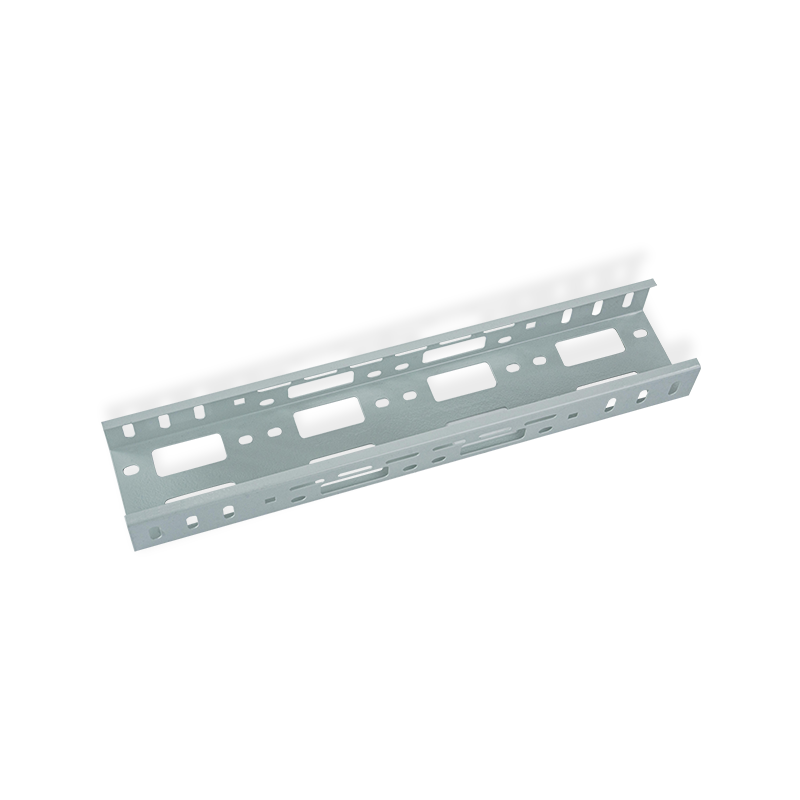
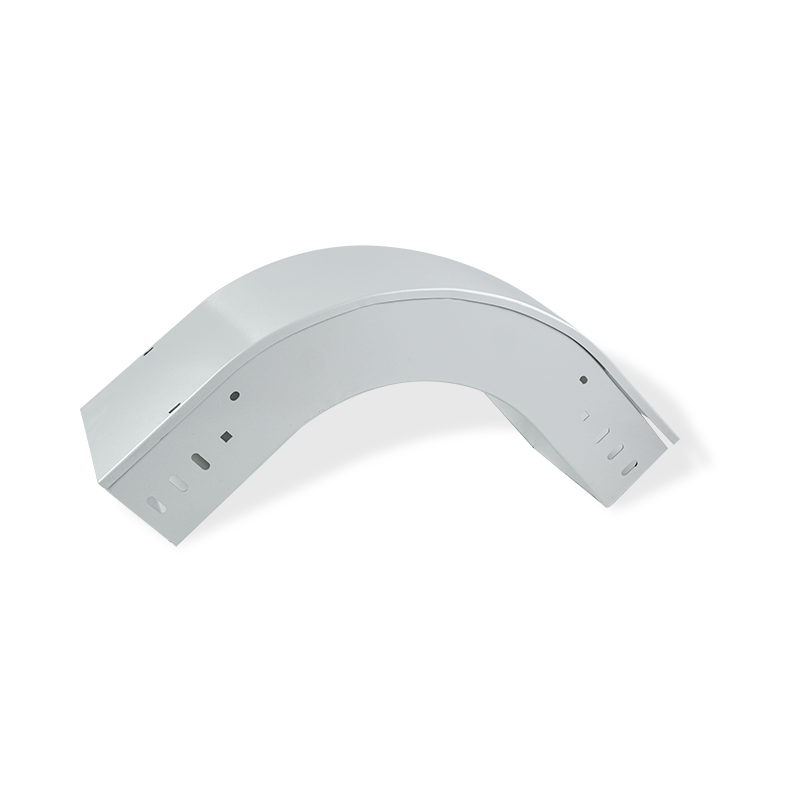

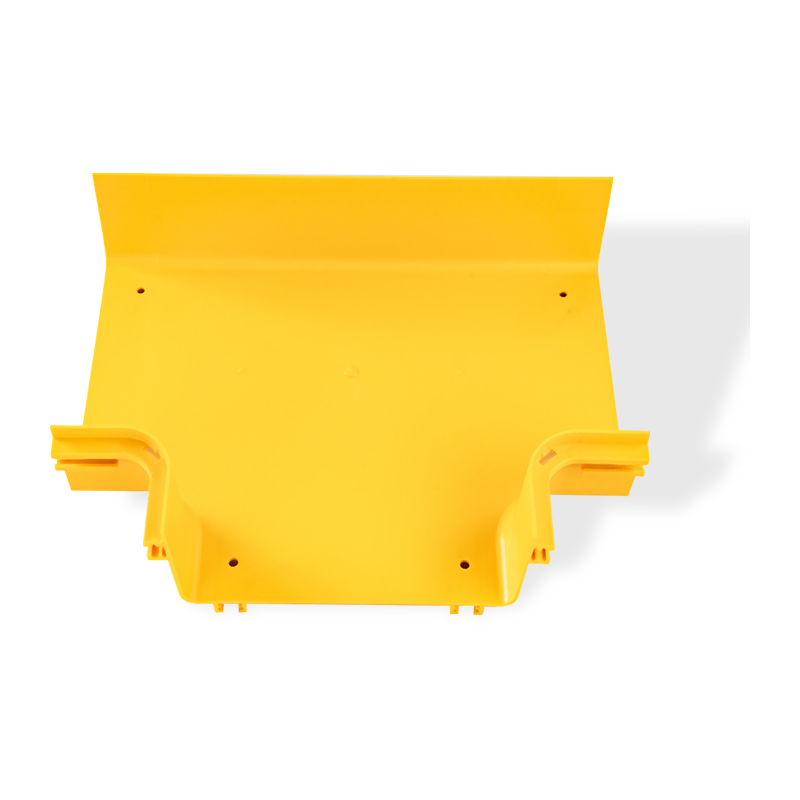

Youming Group is a manufacturing group company mainly engaged in the research and development of new high-strength cable tray
Product
- Wire Type Cable Tray Series
- Punched Type Cable Tray Series
- Trough Type Cable Tray Series
- Cable Rack Ladder Series
- Ladder Type Cable Tray Series
- Marine Cable Ladder Tray
- Strut Channel Cable Tray Series
- Accessories
- Fiber Cable Tray/Optic Cable Tray
- Photovoltaic Stents
- Stainless Steel Cable Tray Series
- Aluminum Alloy Cable Tray System
Contact information
-
No.36, Taidong Industrial Zone Shiyan Town, Dongtai City, Jiangsu Province
