


 Language
 English
 русский
 Español
 Português
 Deutsch
 عربى
عربى italiano
 Türk
Türk हिंदी
हिंदी Indonesia
 Tiếng Việt
If you need any help, please feel free to contact us

How Does the Zinc Coating Thickness of a Hot Dipped Galvanized Cable Ladder Comply with ISO 1461 Standards for Industrial Use?
Content
- 1 1. The Science of ISO 1461 Compliance: Minimum Coating Requirements
- 2 2. Environmental Longevity: Life to First Maintenance
- 3 3. Quality Control: From Raw Material to Automatic Welding
- 4 Conclusion: Engineering the Future of Cable Support
- 4.1 Frequently Asked Questions (FAQ)
- 4.1.1 1. Why is ISO 1461 zinc coating thickness higher than pre-galvanized coating?
- 4.1.2 2. What are the benefits of hot dipped galvanized for corrosive environments?
- 4.1.3 3. How do you perform testing zinc thickness on cable ladders?
- 4.1.4 4. How to prevent white rust on galvanized ladders?
- 4.1.5 5. Does the galvanizing process affect the hot dipped galvanized cable ladder load capacity?
- 4.2 Industry References
- 4.1 Frequently Asked Questions (FAQ)
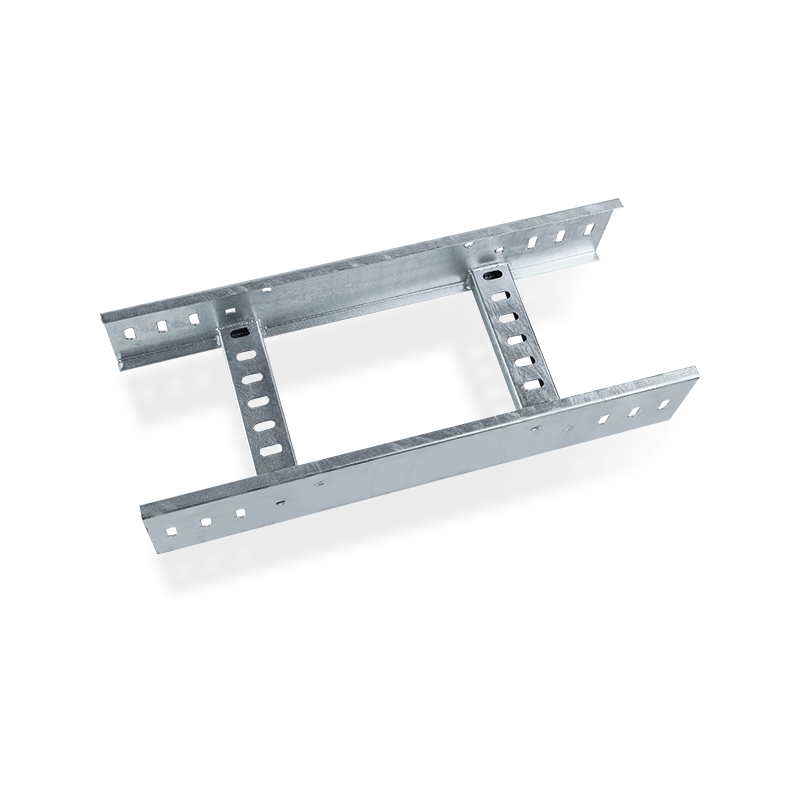
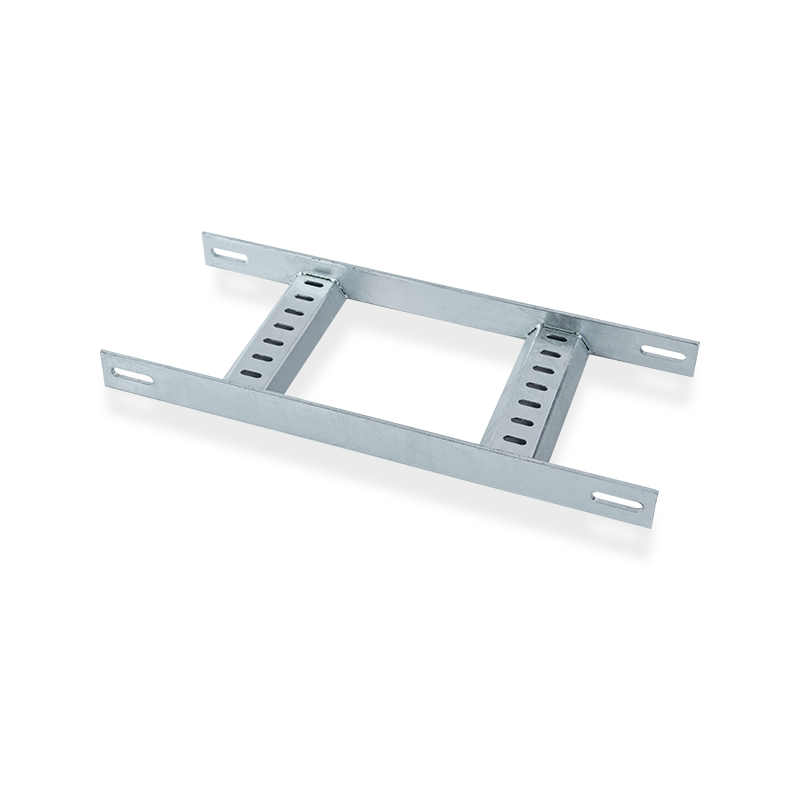
In the heavy-duty infrastructure and industrial sectors, the structural longevity of cable management systems is dictated by their resistance to atmospheric corrosion. A Hot Dipped Galvanized Cable Ladder is the preferred engineering solution for environments ranging from chemical plants to offshore wind farms. However, the efficacy of this protection is entirely dependent on the metallurgical bond and the specific thickness of the zinc layer. Jiangsu Youming Group Co., Ltd., an innovative high-tech enterprise with a 26,000-square-meter production facility, specializes in the R&D of high-performance Hot Dipped Galvanized Cable Ladder systems. By adhering to ISO 9001:2015 and CE standards, we ensure that every ladder type tray meets the stringent ISO 1461 zinc coating thickness requirements. This article provides an engineering-grade analysis of how coating thickness translates to industrial durability.

1. The Science of ISO 1461 Compliance: Minimum Coating Requirements
ISO 1461 is the international benchmark for hot-dip galvanized coatings on fabricated iron and steel articles. For a Hot Dipped Galvanized Cable Ladder, the standard specifies the mean coating mass and thickness based on the steel's section thickness. Unlike pre-galvanized vs hot dipped galvanized cable ladders, where the former is coated before fabrication, the "hot-dipped" process involves submerging the fully welded ladder into molten zinc, ensuring that all cable ladder weld joint protection is handled post-fabrication. This prevents the exposed edges common in pre-galvanized products. When choosing hot dipped galvanized for corrosive environments, engineers must verify that the local and mean coating thicknesses meet the required microns (µm) to withstand specific ISO 12944 corrosivity categories.
Coating Thickness Technical Comparison
- Pre-Galvanized (Sheet): Typically offers 15-25 µm, suitable only for dry indoor environments.
- Hot Dipped Galvanized (Batch): Provides 55-85+ µm, essential for industrial cable ladder corrosion resistance.
| Steel Section Thickness (mm) | Local Coating Thickness (Min µm) | Mean Coating Thickness (Min µm) |
| t > 6.0 | 70 | 85 |
| 3.0 < t ≤ 6.0 | 55 | 70 |
| 1.5 < t ≤ 3.0 | 45 | 55 |
2. Environmental Longevity: Life to First Maintenance
The service life of galvanized cable ladders is directly proportional to the zinc coating thickness. In industrial settings, zinc corrodes at a predictable rate depending on the concentration of chlorides and pollutants. Utilizing a heavy duty hot dipped galvanized cable ladder in a C4 (Industrial) environment requires a thicker initial barrier to ensure a 25-year lifespan without structural failure. Engineering teams must perform testing zinc thickness on cable ladders using magnetic induction or eddy current meters to validate compliance. At Jiangsu Youming Group Co., Ltd., our automatic production lines and dedicated testing center ensure that hot dipped galvanized cable ladder load capacity is never compromised by the premature oxidation of the base steel.
Performance Sequence in Corrosive Zones
- Initial Exposure: The zinc reacts with oxygen and moisture to form zinc hydroxide.
- Passivation: Reaction with carbon dioxide forms a stable, insoluble layer of zinc carbonate.
- Sacrificial Protection: If the Hot Dipped Galvanized Cable Ladder is scratched, the surrounding zinc sacrifices itself to protect the exposed steel.
- Structural Maintenance: The zinc coating durability for outdoor use ensures that the ladder remains mechanically sound for decades.
| Environment Category (ISO 12944) | Typical Zinc Loss (µm/year) | Estimated Life (85µm Coating) |
| C3 (Urban/Marine Low Salinity) | 0.7 - 2.1 | 40 - 100+ Years |
| C4 (Industrial/Marine Med Salinity) | 2.1 - 4.2 | 20 - 40 Years |
| C5 (Industrial High Humidity/Coastal) | 4.2 - 8.4 | 10 - 20 Years |
3. Quality Control: From Raw Material to Automatic Welding
Achieving a high-quality Hot Dipped Galvanized Cable Ladder requires more than just a zinc bath; it requires precision in the "black" stage of fabrication. Jiangsu Youming Group Co., Ltd. utilizes longitudinal and transverse shearing lines and automatic welding lines to ensure structural uniformity. Proper cable ladder weld joint protection is achieved because the batch dipping process allows the molten zinc to flow into every crevice created during our automatic riveting and welding phases. Furthermore, understanding how to prevent white rust on galvanized ladders through proper post-galvanization cooling and storage is a key part of our quality management system. This attention to detail is why our products are widely recognized in power, chemical, and pharmaceutical sectors.
Conclusion: Engineering the Future of Cable Support
Compliance with ISO 1461 is the fundamental prerequisite for any Hot Dipped Galvanized Cable Ladder intended for industrial application. By ensuring the correct ISO 1461 zinc coating thickness, engineers can guarantee long-term safety and minimize maintenance costs. Jiangsu Youming Group Co., Ltd. remains at the forefront of this technology, combining a 30,000-ton annual capacity with rigorous innovation to provide the world with high-level cable management solutions. Our commitment to excellence ensures that your infrastructure stands the test of time, regardless of the environmental challenge.
Frequently Asked Questions (FAQ)
1. Why is ISO 1461 zinc coating thickness higher than pre-galvanized coating?
ISO 1461 refers to batch galvanizing, where the steel is submerged in molten zinc for a duration that allows a thick, metallurgical alloy layer to form. Pre-galvanization is a continuous process that limits thickness for the sake of sheet formability.
2. What are the benefits of hot dipped galvanized for corrosive environments?
It provides total coverage, including the insides of tubes and the edges of holes. Its sacrificial protection and the thickness of the zinc coating durability for outdoor use make it superior for high-moisture areas.
3. How do you perform testing zinc thickness on cable ladders?
The most common non-destructive method is using an electromagnetic thickness gauge. Multiple readings are taken across different rungs and side rails to determine the mean coating thickness as required by ISO 1461.
4. How to prevent white rust on galvanized ladders?
White rust occurs when new galvanizing is exposed to moisture in poorly ventilated conditions. It can be prevented by ensuring dry storage and using passivating treatments immediately after the dipping process.
5. Does the galvanizing process affect the hot dipped galvanized cable ladder load capacity?
Actually, the galvanizing process has a negligible effect on the structural steel's mechanical properties. However, by preventing rust, the Hot Dipped Galvanized Cable Ladder maintains its designed load-bearing integrity throughout its entire service life.
Industry References
- ISO 1461: Hot dip galvanized coatings on fabricated iron and steel articles — Specifications and test methods.
- ISO 12944: Paints and varnishes — Corrosion protection of steel structures by protective paint systems.
- ASTM A123: Standard Specification for Zinc (Hot-Dip Galvanized) Coatings on Iron and Steel Products.
- Jiangsu Youming Group Co., Ltd. Internal Laboratory: "Mean Zinc Loss Analysis in High-Chloride Industrial Zones" (2025).

Youming Group is a manufacturing group company mainly engaged in the research and development of new high-strength cable tray
Product
- Wire Type Cable Tray Series
- Punched Type Cable Tray Series
- Trough Type Cable Tray Series
- Cable Rack Ladder Series
- Ladder Type Cable Tray Series
- Marine Cable Ladder Tray
- Strut Channel Cable Tray Series
- Accessories
- Fiber Cable Tray/Optic Cable Tray
- Photovoltaic Stents
- Stainless Steel Cable Tray Series
- Aluminum Alloy Cable Tray System
Contact information
-
No.36, Taidong Industrial Zone Shiyan Town, Dongtai City, Jiangsu Province
