


 Language
 English
 русский
 Español
 Português
 Deutsch
 عربى
عربى italiano
 Türk
Türk हिंदी
हिंदी Indonesia
 Tiếng Việt
If you need any help, please feel free to contact us

Ventilated Trough vs. Solid Bottom Cable Trays: A Technical Guide to Selection, Installation, and Performance
Content
- 1 Understanding the Core Differences
- 2 Mechanical Protection and Shielding
- 3 Installation and Environmental Considerations
- 4 When to Choose Each System?
- 5 Frequently Asked Questions (FAQ)
- 5.0.1 1. Does a ventilated trough cable tray require more maintenance than a solid bottom tray?
- 5.0.2 2. Can I mix ventilated and solid bottom trays in the same run?
- 5.0.3 3. How does ventilation affect the fire rating of the cable system?
- 5.0.4 4. Is there a significant price difference between the two?
- 5.0.5 5. Which standards govern the load testing of these trays?
- 6 Professional Installation Guide for Ventilated Trough Cable Tray Systems
- 7 Step 1: Planning and Load Calculation
- 8 Step 2: Support Structure Installation
- 9 Step 3: Tray Placement and Connection
- 10 Step 4: Cable Pulling and Thermal Management
- 11 Step 5: Earthing and Final Inspection
- 12 Frequently Asked Questions (FAQ)
- 13 Industry References
- 14 Industry References
In the realm of modern industrial electrical infrastructure, selecting the appropriate cable management system is a critical decision that impacts safety, thermal performance, and system longevity. Whether you are designing a data center, a chemical processing plant, or a renewable energy facility, the choice between a ventilated trough cable tray and a solid bottom system remains a fundamental engineering crossroad. Jiangsu Youming Group Co., Ltd., an innovative high-tech enterprise with an annual production capacity of 30,000 tons, provides high-level engineering solutions to help professionals navigate these complexities.

Understanding the Core Differences
The primary distinction between these two systems lies in their physical construction and their interaction with the environment. A ventilated trough cable tray features a pre-punched bottom with longitudinal or transverse openings, whereas a solid bottom tray offers a continuous, un-perforated surface. This structural difference dictates how the system handles heat, moisture, and mechanical protection.
Thermal Management and Ampacity
One of the most significant technical considerations is how does a ventilated trough cable tray improve cable ampacity? In power distribution, cables generate heat due to internal resistance. A ventilated system allows for natural air convection, preventing heat buildup. In contrast, solid bottom trays may require a de-rating of the cable's current-carrying capacity because heat is trapped within the enclosure.
The thermal efficiency of these systems is compared below:
- Ventilated Trough: High air circulation allows cables to operate at higher current densities without exceeding insulation temperature limits.
- Solid Bottom: Minimal airflow creates a "hot box" effect, often necessitating larger conductor sizes to compensate for heat-induced resistance.
| Feature | Ventilated Trough Tray | Solid Bottom Tray |
| Heat Dissipation | Excellent (Convection-driven) | Poor (Radiative/Conductive) |
| Cable De-rating | Minimal to none | Required per NEC/IEC standards |
| Environmental Influence | High exposure to ambient air | Isolated from ambient air |
Mechanical Protection and Shielding
While ventilation is superior for heat, engineers must also ask why use solid bottom cable trays for sensitive data cables? In environments with high Electromagnetic Interference (EMI) or Radio Frequency Interference (RFI), a solid bottom tray (especially when equipped with a solid cover) acts as a continuous metallic shield. This protects low-voltage signals from external noise.
Furthermore, Jiangsu Youming Group Co., Ltd. utilizes advanced automatic forming and welding lines to ensure that even perforated designs maintain high structural integrity, though solid bottoms naturally provide better protection against falling debris and dripping liquids.
- Physical BarrierOpenings allow dust/moisture entryFull protection against vertical hazards
| Protection Type | Ventilated Trough Tray | Solid Bottom Tray |
| EMI/RFI Shielding | Moderate (Partial Shielding) | Superior (Continuous Shielding) |
Installation and Environmental Considerations
The application environment often dictates the material and design choice. For instance, in outdoor or humid environments, what are the benefits of ventilated trough cable trays in outdoor installations? Ventilation prevents the accumulation of moisture and condensation, which can lead to corrosion or cable jacket degradation over time. Jiangsu Youming Group Co., Ltd. offers these in stainless steel, aluminum alloy, and hot-dip galvanized finishes to combat specific corrosive stressors.
Load Capacity and Structural Design
When calculating span distances and load-bearing requirements, it is vital to understand how to calculate the load capacity of a ventilated trough cable tray. Perforations reduce the dead weight of the tray but require precise engineering to ensure the "Rung" or bottom strength meets NEMA or IEC load classes. Utilizing CNC turret punching and laser cutting, Jiangsu Youming Group Co., Ltd. ensures precision in every millimeter to maintain safety factors even under maximum cable fill.
| Metric | Ventilated Trough Tray | Solid Bottom Tray |
| Self-Weight | Lighter (Easier to install) | Heavier (Requires robust support) |
| Moisture Management | Prevents condensation buildup | Risk of "pooling" if not sloped |
When to Choose Each System?
To summarize the engineering decision-making process, consider what are the main differences between ventilated and solid bottom cable trays in the context of your specific facility. If you are running high-voltage power cables where heat is the primary enemy, the ventilated trough cable tray is the industry standard. If you are protecting control cables in a high-dust or high-EMI environment, the solid bottom is your safest bet.
As an ISO 9001:2015 and CE-certified manufacturer, Jiangsu Youming Group Co., Ltd. leverages its 26,000 square meter production workshop to provide both series, ensuring every product undergoes rigorous testing in their dedicated center before delivery.
Frequently Asked Questions (FAQ)
1. Does a ventilated trough cable tray require more maintenance than a solid bottom tray?
Generally, no. In fact, ventilated trays often require less maintenance in dusty environments because the openings allow small particles to fall through rather than accumulating around the cables, which can happen in solid bottom trays.
2. Can I mix ventilated and solid bottom trays in the same run?
Yes, transitioning between tray types is common. For example, you might use a ventilated trough cable tray for a long horizontal run to manage heat, but switch to a solid bottom for a short section passing under a potential fluid leak source.
3. How does ventilation affect the fire rating of the cable system?
While ventilation allows for heat escape, in a fire scenario, it can allow oxygen to reach the cables. Jiangsu Youming Group Co., Ltd. produces fireproof powder-coated series specifically designed to balance these needs in high-risk zones.
4. Is there a significant price difference between the two?
The cost difference is usually minimal compared to the total project value. Ventilated trays involve more machining (punching), while solid bottoms use more raw material weight. The choice should be driven by technical requirements rather than cost.
5. Which standards govern the load testing of these trays?
Most industrial installations follow NEMA VE 1 or IEC 61537 standards. These ensure that the tray—whether ventilated or solid—can support the specified weight of the cables over a specific span without excessive deflection.
Professional Installation Guide for Ventilated Trough Cable Tray Systems
The successful deployment of a ventilated trough cable tray system depends on rigorous planning and adherence to structural load calculations. This guide outlines the essential steps for installing systems manufactured by Jiangsu Youming Group Co., Ltd., ensuring maximum safety and efficiency in industrial environments.
Step 1: Planning and Load Calculation
Before any hardware is mounted, engineers must determine how to calculate the load capacity of a ventilated trough cable tray based on the total weight of the cables. This includes accounting for future expansion (typically a 20-25% margin). Jiangsu Youming Group Co., Ltd. provides trays designed to meet NEMA and IEC standards, but the support span is the critical variable.
- Support Span: Determine if the system requires 1.5m, 2m, or 3m support intervals.
- Fill Ratio: Ensure the cable fill does not exceed 40-50% of the tray's cross-sectional area to maintain airflow.
Step 2: Support Structure Installation
Supports must be securely anchored to the building structure (steel beams or concrete ceilings). Common support types include trapeze hangers, wall brackets, or floor-mounted pillars. Because a ventilated trough cable tray is lighter than its solid-bottom counterpart, it offers more flexibility during the mounting phase.
| Support Type | Best Use Case | Benefit |
| Trapeze Hanger | Overhead runs | Adjustable height and multi-tier capability |
| Wall Bracket | Along facility perimeters | Space-saving and easy access |
| Floor Pillars | Outdoor or heavy machinery areas | Maximum stability for high-load power cables |
Step 3: Tray Placement and Connection
Begin placing the tray sections onto the supports. One must understand what are the benefits of ventilated trough cable trays in outdoor installations during this phase: the perforated design allows for thermal expansion and contraction without warping.
Sections are joined using splice plates. Jiangsu Youming Group Co., Ltd. utilizes automatic riveting and welding lines to ensure that all connection points are burr-free, protecting the cable jackets during the "pulling" phase.
Thermal Expansion Considerations
In long outdoor runs, expansion splice plates must be used. Failure to account for thermal movement can lead to structural failure of the supports.
Step 4: Cable Pulling and Thermal Management
When pulling cables, it is vital to address how does a ventilated trough cable tray improve cable ampacity. Cables should be laid in a single layer where possible to maximize the convection cooling provided by the bottom perforations. If cables must be bundled, use specialized cable ties that do not pinch the insulation.
| Action | Requirement | Engineering Reason |
| Cable Laying | Uniform spacing | Prevents localized hotspots |
| Bundling | Flame-retardant ties | Maintains safety integrity |
| Transitioning | Large radius bends | Prevents mechanical stress on conductors |
Step 5: Earthing and Final Inspection
Even though a tray is used for management, it must be electrically continuous to act as an Equipment Grounding Conductor (EGC). Many engineers ask why use solid bottom cable trays for sensitive data cables when it comes to grounding—the answer is often superior shielding, but for power cables, the ventilated tray provides sufficient grounding when bonded correctly with jumper cables across every splice.
The Final Checklist
- Verify all bolts on splice plates are torqued to manufacturer specifications.
- Ensure no sharp edges or metal shavings remain in the tray.
- Confirm that what are the main differences between ventilated and solid bottom cable trays were respected (e.g., ensuring ventilated trays were used for the high-heat power segments).
Frequently Asked Questions (FAQ)
1. Can I cut the trays on-site?
Yes, trays can be cut using a fine-tooth saw or circular saw with a metal-cutting blade. However, all cut edges must be filed smooth and treated with a zinc-rich cold galvanizing spray to prevent corrosion, especially on products from Jiangsu Youming Group Co., Ltd. that feature high-grade finishes.
2. How do I handle vertical transitions?
Use internal and external risers. Vertical sections of a ventilated trough cable tray should have cables secured at more frequent intervals (typically every 300mm to 600mm) to prevent the weight of the cable from straining the connections.
3. Do I need covers for ventilated trays?
Covers are optional. They are used if there is a risk of falling objects or if the tray is installed within 1.5 meters of the floor. Note that adding a cover will slightly reduce the airflow benefits of the ventilated design.
It is not recommended unless a grounded metallic divider is installed. Power cables can create EMI that interferes with data signals. If space is limited, a solid bottom tray might be better for the data portion to provide shielding.
5. What is the maximum deflection allowed?
Under full load, the deflection should typically not exceed 1/200 of the span length. If the tray is sagging visibly, additional supports must be installed immediately.
Industry References
- NEMA VE 2: Cable Tray Installation Guidelines.
- NFPA 70: National Electrical Code (NEC).
- BS 7671: Requirements for Electrical Installations (IET Wiring Regulations).
- Manufacturer Specifications: Jiangsu Youming Group Co., Ltd. Technical Data Sheets.
Industry References
- National Electrical Code (NEC) Article 392: Cable Trays.
- NEMA VE 1-2017: Metal Cable Tray Systems.
- IEC 61537: Cable management - Cable tray systems and cable ladder systems.
- IEEE Standard 525: Guide for the Design and Installation of Cable Systems in Substations.
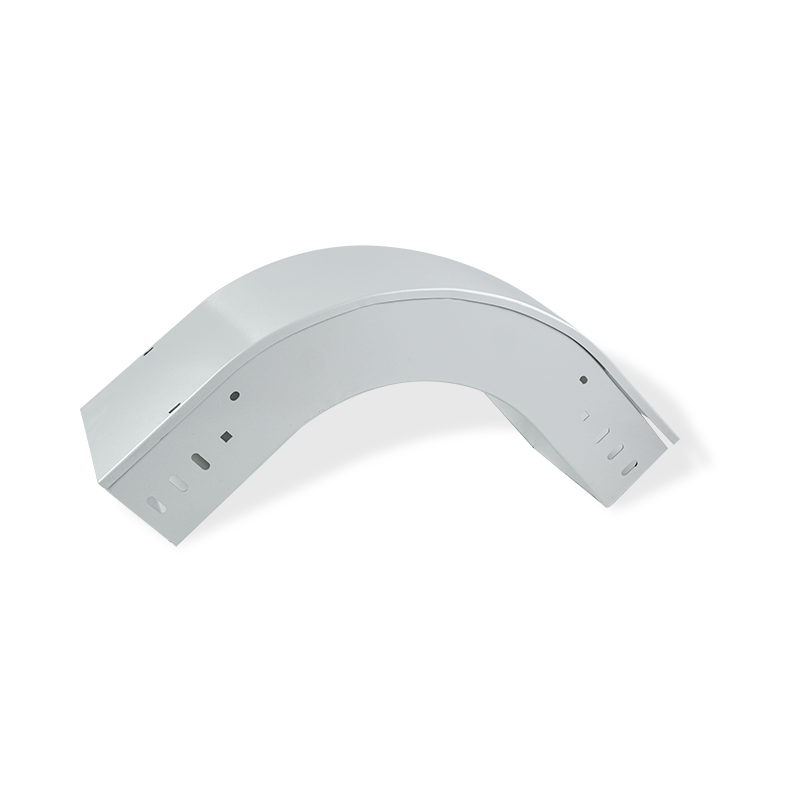
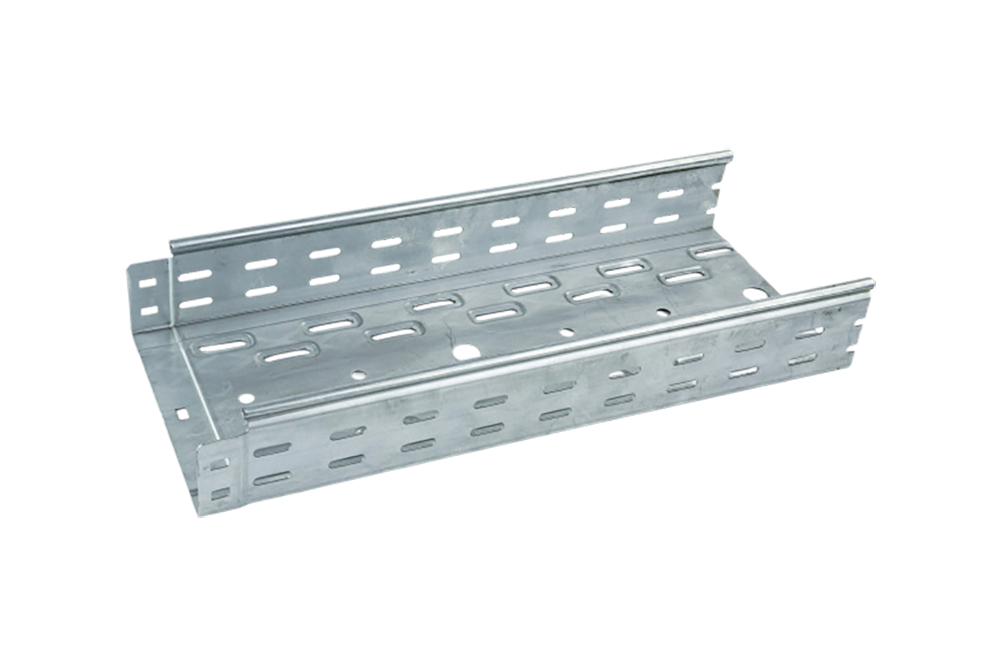
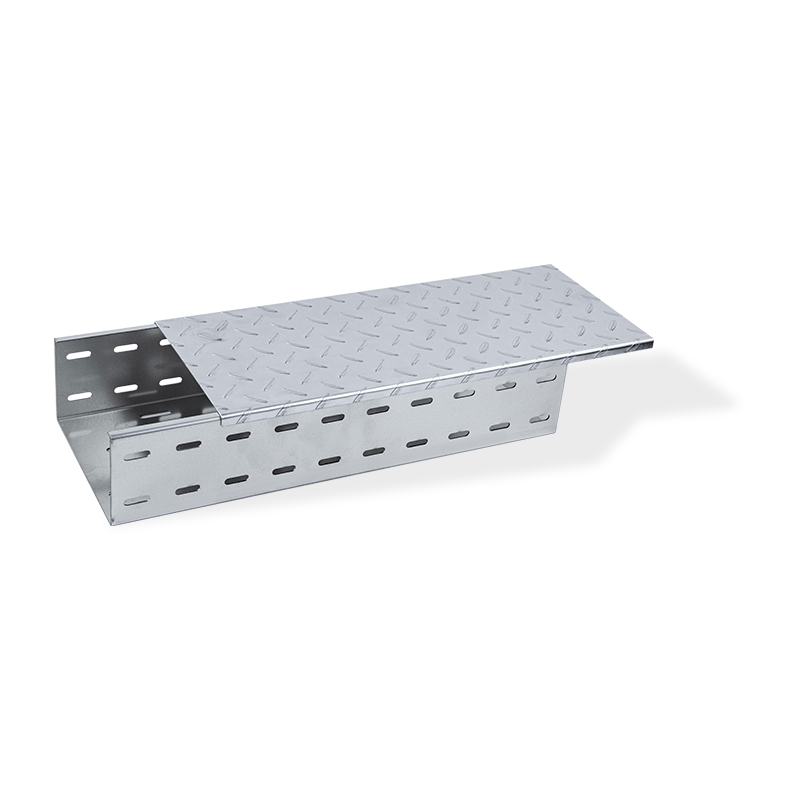
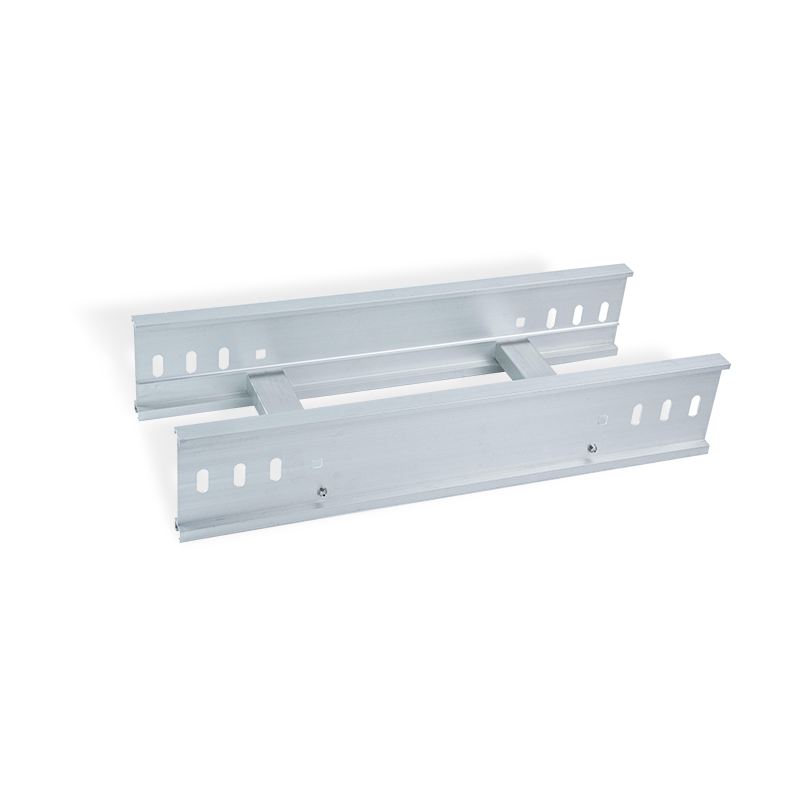

Youming Group is a manufacturing group company mainly engaged in the research and development of new high-strength cable tray
Product
- Wire Type Cable Tray Series
- Punched Type Cable Tray Series
- Trough Type Cable Tray Series
- Cable Rack Ladder Series
- Ladder Type Cable Tray Series
- Marine Cable Ladder Tray
- Strut Channel Cable Tray Series
- Accessories
- Fiber Cable Tray/Optic Cable Tray
- Photovoltaic Stents
- Stainless Steel Cable Tray Series
- Aluminum Alloy Cable Tray System
Contact information
-
No.36, Taidong Industrial Zone Shiyan Town, Dongtai City, Jiangsu Province
