


 Language
 English
 русский
 Español
 Português
 Deutsch
 عربى
عربى italiano
 Türk
Türk हिंदी
हिंदी Indonesia
 Tiếng Việt
If you need any help, please feel free to contact us

How to Choose Trough Cable Trays for Industrial Cable Management, Power Distribution and Infrastructure Wiring Systems
Content
- 1 01What is a trough cable tray and how does it differ from other cable management systems?
- 2 02What are the main types of trough cable trays?
- 3 03What industries use trough cable trays most?
- 4 04What performance properties should trough cable trays provide?
- 5 05How are trough cable trays manufactured?
- 6 06How do you select the right trough cable tray system?
- 7 07What are common issues or limitations of trough cable trays?
- 8 08What is the future trend of trough cable trays in global infrastructure?
- 9 FAQ
Cable damage, dust ingress, and overheating in an electrical installation often trace back to one overlooked component: the tray carrying the cables. A trough cable tray provides enclosed, solid-bottom support for power and control cabling across industrial and infrastructure projects, protecting conductors from impact and contamination in ways an open ladder system cannot. This guide explains how the system works, where it fits, and how to select the right specification.
01What is a trough cable tray and how does it differ from other cable management systems?
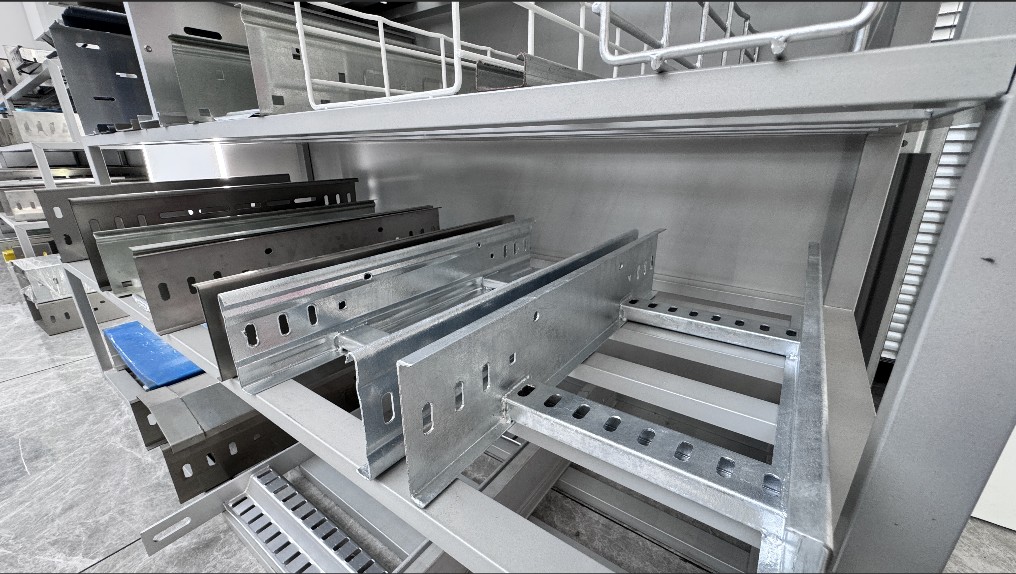
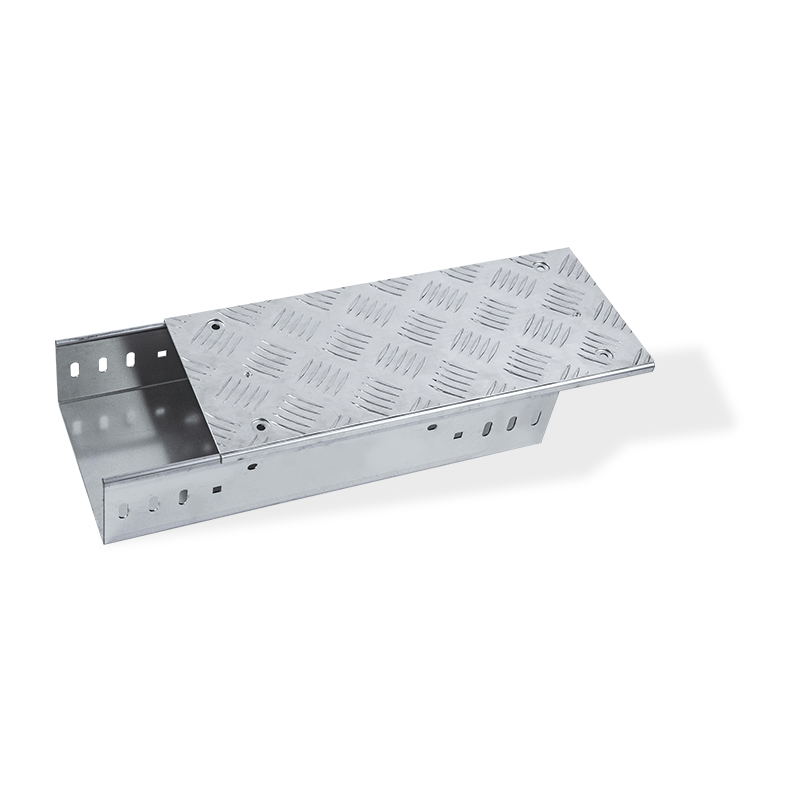
A trough cable tray definition centers on its enclosed profile: a solid bottom cable tray system with raised side rails that fully supports and partially shields the cables running through it. This is the core distinction from ladder-style systems, since a trough design gives continuous surface contact rather than intermittent rung support.
The difference between trough cable tray and ladder cable tray comes down to enclosure: a cable management metal tray with a solid base reduces sag between supports and limits exposure to falling debris, dust, and impact compared with an open rung design.
As an industrial cable support system, the trough profile is typically chosen where cable protection matters more than airflow, while an enclosed cable routing tray variant with a cover adds a further layer of physical protection in exposed or high-traffic areas.
- Side rails: provide vertical containment and structural rigidity
- Solid base: continuous cable support with reduced point-loading
- Optional cover: adds impact and dust protection where required
What is trough cable tray used for in electrical systems generally comes down to routing power and control cabling in environments where physical protection is a higher priority than open ventilation.
02What are the main types of trough cable trays?
| Type | Key characteristic |
| Steel trough cable tray | High strength, commonly used in heavy industrial settings |
| Aluminum cable tray system | Lighter weight, useful where load on structural supports is a concern |
| Stainless steel cable tray | Higher corrosion resistance for harsh or chemical environments |
| Powder coated cable tray | Added surface protection layer over base metal |
A perforated cable tray vs trough type comparison highlights the core trade-off: perforated designs allow airflow and drainage through small openings, while trough types prioritize enclosure and physical protection over ventilation. Steel vs aluminum trough cable tray comparison usually favors steel for raw strength and aluminum for weight-sensitive installations, while perforated vs solid bottom cable tray differences generally decide the choice based on how much airflow and moisture drainage the application actually needs.
03What industries use trough cable trays most?
The enclosed design is specified wherever cable protection and clean routing both matter.
Power plant cable management
Routes high-value control and instrumentation cabling with added physical protection.
Data center cable routing
Keeps structured cabling organized and shielded from dust and debris.
Industrial automation wiring
Supports control cabling near machinery where impact risk is elevated.
Petrochemical plant cable systems
Provides enclosed routing in environments with corrosive or hazardous conditions.
Building electrical infrastructure
Used in risers and plant rooms where organized, protected cable runs are required.
Trough cable tray for power plant wiring systems and cable trays in data center infrastructure both rely on the same underlying benefit: industrial use of solid bottom cable trays reduces physical risk to cabling compared with open support systems.
04What performance properties should trough cable trays provide?
Specifying a tray system means checking it against a defined set of structural and environmental performance factors.
How strong should industrial cable trays be depends entirely on the expected cable load and support spacing, so load bearing cable tray strength should always be checked against the actual installed cable weight rather than a generic assumption. Corrosion resistance in steel cable tray systems is achieved through galvanization, powder coating, or stainless steel selection depending on the environment, and cable protection electromagnetic shielding benefits from the tray's continuous metal enclosure in sensitive control wiring applications.
05How are trough cable trays manufactured?
| Stage | What happens |
| Sheet metal forming process | Flat metal coil is cut and formed into the tray profile |
| Steel stamping cable tray production | Rungs, holes, and mounting features are stamped into the formed sections |
| Galvanization coating process | Steel components are hot-dip or electro-galvanized for corrosion protection |
| Powder coating treatment | An additional protective and decorative coating layer is applied where specified |
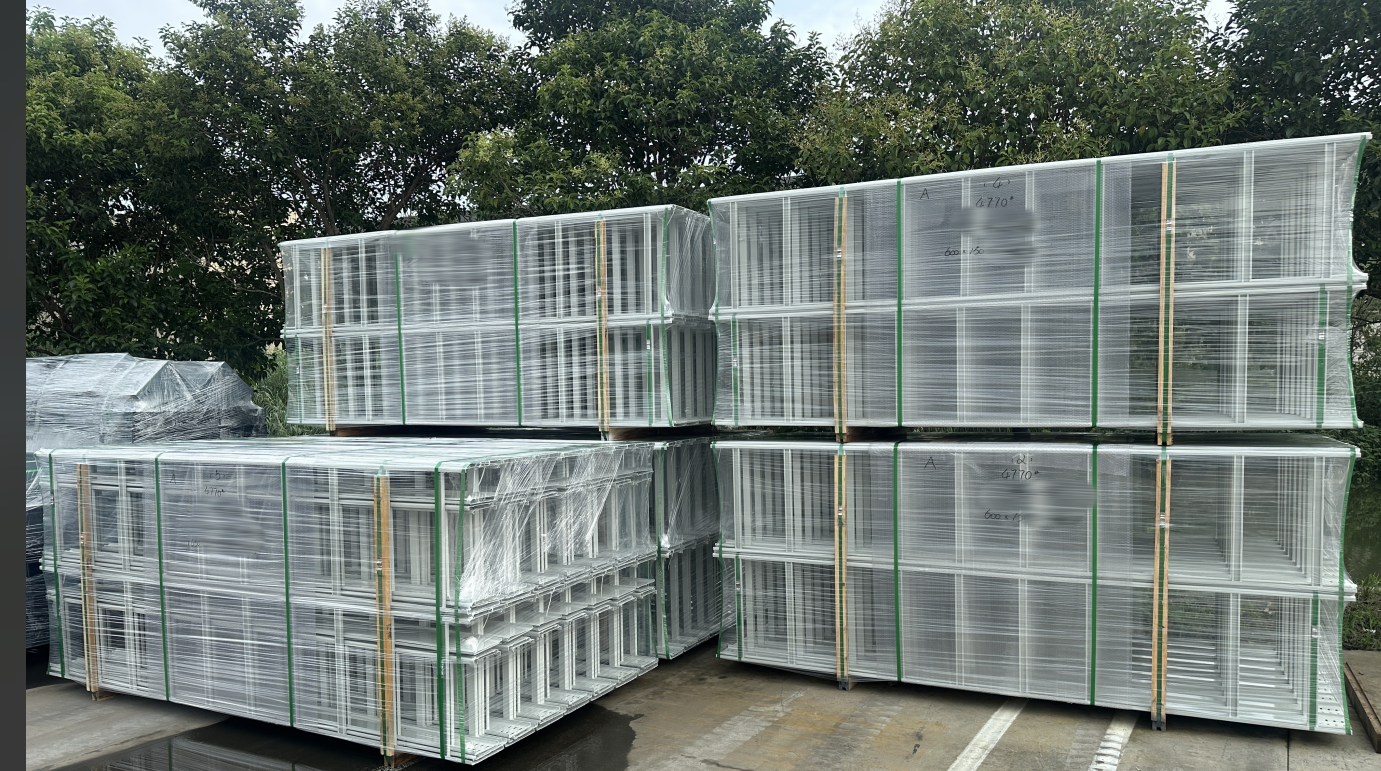
| Assembly and inspection | Sections, covers, and fittings are checked for dimensional accuracy before shipment |
How trough cable trays are made ultimately shapes long-term durability, and the manufacturing process of steel cable tray systems is only as reliable as its weakest stage, whether that is forming accuracy or coating consistency. The galvanization process for cable management trays in particular has a direct impact on how long a tray resists corrosion once installed.
06How do you select the right trough cable tray system?
Cable load capacity selection
Confirm the tray's rated load exceeds the total weight of installed cabling.
Tray width and depth sizing
Size the tray to current cable volume plus reasonable future capacity.
Environmental corrosion level selection
Match material and coating to the site's humidity and chemical exposure.
Installation support spacing
Set support intervals based on tray load rating and span capability.
Grounding and bonding requirements
Confirm the system meets local electrical code for tray grounding continuity.
How to choose trough cable tray size and selecting cable tray for industrial wiring systems both depend on getting these five factors right before ordering. This same guide to choosing corrosion resistant cable trays logic applies whether the project is a data center, a petrochemical plant, or a standard industrial facility.
07What are common issues or limitations of trough cable trays?
Cable overheating risk increases in fully enclosed trough systems compared with ventilated designs, since heat generated by densely packed cables has fewer paths to dissipate.
Dust accumulation in solid trays can occur over time, particularly in industrial environments with airborne particulates, since the enclosed base does not allow debris to pass through as a perforated design would. Installation complexity cable tray considerations arise because solid bottom sections are typically heavier and less flexible to route around obstacles than lighter perforated trays. Weight load limitations system checks matter especially on longer spans, and corrosion in humid environments remains a risk for any uncoated or improperly coated steel tray regardless of profile type.
Disadvantages of trough cable tray systems and problems with enclosed cable tray designs generally trace back to these same ventilation and weight trade-offs, which is why is solid bottom cable tray better for ventilation is really an environment-specific question rather than a universal answer.
08What is the future trend of trough cable trays in global infrastructure?
Modern facility design is increasingly shaped by smart factory wiring systems that demand more organized, protected cable routing as automation density increases. Modular cable management solutions are gaining traction because they simplify future expansion without requiring a full tray system redesign, and this is reflected in growing demand for trough cable tray systems with standardized modular fittings.
Corrosion resistant advanced coatings continue to extend service life in harsh industrial and coastal environments, while lightweight metal tray systems help reduce structural load in retrofit projects with limited support capacity. Green building electrical infrastructure standards are also beginning to factor material sourcing and recyclability into cable tray specifications, pushing the category toward more sustainable production practices over time.
 |
 |
FAQ
What is trough cable tray?
It is a solid-bottom cable support system with raised side rails, designed to enclose and protect power and control cabling in industrial and infrastructure installations.
What is difference between cable tray types?
Trough trays have a solid base for enclosure and protection, ladder trays use open rungs for airflow, and perforated trays offer a middle ground with drainage and ventilation holes.
Where are trough cable trays used?
They are commonly used in power plants, data centers, industrial automation facilities, petrochemical plants, and general building electrical infrastructure.
Are cable trays better than conduits?
Cable trays generally allow easier future cable additions and better heat dissipation than enclosed conduits, though conduits may offer more complete physical protection in certain environments.
How to install trough cable tray?
Installation typically involves mounting supports at rated intervals, securing tray sections and covers, ensuring proper grounding and bonding, and confirming load capacity before running cables.
What materials are used in cable trays?
Common materials include galvanized steel, aluminum, and stainless steel, with powder coating sometimes added for extra corrosion and surface protection.

Youming Group is a manufacturing group company mainly engaged in the research and development of new high-strength cable tray
Product
- Wire Type Cable Tray Series
- Punched Type Cable Tray Series
- Trough Type Cable Tray Series
- Cable Rack Ladder Series
- Ladder Type Cable Tray Series
- Marine Cable Ladder Tray
- Strut Channel Cable Tray Series
- Accessories
- Fiber Cable Tray/Optic Cable Tray
- Photovoltaic Stents
- Stainless Steel Cable Tray Series
- Aluminum Alloy Cable Tray System
Contact information
-
No.36, Taidong Industrial Zone Shiyan Town, Dongtai City, Jiangsu Province
