


 Language
 English
 русский
 Español
 Português
 Deutsch
 عربى
عربى italiano
 Türk
Türk हिंदी
हिंदी Indonesia
 Tiếng Việt
If you need any help, please feel free to contact us

How does a Hot-Dipped Galvanized Marine Cable Tray Perform in Offshore Oil and Gas Platforms?
Content
- 1 The Technical Necessity of Hot-Dip Galvanization in Offshore Environments
- 2 Performance Metrics of Marine Cable Tray in High-Salinity Zones
- 3 Mechanical Load and Structural Integrity
- 4 Ensuring Safety with Certified Manufacturing
- 5 Frequently Asked Questions (FAQ)
- 6 Product Specifications: Marine Cable Management Systems
- 7 Industry References
In the harsh environments of offshore oil and gas platforms, the integrity of electrical systems is paramount. These structures are constantly exposed to high salinity, extreme humidity, and mechanical stresses. Selecting a robust Marine Cable Tray system is not just a matter of organization, but a critical safety requirement. Jiangsu Youming Group Co., Ltd., a high-tech enterprise with an annual production capacity of over 30,000 tons, specializes in providing engineering-grade solutions that meet these rigorous maritime standards.

The Technical Necessity of Hot-Dip Galvanization in Offshore Environments
Offshore platforms operate in a "C5-M" (Very High Marine) corrosive category according to ISO 12944 standards. A standard Marine Cable Tray must be treated to prevent structural failure due to chloride-induced pitting and oxidation. Hot-dip galvanizing (HDG) involves immersing the steel tray in a bath of molten zinc at approximately 450°C, creating a metallurgical bond.
Metallurgical Protection vs. Surface Coating
Unlike simple painting or powder coating, the HDG process used by Jiangsu Youming Group Co., Ltd. ensures that the zinc penetrates every corner of the marine cable tray for offshore platforms. This creates a series of zinc-iron alloy layers that are harder than the base steel itself, providing exceptional abrasion resistance during the installation of heavy-duty power cables.
The following table compares the performance of HDG against standard electro-galvanized finishes in offshore conditions:
| Feature | Electro-Galvanized (Zinc Plated) | Hot-Dipped Galvanized (HDG) |
| Coating Thickness | 5-12 microns | 65-85+ microns |
| Bonding Type | Physical Adhesion | Metallurgical Bond |
| Service Life (Marine) | Less than 2 years | 20+ years |
| Edge Protection | Poor (often thins at edges) | Excellent (uniform coverage) |
Performance Metrics of Marine Cable Tray in High-Salinity Zones
The primary challenge for a heavy-duty marine cable tray is the "sacrificial protection" it must offer. In the presence of an electrolyte like seawater, zinc acts as an anode and corrodes in preference to the underlying steel. Even if the tray is scratched during maintenance, the surrounding zinc prevents rust from spreading.
Corrosion Resistance and Longevity
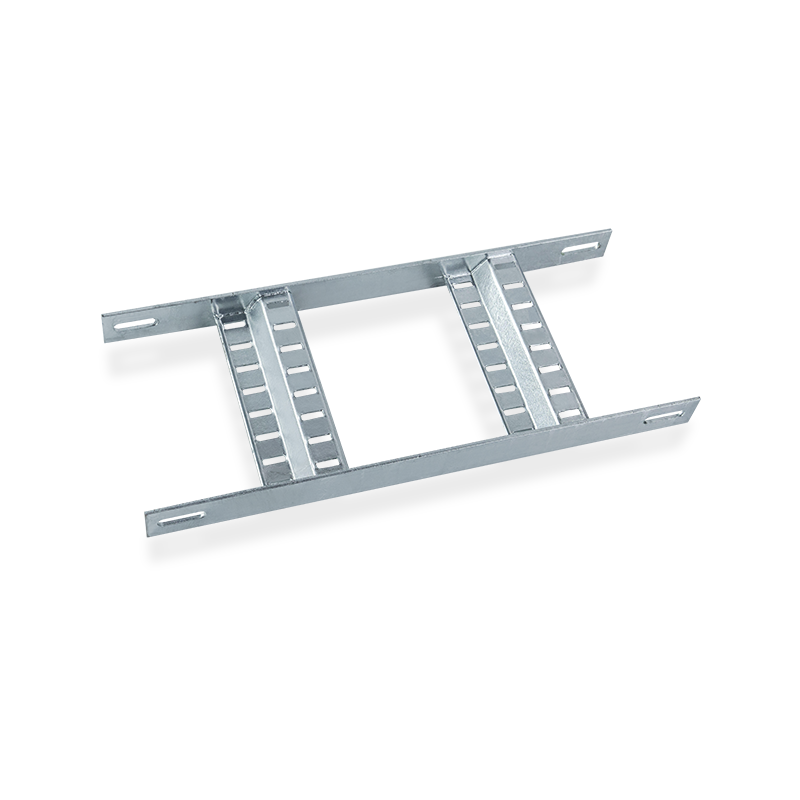
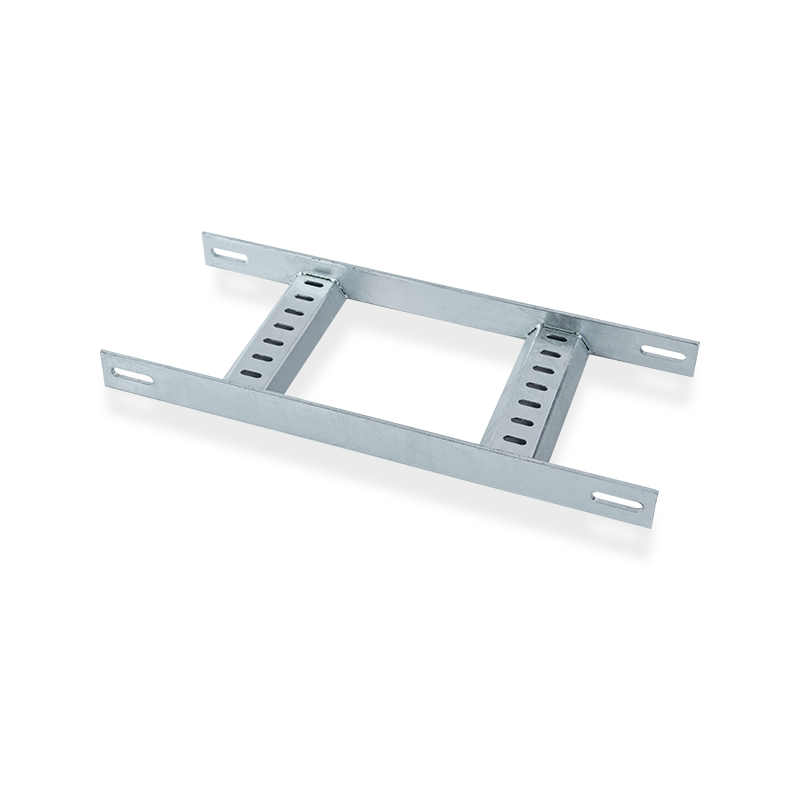
Utilizing a corrosion resistant marine cable ladder is standard practice for vertical cable runs on oil rigs. The open design allows for maximum airflow, reducing the accumulation of salt crystals and moisture. Jiangsu Youming Group Co., Ltd. utilizes fully automatic welding and forming lines to ensure that every joint in the ladder or tray is structurally sound before the galvanizing process, eliminating internal stress points where corrosion typically begins.
- Self-Healing Properties: The zinc carbonate film that forms on the surface acts as an additional barrier against the atmosphere.
- Thermal Expansion: HDG coatings remain stable across the wide temperature fluctuations common in offshore climates.
- Chemical Stability: Resistance to the hydrocarbons and drilling fluids frequently encountered on deck.
Mechanical Load and Structural Integrity
Offshore platforms require a marine grade cable management system that can support the weight of several kilometers of armored cabling. Under the ISO 9001:2015 management system, Jiangsu Youming Group Co., Ltd. ensures that tray designs account for dynamic loads, including vibration from turbines and the impact of wind and waves.
Load Capacity Comparison: Aluminum vs. HDG Steel
While aluminum is lighter, HDG steel offers superior mechanical strength and fire resistance, which are critical for "Safe Zone" and "Hazardous Area" classifications on oil platforms.
| Parameter | Aluminum Alloy Tray | HDG Steel Marine Cable Tray |
| Yield Strength | Moderate | High |
| Fire Resistance | Melts at approx. 660°C | Maintains integrity up to 1000°C+ |
| Expansion Rate | High (Requires more joints) | Low (Greater stability) |
Ensuring Safety with Certified Manufacturing
The reliability of a marine cable tray with CE certification cannot be overstated. Jiangsu Youming Group Co., Ltd. leverages a 26,000 square meter production workshop and a dedicated testing center to verify that every batch meets EU standards. From raw material procurement to CNC turret punching and final inspection, the process is engineered to minimize human error and maximize durability.
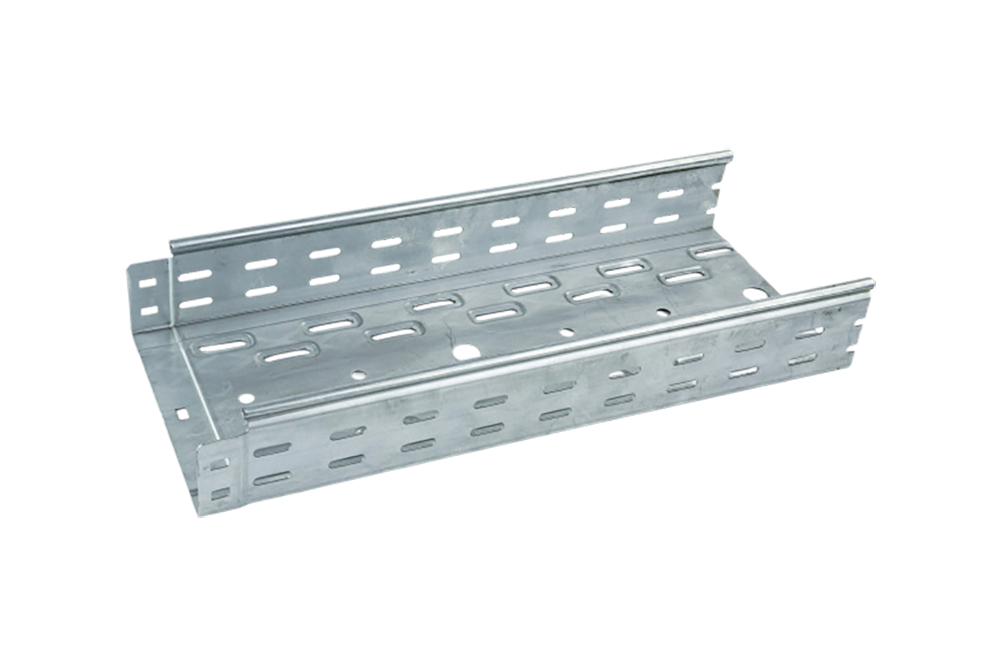
By integrating advanced enterprise management with over 50 technical backbone members, the company provides customized specifications—including trough, ladder, and perforated types—to fit the specific spatial constraints of offshore modules.
Frequently Asked Questions (FAQ)
- Q1: Why is Hot-Dipped Galvanizing preferred over Stainless Steel in some offshore areas?
A: While stainless steel is excellent, HDG steel is often more cost-effective for large-scale infrastructure while providing sufficient "sacrificial" protection in high-chloride environments where certain grades of stainless might suffer from stress corrosion cracking. - Q2: How does the "ladder type" tray benefit offshore platforms?
A: The ladder type allows for high-volume cable heat dissipation and prevents the buildup of water or hazardous gases, which is vital for safety in oil and gas processing zones. - Q3: Can these trays withstand the vibrations of an oil rig?
A: Yes. When manufactured with automatic riveting and welding lines, the trays maintain high structural rigidity, resisting the fatigue caused by mechanical vibrations. - Q4: What is the typical lifespan of an HDG Marine Cable Tray?
A: In a C5-M marine environment, a properly hot-dipped galvanized tray with a coating thickness exceeding 80 microns can last 20 to 25 years without significant maintenance. - Q5: Does Jiangsu Youming Group Co., Ltd. provide custom sizes?
A: Yes, with laser cutting and CNC punching capabilities, the company can produce various specifications and models to meet specific engineering blueprints.
Product Specifications: Marine Cable Management Systems
At Jiangsu Youming Group Co., Ltd., our engineering department ensures that every Marine Cable Tray meets the exact mechanical and chemical requirements for deep-sea and offshore deployment. Below are the technical parameters for our flagship hot-dipped galvanized (HDG) series.
1. Material & Coating Standards
- Base Material: Carbon Steel (Q235B / Q355B) or specialized marine-grade alloys.
- Coating Process: Hot-Dip Galvanizing (HDG) per ISO 1461.
- Coating Thickness: Average thickness ≥ 65μm - 85μm (Customizable up to 100μm+ for extreme C5-M environments).
- Certifications: CE, ISO 9001:2015, ISO 14001:2015.
2. Comparison of Tray Types for Offshore Use
Choosing the right architecture for your marine grade cable management system depends on cable density, heat dissipation needs, and protection requirements.
| Feature | Ladder Type (Marine Grade) | Trough/Perforated Type |
| Primary Usage | High-voltage power cables, vertical risers. | Control cables, instrumentation, data lines. |
| Ventilation | Maximum airflow; prevents heat buildup. | Limited; provides physical shielding. |
| Debris Protection | Low (Open structure). | High (Protects cables from falling objects). |
| Mechanical Load | Superior load-to-weight ratio. | Excellent rigidity and continuous support. |
3. Dimensional Availability
Leveraging our 26,000 square meter production workshop and automatic forming lines, we offer the following standard ranges for our heavy-duty marine cable tray:
- Width: 50mm to 1000mm.
- Side Rail Height: 50mm to 200mm.
- Standard Length: 2000mm, 3000mm, or 6000mm (Custom lengths available via CNC laser cutting).
- Rung Spacing (Ladder): 200mm, 250mm, or 300mm.
4. Engineering Advantages of choosing Jiangsu Youming Group Co., Ltd.
Integrating a corrosion resistant marine cable ladder from our facility ensures long-term structural reliability. Our marine cable tray for offshore platforms features unique design elements:
- Smooth Edge Technology: All perforated holes and tray edges are deburred before galvanizing to prevent cable jacket abrasion during pull-through.
- Automatic Welding: Ensures 100% penetration at rung-to-rail joints, critical for resisting the constant vibrations of offshore turbines and pumps.
- High-Tech R&D: Our team of 50 technical backbone members can provide custom load-bearing calculations for complex offshore modules.
Industry References
- ISO 12944-2: Paints and varnishes — Corrosion protection of steel structures by protective paint systems — Part 2: Classification of environments.
- ASTM A123/A123M: Standard Specification for Zinc (Hot-Dip Galvanized) Coatings on Iron and Steel Products.
- IEC 61537: Cable management — Cable tray systems and cable ladder systems.
- National Association of Corrosion Engineers (NACE) - SP0108: Corrosion Control of Offshore Structures.

Youming Group is a manufacturing group company mainly engaged in the research and development of new high-strength cable tray
Product
- Wire Type Cable Tray Series
- Punched Type Cable Tray Series
- Trough Type Cable Tray Series
- Cable Rack Ladder Series
- Ladder Type Cable Tray Series
- Marine Cable Ladder Tray
- Strut Channel Cable Tray Series
- Accessories
- Fiber Cable Tray/Optic Cable Tray
- Photovoltaic Stents
- Stainless Steel Cable Tray Series
- Aluminum Alloy Cable Tray System
Contact information
-
No.36, Taidong Industrial Zone Shiyan Town, Dongtai City, Jiangsu Province
