


 Language
 English
 русский
 Español
 Português
 Deutsch
 عربى
عربى italiano
 Türk
Türk हिंदी
हिंदी Indonesia
 Tiếng Việt
If you need any help, please feel free to contact us

The Role of Ventilated Trough Cable Trays in Data Center Thermal Management
Content
- 1 1. Heat Dissipation Mechanisms: Perforation vs. Solid Bottom
- 2 2. Material Science and Electromagnetic Interference (EMI)
- 3 3. Installation Logistics and Maintenance Accessibility
- 4 Conclusion: The Future of Scalable Infrastructure
- 4.1 Frequently Asked Questions (FAQ)
- 4.1.1 1. Does the perforation in a ventilated trough cable tray weaken it?
- 4.1.2 2. Why is an aluminum alloy ventilated trough tray better for data centers?
- 4.1.3 3. How does cable tray ventilation affect fire safety?
- 4.1.4 4. Can I use a powder coated ventilated cable tray in a harsh chemical environment?
- 4.1.5 5. Is the best cable tray for high-density server rooms always the ventilated trough?
- 4.2 Industry References
- 4.1 Frequently Asked Questions (FAQ)
In the high-density computing environments of modern data centers, thermal management is a critical factor for hardware reliability and energy efficiency. As cable densities increase to support high-speed data transmission, the heat generated by electrical resistance within those cables becomes a significant concern. The ventilated trough cable tray has emerged as a specialized engineering solution to address these challenges. Jiangsu Youming Group Co., Ltd., located in the Taidong Industrial Park, is a high-tech enterprise dedicated to the R&D and production of advanced cable routing systems. Operating a 26,000-square-meter facility with fully automatic production lines, we manufacture ventilated trough cable tray systems that meet ISO 9001:2015 and EU CE certifications. By facilitating passive airflow, these trays serve as a fundamental component in maintaining the "Cold Aisle/Hot Aisle" integrity required for professional data center operations.

1. Heat Dissipation Mechanisms: Perforation vs. Solid Bottom
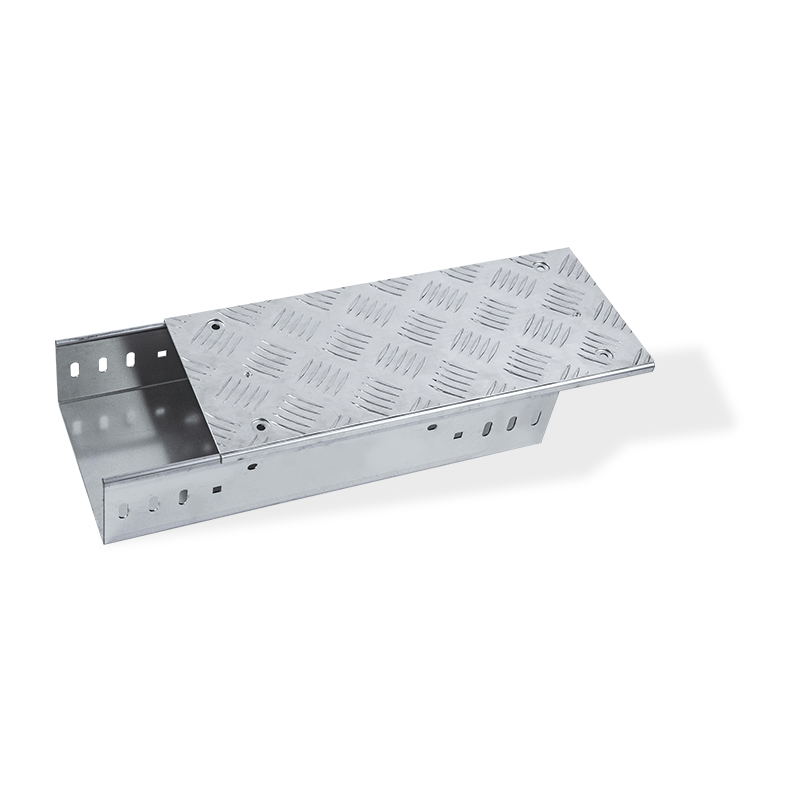
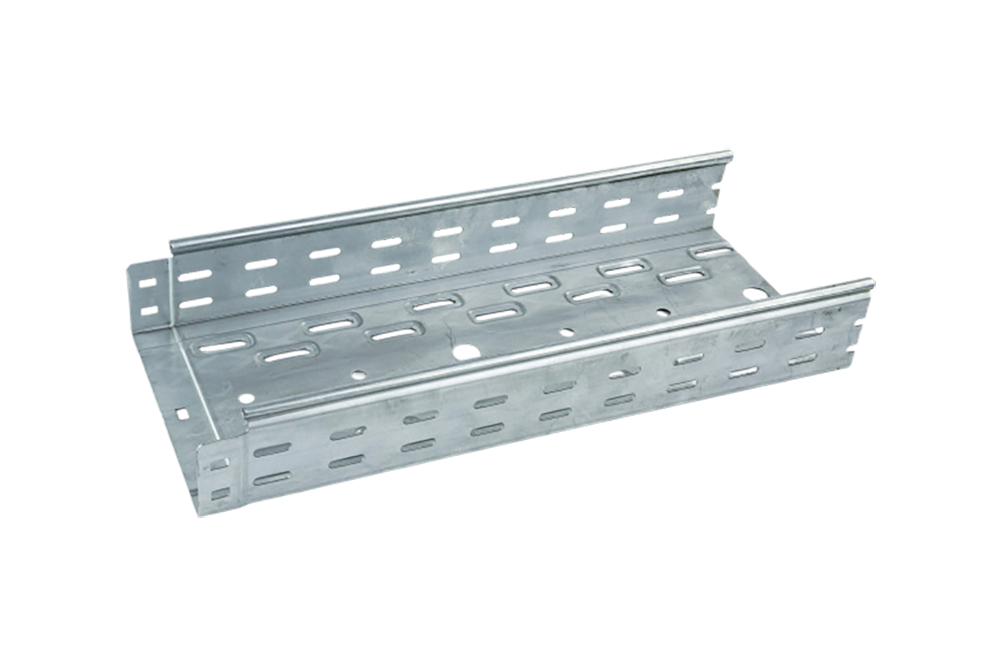
The primary engineering advantage of a ventilated trough cable tray is its ability to promote convective cooling. In a standard solid-bottom tray, heat becomes trapped around the lower cable layers, leading to "hot spots" that can degrade insulation over time. When comparing ventilated vs solid trough cable trays, the perforated design of the ventilated model allows air to circulate around the entire circumference of the cable bundle. This is essential for preventing cable overheating in data centers, where the constant load can lead to thermal runaway if not properly managed. For engineers choosing between perforated and ladder cable trays, the ventilated trough offers the high protection of a trough with the cooling benefits of a ladder, making it the best cable tray for high-density server rooms.
Thermal Performance Matrix
- Airflow Velocity: Perforations in the trough bottom allow for vertical air movement, utilizing the "chimney effect" to draw heat away from the conductors.
- Cable Ampacity: Proper ventilated cable tray heat dissipation allows cables to operate at higher current ratings without exceeding their thermal limits.
| Technical Feature | Solid Trough Tray | Ventilated Trough Cable Tray |
| Heat Accumulation | High (Traps stagnant air) | Low (Promotes constant airflow) |
| Cable Ampacity Derating | Significant derating required | Minimal derating (Superior air contact) |
| Dust Protection | Excellent | Good (Balances protection with airflow) |
2. Material Science and Electromagnetic Interference (EMI)
Data centers require materials that are both structurally sound and electromagnetically stable. An aluminum alloy ventilated trough tray is often preferred because it offers excellent thermal conductivity and is naturally non-magnetic, which helps in reducing EMI in data center cable trays. Jiangsu Youming Group Co., Ltd. utilizes automatic forming and laser cutting lines to ensure that every perforation is burr-free, preventing damage to sensitive fiber optic or copper cabling. When calculating ventilated trough cable tray load capacity, engineers must account for the slight reduction in rigidity caused by perforations, though our high-tech powder coated ventilated cable tray series compensates for this through optimized longitudinal ribbing. Furthermore, the fireproof ventilated trough cable tray benefits are significant; in the event of a fire, the ventilation holes allow for the rapid detection of smoke by aspirating systems.
Material Engineering Sequence
- Shearing and Punching: CNC turret punching ensures high-precision ventilation ratios.
- Automatic Forming: Longitudinal shearing lines maintain structural integrity for high load-bearing.
- Surface Treatment: Hot-dip galvanizing or powder coating provides corrosion resistance for a 25-year service life.
3. Installation Logistics and Maintenance Accessibility
Efficient data center cable management cooling depends not just on the tray itself, but on how it is integrated into the facility. Installing ventilated trough trays in raised floors allows for the utilization of the under-floor plenum for active cooling distribution. The ventilated trough cable tray design provides convenient points for cable ties and drop-outs, ensuring that cable bundles remain organized and do not impede airflow. For facility managers, maintaining ventilated trough cable trays is simpler because the perforations allow for visual inspection of the bottom cable layers and facilitate dust removal via compressed air, which is vital for preventing "dust-induced insulation failure" in high-voltage communication environments.
| Installation Factor | Overhead Installation | Raised Floor Installation |
| Cooling Efficiency | Moderate (Relies on room HVAC) | High (Utilizes pressurized plenum air) |
| Accessibility | Easy for adds/changes | Discrete; space-saving |
| Cable Tray Ventilation | Natural Convection | Forced Air Convection |
Conclusion: The Future of Scalable Infrastructure
As data centers evolve toward 400G and 800G architectures, the thermal load on cable management systems will only increase. The ventilated trough cable tray remains the most reliable engineering choice for balancing physical protection with thermal performance. Jiangsu Youming Group Co., Ltd., with its 50 million RMB registered capital and annual production capacity of 30,000 tons, stands ready to support this infrastructure. Our commitment to quality inspection and technological innovation ensures that our ventilated trough cable tray systems provide a secure, cool, and efficient environment for the world's most critical data.
Frequently Asked Questions (FAQ)
1. Does the perforation in a ventilated trough cable tray weaken it?
While perforations remove a small amount of material, the structural integrity is maintained through CNC turret punching and specialized automatic forming lines. When calculating ventilated trough cable tray load capacity, these factors are accounted for to ensure they meet the same heavy-duty standards as solid trays.
2. Why is an aluminum alloy ventilated trough tray better for data centers?
Aluminum offers higher thermal conductivity than steel, meaning it helps dissipate heat faster. Additionally, its non-magnetic properties are essential for reducing EMI in data center cable trays carrying high-speed signals.
3. How does cable tray ventilation affect fire safety?
Ventilated trays allow heat to escape, which can delay the ignition of cable jackets. More importantly, fireproof ventilated trough cable tray benefits include allowing smoke to reach sensors faster, triggering suppression systems earlier than solid trays would.
4. Can I use a powder coated ventilated cable tray in a harsh chemical environment?
Yes. Our powder-coated series provides an extra layer of chemical and corrosion resistance, though for maximum durability in shipping or chemical plants, hot-dip galvanized or stainless steel series are recommended.
5. Is the best cable tray for high-density server rooms always the ventilated trough?
In most cases, yes. It provides the physical protection of a trough (preventing cable sag and side damage) while offering the necessary airflow for preventing cable overheating in data centers.
Industry References
- NEMA VE 1: Metal Cable Tray Systems Standards.
- TIA-942: Telecommunications Infrastructure Standard for Data Centers.
- ISO 9001:2015 & ISO 14001:2015 - Quality and Environmental Management Systems.
- Jiangsu Youming Group Internal R&D: "Thermal Efficiency Analysis of Perforated Bottom Cable Trays" (2025).

Youming Group is a manufacturing group company mainly engaged in the research and development of new high-strength cable tray
Product
- Wire Type Cable Tray Series
- Punched Type Cable Tray Series
- Trough Type Cable Tray Series
- Cable Rack Ladder Series
- Ladder Type Cable Tray Series
- Marine Cable Ladder Tray
- Strut Channel Cable Tray Series
- Accessories
- Fiber Cable Tray/Optic Cable Tray
- Photovoltaic Stents
- Stainless Steel Cable Tray Series
- Aluminum Alloy Cable Tray System
Contact information
-
No.36, Taidong Industrial Zone Shiyan Town, Dongtai City, Jiangsu Province
