


 Language
 English
 русский
 Español
 Português
 Deutsch
 عربى
عربى italiano
 Türk
Türk हिंदी
हिंदी Indonesia
 Tiếng Việt
If you need any help, please feel free to contact us

Best Practices for Installing Ventilated Trough Cable Trays in High-Voltage Environments
Content
- 1 1. Thermal Management and Airflow Optimization
- 2 2. Grounding, Bonding, and EMI Shielding in HV Areas
- 3 3. Structural Load and Support Specifications
- 4 Conclusion: Professional Excellence in Cable Management
- 4.1 Frequently Asked Questions (FAQ)
- 4.1.1 1. What are the primary benefits of using ventilated trough cable trays in substations?
- 4.1.2 2. How do I determine the load capacity of ventilated trough cable trays?
- 4.1.3 3. Is stainless steel ventilated trough cable tray durability necessary for all power plants?
- 4.1.4 4. Why ventilated trough cable trays for power plants instead of ladder trays?
- 4.1.5 5. Can I get a customized ventilated trough cable tray for a specific project?
- 4.2 Industry References
- 4.1 Frequently Asked Questions (FAQ)
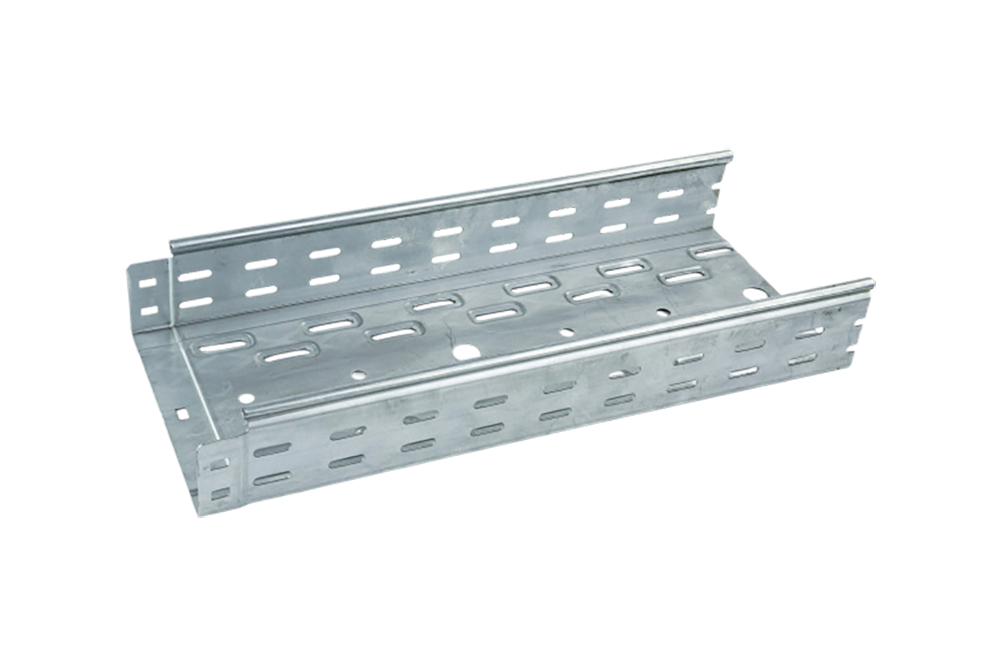
In high-voltage electrical infrastructure, heat accumulation and electromagnetic interference (EMI) are critical variables that dictate system reliability. A ventilated trough cable tray serves as an essential component for managing power cables, providing a balance between physical protection and atmospheric cooling. Jiangsu Youming Group Co., Ltd., an innovative high-tech enterprise with a 50 million RMB registered capital and a 26,000-square-meter facility, specializes in high-capacity longitudinal and transverse shearing lines for premium tray production. Our engineering team focuses on heat dissipation in ventilated trough cable trays to ensure that high-voltage lines operate within thermal limits. This guide details the technical installation protocols for a ventilated trough cable tray in demanding power environments.

1. Thermal Management and Airflow Optimization
High-voltage cables generate significant Joule heating, which can lead to insulation degradation if not managed. The primary benefits of using ventilated trough cable trays lie in their ability to facilitate air convection through bottom perforations while maintaining the structural rigidity of a solid-bottom trough. When comparing ventilated trough vs ladder cable tray airflow, the ladder type offers maximum ventilation but lacks the protection against falling debris provided by the ventilated trough. For engineers, calculating cable tray fill ratio for ventilated troughs is paramount; typically, for power cables, the fill should not exceed 40-50% of the cross-sectional area to prevent heat traps. Selecting aluminum alloy ventilated trough cable trays can further enhance thermal conductivity compared to standard steel options.
Heat Dissipation Performance Matrix
- Convection Efficiency: Perforated patterns allow for vertical airflow, reducing the ambient temperature around the conductor.
- Material Impact: Aluminum alloy trays dissipate heat faster than hot-dip galvanized steel due to higher thermal conductivity.
| Tray Configuration | Cooling Efficiency | Mechanical Protection Level |
| Solid Bottom Trough | Low (Heat Trap Potential) | Maximum (Full Shielding) |
| Ventilated Trough Cable Tray | Moderate-High (Convective) | High (Balanced) |
| Ladder Type | Maximum (Open Air) | Moderate (Exposed) |
2. Grounding, Bonding, and EMI Shielding in HV Areas
Safety in high-voltage environments is contingent upon a robust grounding system. Every ventilated trough cable tray section must be electrically continuous to mitigate fault currents. Grounding requirements for ventilated trough systems involve using high-conductivity bonding jumpers across expansion joints. While stainless steel ventilated trough cable tray durability is unmatched in corrosive environments, it possesses higher electrical resistance than aluminum, requiring more frequent bonding points. In high voltage cable management using trough trays, the tray also acts as an electromagnetic shield; the ventilated design provides better shielding than ladder trays while still allowing the system to breathe. At Jiangsu Youming Group Co., Ltd., our hot-dip galvanized ventilated trough cable tray series is designed to meet ISO 9001:2015 standards for consistent electrical conductivity.
Electrical Integration Sequence
- Surface Preparation: Ensure all connection points are free of paint or oxidation before riveting.
- Bonding Jumper Installation: Utilize tinned copper jumpers for superior galvanic compatibility.
- Testing: Conduct a point-to-point resistance test to ensure compliance with NEMA standards for cable tray installation.
| Material Property | Hot-Dip Galvanized Steel | 304/316 Stainless Steel |
| Electrical Conductivity | Good (Zinc layer assists) | Moderate (Requires robust bonding) |
| EMI Shielding Effectiveness | High | High |
| Bonding Interval | Every 15-20 feet | Every 10-12 feet |
3. Structural Load and Support Specifications
The weight of high-voltage armored cables necessitates a high load capacity of ventilated trough cable trays. Choosing the right size ventilated trough cable tray involves analyzing the span between supports; as the span increases, the allowable load decreases significantly. Installing ventilated trough cable trays in high-voltage environments often requires reinforced trapeze hangers or wall brackets to handle the dynamic loads during a short-circuit event. Jiangsu Youming Group Co., Ltd. utilizes automatic forming lines and laser cutting to ensure precise tolerances, allowing our trays to maintain structural integrity under maximum load. We also provide fireproof powder coated cable trays for specialized high-heat power plant zones where additional passive fire protection is mandatory.
Load Bearing and Span Sequence
- Static Load Analysis: Weight of cables + 200 lb concentrated load for safety.
- Expansion Coordination: Utilizing expansion splice plates to allow for thermal expansion of the ventilated trough cable tray in outdoor substations.
Conclusion: Professional Excellence in Cable Management
A successful installation of a ventilated trough cable tray in high-voltage zones requires a deep understanding of thermal dynamics, electrical safety, and structural engineering. Jiangsu Youming Group Co., Ltd. remains at the forefront of the industry, providing various specifications and models across infrastructure, power, and chemical fields. With our CE and ISO certifications, we ensure that every 30,000 tons of annual production reaches the highest level of industry quality, winning high recognition and trust from global customers. For large-scale power projects, our fully automatic production lines guarantee the precision and durability required for 21st-century energy grids.
Frequently Asked Questions (FAQ)
1. What are the primary benefits of using ventilated trough cable trays in substations?
They provide a compromise between the full protection of a solid trough and the cooling of a ladder tray. This prevents the accumulation of moisture and heat while shielding cables from external impacts.
2. How do I determine the load capacity of ventilated trough cable trays?
Load capacity is determined by the tray's depth, material thickness, and the support span. Engineers should refer to NEMA VE-1 standards or the manufacturer's load charts to ensure the tray can support the heavy-duty power cables.
3. Is stainless steel ventilated trough cable tray durability necessary for all power plants?
Stainless steel is recommended for chemical plants, offshore shipping, or pharmaceutical environments where corrosion is a major risk. For standard indoor power rooms, hot-dip galvanized or aluminum trays are often sufficient.
4. Why ventilated trough cable trays for power plants instead of ladder trays?
Ventilated troughs provide better protection against falling objects and prevent small animals from entering the cable area, which is a common cause of short circuits in high-voltage environments.
5. Can I get a customized ventilated trough cable tray for a specific project?
Yes. Jiangsu Youming Group Co., Ltd. specializes in R&D and manufacturing, offering various specifications and models tailored to infrastructure, communication, and metallurgy fields through our CNC and automatic welding lines.
Industry References
- NEMA VE 1-2017: Metal Cable Tray Systems.
- NFPA 70: National Electrical Code (NEC) Article 392 - Cable Trays.
- ISO 9001:2015: Quality Management System Standard.
- Jiangsu Youming Group Internal Research: "Heat Flux Analysis in Perforated Cable Management" (2025).

Youming Group is a manufacturing group company mainly engaged in the research and development of new high-strength cable tray
Product
- Wire Type Cable Tray Series
- Punched Type Cable Tray Series
- Trough Type Cable Tray Series
- Cable Rack Ladder Series
- Ladder Type Cable Tray Series
- Marine Cable Ladder Tray
- Strut Channel Cable Tray Series
- Accessories
- Fiber Cable Tray/Optic Cable Tray
- Photovoltaic Stents
- Stainless Steel Cable Tray Series
- Aluminum Alloy Cable Tray System
Contact information
-
No.36, Taidong Industrial Zone Shiyan Town, Dongtai City, Jiangsu Province
