


 Language
 English
 русский
 Español
 Português
 Deutsch
 عربى
عربى italiano
 Türk
Türk हिंदी
हिंदी Indonesia
 Tiếng Việt
If you need any help, please feel free to contact us

Which Material for a Marine Cable Tray Offers the Best Resistance to Saltwater Corrosion According to DNV Standards?
Content
- 1 Engineering Standards for Saltwater Corrosion Resistance
- 2 Advanced Coating Technologies and Structural Performance
- 3 Optimizing Installation in Confined Spaces
- 4 Frequently Asked Questions (FAQ)
- 4.1 1. What is the minimum Martindale or ISO equivalent for marine coating durability?
- 4.2 2. Can I use aluminum marine cable trays for external decks?
- 4.3 3. How do the latest 2025 IEC 60092-352 updates affect cable tray selection?
- 4.4 4. What contributes most to a hot dip galvanized marine cable tray lifespan?
- 4.5 5. Is a wire mesh cable tray for shipyards strong enough for power cables?
In the offshore and maritime sectors, the structural integrity of electrical infrastructure is directly tied to material science. Choosing a Marine Cable Tray is not merely an aesthetic or budgetary decision; it is a critical engineering choice that must account for C5-M (Marine) or CX (Extreme) atmospheric corrosivity categories. Jiangsu Youming Group Co., Ltd., a high-tech innovative enterprise based in the Taidong Industrial Park, addresses these challenges with a 26,000-square-meter production facility capable of manufacturing over 30,000 tons of high-performance cable management systems annually.
Our engineering teams utilize advanced longitudinal and transverse shearing lines alongside automatic welding and CNC turret punching to produce series ranging from stainless steel to aluminum alloy. As a certified organization under ISO 9001:2015 and EU CE standards, we ensure that every Marine Cable Tray meets the rigorous "three-defense" (moisture, salt spray, and mold) requirements essential for shipping, machinery, and national power grid applications.

Engineering Standards for Saltwater Corrosion Resistance
The selection of materials for maritime environments is governed by international classification societies, with DNV (Det Norske Veritas) providing the benchmark for offshore reliability. According to the July 2024 edition of the DNV class rules for ships and offshore units, which entered into force on January 1, 2025, there is an increased emphasis on life-cycle durability and material stability in harsh environments. This update reinforces the need for dnv approved marine cable trays that can withstand prolonged exposure to chloride-rich atmospheres without catastrophic structural degradation.
Source: DNV - July 2024 Edition of Class Rules for Ships and Offshore Units
Stainless Steel vs. Aluminum Alloy: A Technical Comparison
While both materials are widely used, their performance varies significantly under thermal and chemical stress. Stainless steel, specifically Grade 316L (SS316L), is the industry standard for stainless steel 316l cable tray for offshore applications due to its molybdenum content, which prevents pitting corrosion. Aluminum alloy (such as 6063 or 5052), however, offers a superior strength-to-weight ratio, which is critical for reducing the overall deadweight of the vessel. For instance, an aluminum Marine Cable Tray may weigh up to 50% less than its steel counterpart while maintaining sufficient load bearing capacity for shipboard cable trays.
| Performance Attribute | Stainless Steel 316L | Aluminum Alloy (6063-T6) |
| Corrosion Resistance | Highest; superior resistance to pitting/crevice corrosion | Excellent; forms a natural protective oxide layer |
| Weight Factor | Heavy (approx. 7.9 g/cm³) | Lightweight (approx. 2.7 g/cm³) |
| DNV Compliance | Standard for splash zones and open decks | Common for internal decks and superstructure |
Advanced Coating Technologies and Structural Performance
In addition to base metal selection, the "after-processing" stage is where the Marine Cable Tray gains its long-term resilience. Jiangsu Youming Group Co., Ltd. employs automatic spraying and hot-dip galvanizing lines to provide secondary protection layers. For steel trays, a hot dip galvanized marine cable tray lifespan is determined by the thickness of the zinc coating, which acts as a sacrificial anode. According to IEC 60092-352:2025 (the latest update on electrical installations in ships), cable supports must be designed to mitigate mechanical stress from ship vibrations while ensuring continuity of the protective finish.
Source: IEC 60092-352:2025 - Electrical installations in ships: Selection and installation of cables
Structural Integrity and Vibration Resistance
Marine environments subject cable systems to constant low-frequency vibrations and high-impact shocks from wave slamming. The load bearing capacity for shipboard cable trays is tested in our internal quality centers to ensure that even under maximum fill ratios, the tray does not deflect beyond L/200. This is particularly vital for fire rated cable tray for marine use, where the structural integrity must be maintained during high-temperature emergencies to ensure the functionality of emergency lighting and communication systems.
| Structural Feature | Ladder Type | Perforated / Trough Type |
| Vibration Dampening | Superior airflow reduces wind-induced oscillation | Solid base provides better EMI/RFI shielding |
| Installation Speed | Highly efficient for large power cables | Ideal for high-density instrument cabling |
| Mechanical Strength | Optimized for heavy vertical loads | Enhanced protection against falling debris |
Optimizing Installation in Confined Spaces
Shipyards frequently face the challenge of installing cable management in congested engine rooms or narrow passages. Using wire mesh cable tray for shipyards allows for on-site modifications, such as manual bending and cutting, which significantly reduces labor hours. At Jiangsu Youming Group Co., Ltd., we provide comprehensive product selection services to ensure that our customers receive the exact specifications—whether trough, ladder, or mesh—needed for infrastructure, communication, or power projects.
- Precision Manufacturing: Automatic riveting and laser cutting ensure dimensional accuracy.
- Material Diversity: Availability of SS316L, Aluminum, and specialized fireproof coatings.
- Proven Reliability: Years of market expansion and cooperation with major domestic enterprises.
Frequently Asked Questions (FAQ)
1. What is the minimum Martindale or ISO equivalent for marine coating durability?
For marine environments, we follow ISO 12944 standards for corrosion protection. A high-quality Marine Cable Tray should meet the C5-M or CX durability ratings, which require testing for salt spray resistance and humidity for thousands of hours without film breakdown.
2. Can I use aluminum marine cable trays for external decks?
While aluminum offers excellent resistance to saltwater, dnv approved marine cable trays made of Stainless Steel 316L are often preferred for splash zones where mechanical impact and extreme salt concentrations are highest. Aluminum is ideal for superstructures where weight saving is a priority.
3. How do the latest 2025 IEC 60092-352 updates affect cable tray selection?
The IEC 60092-352:2025 standard places greater emphasis on the selection of fiber optic and symmetrical category cables, requiring cable trays to have smoother finishes and specific bending radii to prevent signal degradation under ship motion.
4. What contributes most to a hot dip galvanized marine cable tray lifespan?
The primary factor is the zinc coating thickness (typically ≥ 85 μm for marine use). In offshore environments, the zinc erodes at a predictable rate; hence, thicker coatings directly correlate to a longer service life before the base steel is exposed.
5. Is a wire mesh cable tray for shipyards strong enough for power cables?
Yes, provided the wire diameter and grid density are engineered correctly. Jiangsu Youming Group Co., Ltd. produces mesh trays that balance flexibility with a high load bearing capacity for shipboard cable trays, suitable for secondary power distribution and data lines.
Related Products
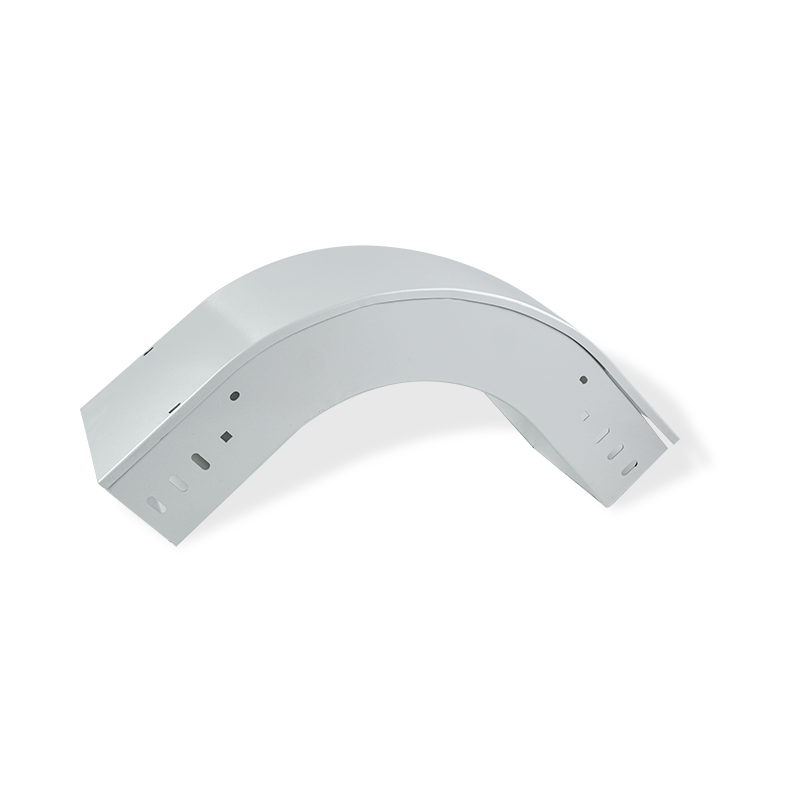

Youming Group is a manufacturing group company mainly engaged in the research and development of new high-strength cable tray
Product
- Wire Type Cable Tray Series
- Punched Type Cable Tray Series
- Trough Type Cable Tray Series
- Cable Rack Ladder Series
- Ladder Type Cable Tray Series
- Marine Cable Ladder Tray
- Strut Channel Cable Tray Series
- Accessories
- Fiber Cable Tray/Optic Cable Tray
- Photovoltaic Stents
- Stainless Steel Cable Tray Series
- Aluminum Alloy Cable Tray System
Contact information
-
No.36, Taidong Industrial Zone Shiyan Town, Dongtai City, Jiangsu Province
