


 Language
 English
 русский
 Español
 Português
 Deutsch
 عربى
عربى italiano
 Türk
Türk हिंदी
हिंदी Indonesia
 Tiếng Việt
If you need any help, please feel free to contact us

How to Choose Correctly? A Comparison and Selection Guide for Ladder Type vs. Trough Type Cable Trays
Content
- 1 Introduction: Understanding the Core Role of Cable Trays in Electrical Wiring
- 2 Ladder Type vs. Trough Type Cable Trays: Basic Definitions and Visual Differences
- 3 In-Depth Comparison: Performance and Application Scenarios of Ladder vs. Trough Trays
- 4 Authoritative Selection Guide: Making the Right Decision Based on Your Project Needs
- 5 Choosing a Reliable Manufacturer: Considerations Beyond the Product Itself
- 6 FAQ
Introduction: Understanding the Core Role of Cable Trays in Electrical Wiring
In complex industrial, commercial, and infrastructure power systems, cable trays are key components for supporting and protecting cables, ensuring their safe, orderly, and efficient operation. Choosing the right type of cable tray is not only related to the initial investment cost but also directly affects the long-term reliability, maintenance costs, and scalability of the system. Among the many types of cable trays, ladder type cable trays and trough type cable trays are the two most common. This article aims to provide you with a detailed comparison and selection guide to help you make an informed choice between ladder type cable tray manufacturers and trough type tray suppliers based on your specific project needs.
Ladder Type vs. Trough Type Cable Trays: Basic Definitions and Visual Differences
What is a Ladder Type Cable Tray?
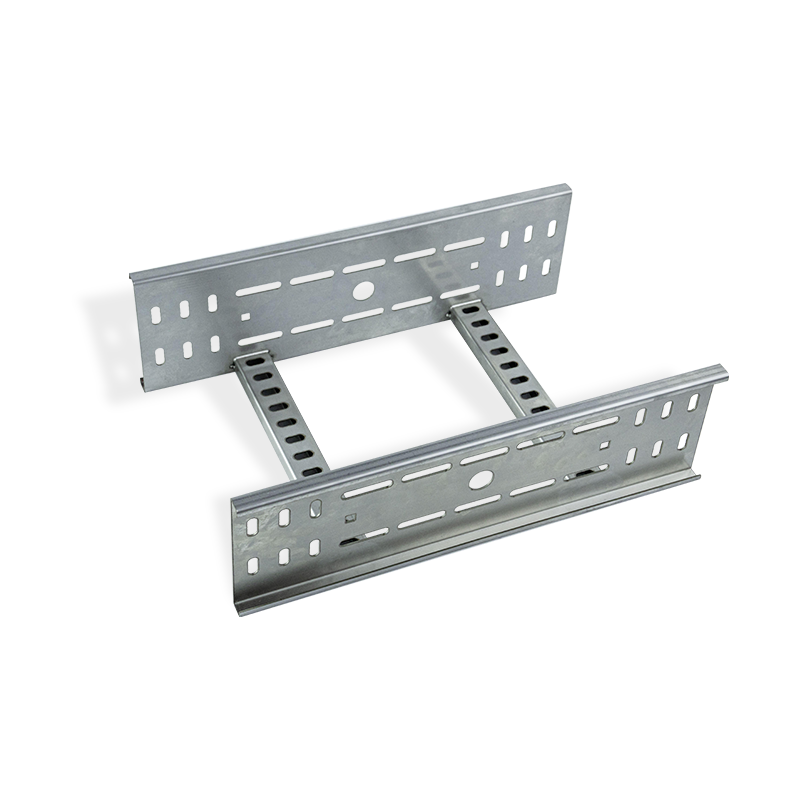
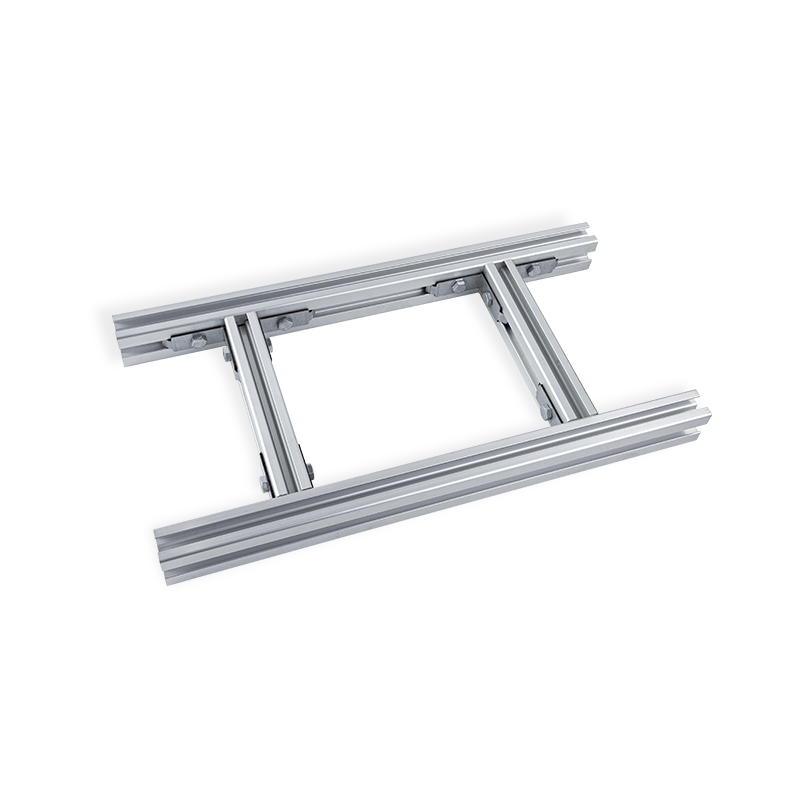
A ladder type cable tray, as the name suggests, has a structure similar to a ladder. It consists of two parallel side rails connected by a series of evenly spaced rungs. This open design is its most distinctive feature.
- Structure: Side rails + rungs, forming an open frame.
- Appearance: Ladder-like, transparent structure.
- Typical Applications: Often used for large cable installations requiring high mechanical strength and excellent ventilation and heat dissipation.
What is a Trough Type Cable Tray?
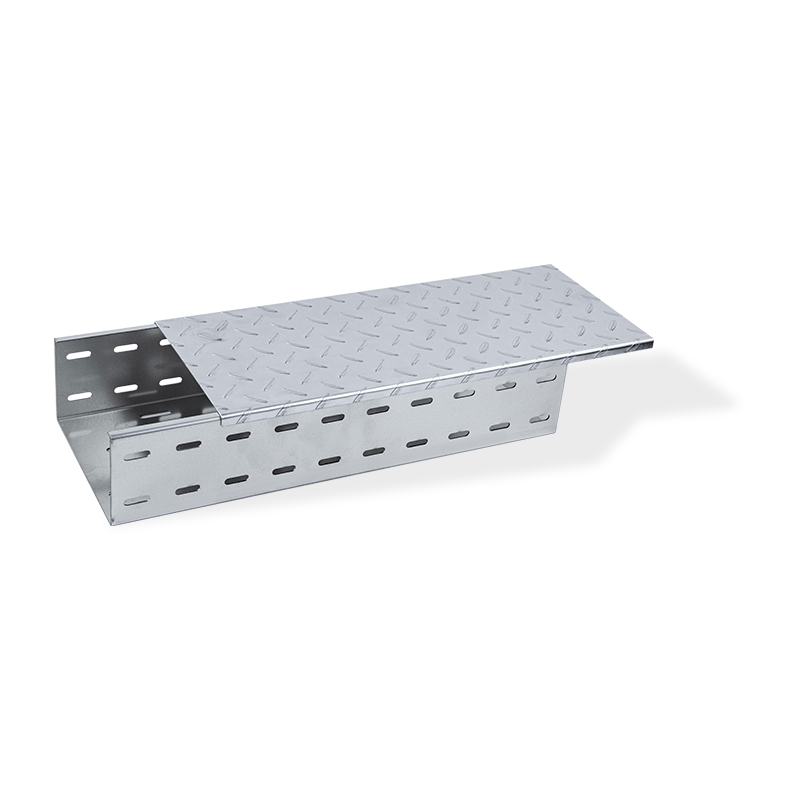
Trough type cable trays use a closed or semi-closed design, consisting of a bottom tray and two sides, usually accompanied by a removable cover. It forms a continuous channel that completely encloses the cables.
- Structure: Bottom tray + sides + (usually) cover, forming a closed channel.
- Appearance: Resembles a rectangular trough, neat appearance.
- Typical Applications: Suitable for precise cable routing environments requiring high levels of protection against dust, moisture, and interference.
In-Depth Comparison: Performance and Application Scenarios of Ladder vs. Trough Trays
Structural Design and Ventilation/Heat Dissipation Comparison
The fundamental difference in structure directly determines their ventilation and heat dissipation performance. The open structure of the ladder tray allows air to circulate freely around the cables, effectively carrying away heat generated during operation. The enclosed structure of the trough tray, while offering better protection, has relatively poor heat dissipation.
- Ladder Tray: Open structure, excellent ventilation and heat dissipation, effectively extends cable life, preferred for high heat generation applications.
- Trough Tray: Enclosed structure, limited heat dissipation, requires special attention to thermal management when cable load is high.
Cable Capacity, Routing, and Maintenance Convenience Comparison
The ease of cable installation and maintenance is an important consideration in selection. Due to its open design, cables can enter and exit the ladder tray from any position, making adding, removing, or replacing cables very convenient. Trough trays require the cover to be opened for operation, which is relatively cumbersome.
- Ladder Tray: Extremely convenient for cable installation and maintenance, supports top and side access, high flexibility.
- Trough Tray: Requires opening the cover for routing, adding/removing cables is less convenient than with ladder trays, but offers a neater appearance after installation.
Mechanical Strength and Load Capacity Comparison
When needing to support a large number of heavy cables, the mechanical strength of the tray is crucial. Typically, ladder trays made of high-quality steel excel in load-bearing capacity, which is why many heavy duty ladder type cable tray manufacturers emphasize their products' suitability for the harshest industrial environments.
| Comparison Item | Ladder Type Cable Tray | Trough Type Cable Tray |
| Load Capacity | Very high, suitable for laying many thick power cables | Medium, suitable for control cables, communication cables |
| Structural Rigidity | Excellent rigidity due to the rung structure, allows for larger spans | Relies on baseplate and cover, relatively weaker rigidity |
Protection Rating and Environmental Adaptability Comparison
The Ingress Protection (IP) rating determines the tray's resistance to external environmental factors like dust and moisture. Trough trays, with the cover installed, can provide a higher IP rating. While ladder trays are inherently open, they can achieve excellent corrosion resistance by selecting different surface treatments, such as sourcing from specialized hot dipped galvanized ladder type cable tray manufacturers, making them suitable for humid, corrosive industrial environments.
| Comparison Item | Ladder Type Cable Tray | Trough Type Cable Tray |
| Protection Rating (IP) | Relatively low (e.g., IP20), but the cables themselves may have protection | Relatively high (e.g., IP54 or above), effective against dust and water splashes |
| EMI Shielding | No shielding function | Metal enclosed structure provides certain electromagnetic shielding effect |
| Corrosion Resistance | Depends on surface treatment (e.g., hot-dip galvanizing), can be very strong | Also depends on surface treatment, internal environment is cleaner |
Authoritative Selection Guide: Making the Right Decision Based on Your Project Needs
When Should You Prioritize Ladder Type Cable Trays?
Ladder type cable trays are usually the better choice in the following scenarios. If you are an engineer or purchaser responsible for ladder type cable tray manufacturers for industrial projects, you will frequently encounter these requirements.
- Applications where high ampacity and heat dissipation are critical: Such as power plants, large data centers, heavy machinery manufacturing workshops.
- Occasions requiring frequent adjustments, maintenance, or addition/removal of cables: The open structure provides unparalleled flexibility.
- Projects with relatively limited budgets: Typically, the manufacturing cost and the quotes on a ladder type cable tray manufacturers price list are more competitive than those for equivalent trough trays.
- Installations requiring long span support: Their high structural strength allows for wider support point spacing.
When Should You Prioritize Trough Type Cable Trays?
In the following scenarios, the enclosed characteristics of trough trays offer irreplaceable advantages.
- Environments requiring high levels of protection: Such as food and pharmaceutical industries with extreme dust requirements, or outdoor/damp areas requiring splash resistance.
- Areas sensitive to electromagnetic interference: Data center server rooms, communication hubs, etc., requiring shielding from external interference.
- Public areas where aesthetics and safety are emphasized: Such as shopping malls, office buildings, the closed design hides cables, is neater, and prevents direct contact.
- Laying small quantities of control cables, communication fiber optics: Provides the utmost physical protection for delicate cables.
Choosing a Reliable Manufacturer: Considerations Beyond the Product Itself
After determining the tray type, choosing a reputable manufacturer is crucial. An excellent manufacturer can not only provide high-quality products but also offer professional technical support and customization services. For instance, when you need non-standard sizes or special accessories, finding suppliers that offer services as custom ladder type cable tray manufacturers becomes particularly important. A reliable manufacturer, such as Jiangsu Youming Group Co., Ltd., typically possesses the following qualities:
- Comprehensive Quality Certifications: Certifications like ISO 9001, ISO 14001, ISO 45001, and CE ensure stability in production processes and product quality.
- Strong R&D and Production Capability: Possesses automated production lines (e.g., automatic welding, spraying lines) and an independent testing center, ensuring production capacity and product consistency.
- Extensive Product Series: Offers various types including ladder, trough, perforated, etc., and multiple material and surface treatment options like hot-dip galvanized, stainless steel, aluminum alloy.
- Professional Technical Support: Capable of providing professional selection support including load calculation and installation guidance, helping you optimize your project plan.

FAQ
What is the maximum allowable span for a ladder type cable tray?
The maximum allowable span for a ladder type cable tray is not a fixed value; it depends on several factors, including the tray's side rail height and material thickness, the expected total cable load, and whether there will be additional dynamic loads (e.g., personnel walking). Typically, professional heavy duty ladder type cable tray manufacturers provide detailed load-span tables. Generally, for standard industrial applications, spans between 1.5 meters and 3 meters are common, but in heavy-duty applications, spans may need to be reduced to 1 meter or less for safety.
In a corrosive environment, which is more durable, ladder tray or trough tray?
In corrosive environments, the durability of the tray depends primarily on its surface treatment process, not the structure type. Both can be adapted to harsh environments with suitable anti-corrosion treatments. For example, a hot-dip galvanized ladder tray sourced from professional hot dipped galvanized ladder type cable tray manufacturers provides long-lasting cathodic protection with its zinc layer, offering strong corrosion resistance ideal for chemical plants, coastal areas, etc. Similarly, trough trays can also be hot-dip galvanized. Therefore, choosing a pallet with a high corrosion resistance grade and surface treatment is more critical than getting entangled in the type of structure.
Can I mix ladder type and trough type cable trays in the same project?
This is a very common and practical approach. In large projects, both types of rack troughs are often used in different areas based on specific needs. For example, trapezoidal rack troughs are used for main cable runs and high-heat areas to optimize load-bearing and heat dissipation. Trough-type rack troughs are used for branch lines entering the workshop or above control cabinets that require dust and interference protection. This hybrid approach meets functional requirements while optimizing costs.
What aspects does custom cable tray manufacturing usually include?
When standard products cannot meet project requirements, seeking services from custom ladder type cable tray manufacturers is necessary. Customization typically includes:
- Size Customization: Non-standard width, height, length.
- Material Customization: Such as specific grades of stainless steel, aluminum alloy, etc.
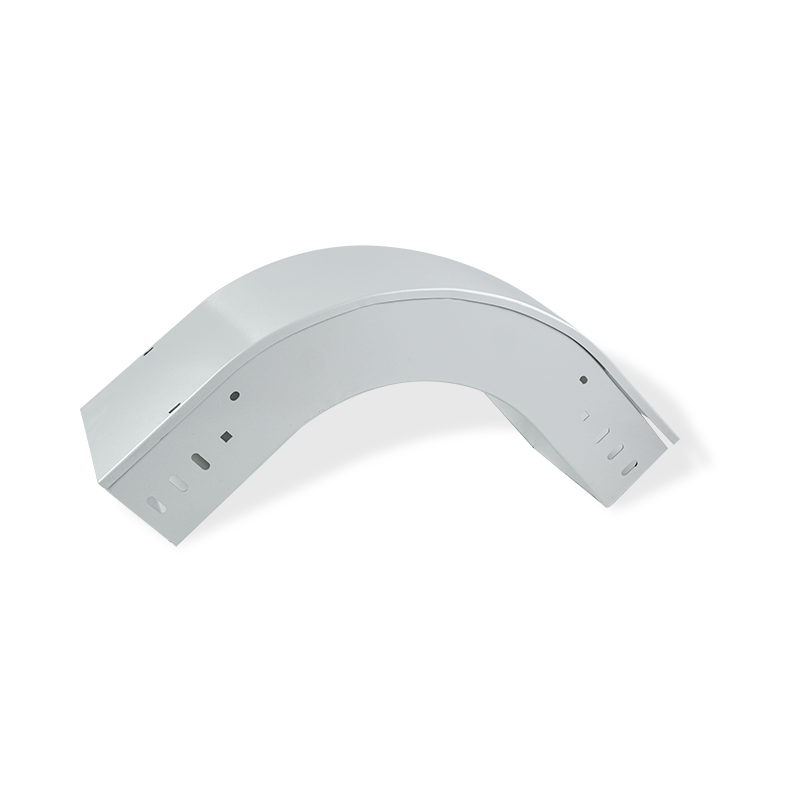
- Structural Modifications: Such as special elbows, tees, reducers, etc.
- Surface Treatment: Special color coating (for aesthetics or identification), thickened coating, etc.
- Accessory Customization: Special brackets, connection plates, and other installation accessories.

Youming Group is a manufacturing group company mainly engaged in the research and development of new high-strength cable tray
Product
- Wire Type Cable Tray Series
- Punched Type Cable Tray Series
- Trough Type Cable Tray Series
- Cable Rack Ladder Series
- Ladder Type Cable Tray Series
- Marine Cable Ladder Tray
- Strut Channel Cable Tray Series
- Accessories
- Fiber Cable Tray/Optic Cable Tray
- Photovoltaic Stents
- Stainless Steel Cable Tray Series
- Aluminum Alloy Cable Tray System
Contact information
-
No.36, Taidong Industrial Zone Shiyan Town, Dongtai City, Jiangsu Province
