


 Language
 English
 русский
 Español
 Português
 Deutsch
 عربى
عربى italiano
 Türk
Türk हिंदी
हिंदी Indonesia
 Tiếng Việt
If you need any help, please feel free to contact us

The Ultimate Guide to Trough Type Cable Trays: Selection, Installation, and Benefits
Content
In the world of cable management, the trough type cable tray stands as a versatile and robust solution for supporting and protecting electrical and data cables. Its unique design, featuring a solid bottom and side rails, makes it ideal for a wide range of applications, from industrial plants to commercial buildings. This comprehensive guide delves deep into the specifics of trough cable trays, offering professional insights to help you make an informed decision for your project. We will explore key considerations, from load capacity to material selection, ensuring your installation is both efficient and compliant with industry standards.

What is a Trough Type Cable Tray?
A trough type cable tray is a continuous rigid structure used to securely support insulated electrical cables and raceways. Unlike ladder-type trays, it features a solid or ventilated bottom that provides superior cable support and protection against dust, moisture, and falling debris. This design is particularly advantageous for horizontal runs and in environments where minimal cable sag is critical. The primary function is to provide a safe, organized, and accessible pathway for large volumes of power and control cables.
- Solid Bottom: Offers maximum protection for sensitive cables.
- Ventilated Bottom: Allows for better heat dissipation and reduced weight.
- Side Rails: Contain cables and provide structural strength.
- Modular Design: Enables easy customization and expansion of the cable run.
5 Key Long-Tail Keywords and Their Deep Dive
To better address specific user queries, we've identified five semantically related long-tail keywords with good search volume and lower competition. These phrases represent the nuanced questions professionals are asking.
trough type cable tray load capacity chart
Understanding the load capacity of a trough type cable tray is fundamental to a safe and reliable installation. The load capacity, or the maximum weight a tray can support, depends on material, gauge thickness, support spacing, and tray width. Exceeding this capacity can lead to structural failure, cable damage, and significant safety hazards. A load capacity chart is an essential reference tool for engineers and installers.
- Material Impact: Steel trays typically have a higher load capacity than aluminum ones of the same dimensions.
- Gauge Thickness: A lower gauge number (thicker metal) significantly increases the tray's strength.
- Support Span: The distance between supports is inversely proportional to the load capacity; shorter spans allow for heavier loads.
The following table provides a simplified example for a standard steel trough type cable tray. Always consult manufacturer specifications for precise data.
| Tray Width (mm) | Material Gauge | Support Span (m) | Approx. Load Capacity (kg/m) |
| 150 | 1.5 mm | 3 | 75 |
| 300 | 1.5 mm | 3 | 100 |
| 450 | 2.0 mm | 4 | 150 |
| 600 | 2.0 mm | 4 | 200 |
trough type cable tray installation guidelines
Proper installation is critical for the performance and longevity of any cable management system. Adhering to established trough type cable tray installation guidelines ensures structural integrity, safety compliance, and ease of maintenance. The process involves careful planning, precise assembly, and secure mounting.
- Pre-Installation Planning: Review engineering drawings, verify all components, and plan the routing to avoid obstructions.
- Support Structure: Install supports at intervals specified by the load capacity chart and ensure they are level and plumb.
- Assembly and Alignment: Connect tray sections securely using splice plates, ensuring smooth internal surfaces to prevent cable jacket abrasion.
- Grounding and Bonding: Properly ground the entire tray system to protect against electrical faults, as per NEC and IEC standards.
advantages of trough cable tray over ladder type
Choosing between a trough and a ladder type cable tray is a common dilemma. Each has its merits, but understanding the specific advantages of trough cable tray over ladder type can guide the selection process for your particular application. The key differentiator lies in the level of cable protection and containment.
- Superior Cable Protection: The solid bottom shields cables from falling objects, dust, and moisture, making it ideal for food processing, pharmaceutical, or dusty industrial environments.
- Ideal for Smaller Cables: Trough trays provide continuous support, preventing smaller-diameter control and data cables from sagging through the rungs of a ladder tray.
- Containment of Spills: In the event of a cable fluid leak, the trough design helps contain the spill, preventing it from dripping onto equipment or personnel below.
- Enhanced Safety: The enclosed nature reduces the risk of accidental contact with live conductors from below.
Here is a comparative overview:
| Feature | Trough Type Cable Tray | Ladder Type Cable Tray |
| Cable Support | Continuous, solid/ventilated base | At rungs, open design |
| Heat Dissipation | Good (Ventilated), Moderate (Solid) | Excellent |
| Cable Protection | High | Moderate |
| Best For | Small cables, harsh environments | Large power cables, high-heat areas |
trough cable tray weight per meter
The weight of a trough cable tray is a crucial factor in structural engineering and logistics. Knowing the trough cable tray weight per meter helps in calculating the total load on the support structure, planning for handling during installation, and estimating shipping costs. The weight varies significantly based on material and dimensions.
- Material Density: Steel trays are heavier than aluminum trays. For example, a 300mm wide steel tray might weigh 8-10 kg/m, while an aluminum equivalent weighs 3-4 kg/m.
- Tray Dimensions: Width and depth directly influence weight; a wider and deeper tray will be heavier.
- Metal Gauge: A thicker gauge (e.g., 2.0mm vs. 1.5mm) increases the weight per meter.
trough type cable tray price list
Budgeting for a project requires a clear understanding of costs. While a definitive trough type cable tray price list must be obtained from suppliers, as prices fluctuate with raw material costs, we can outline the primary factors that influence the final price. This knowledge allows for more accurate budget forecasting.
- Raw Material Cost: The price of steel, aluminum, or stainless steel is the most significant variable.
- Manufacturing Process: Trays from manufacturers with advanced automation, like Jiangsu Youming Group Co., Ltd., often offer better consistency and competitive pricing due to efficient production.
- Finish and Coating: Hot-dip galvanized trays are standard; powder coating or specialized fireproof coatings add to the cost.
- Accessories: Fittings, bends, tees, and reducers contribute to the overall system cost.

Advanced Considerations for Trough Cable Trays
Beyond basic selection and installation, several advanced factors can optimize your cable tray system's performance and longevity. These considerations are especially relevant for large-scale or critical infrastructure projects.
Material Selection: Galvanized Steel vs. Stainless Steel
The choice of material is dictated by the operating environment. For standard indoor applications, hot-dip galvanized steel offers excellent corrosion resistance at a reasonable cost. However, in highly corrosive environments such as chemical plants, coastal areas, or food processing facilities, stainless steel becomes the preferred choice due to its superior resistance to rust and chemical attack.
- Hot-Dip Galvanized Steel: Economical, good corrosion resistance, suitable for most industrial applications.
- Stainless Steel (e.g., 304, 316): Premium corrosion resistance, hygienic, ideal for harsh and corrosive environments.
- Aluminum: Lightweight, inherent corrosion resistance, non-magnetic, and excellent for data centers and telecommunications.
Customization and Accessories
A complete trough type cable tray system is more than just straight sections. A full suite of accessories is required to navigate obstacles and create a functional network. Reputable manufacturers provide a wide range of custom solutions.
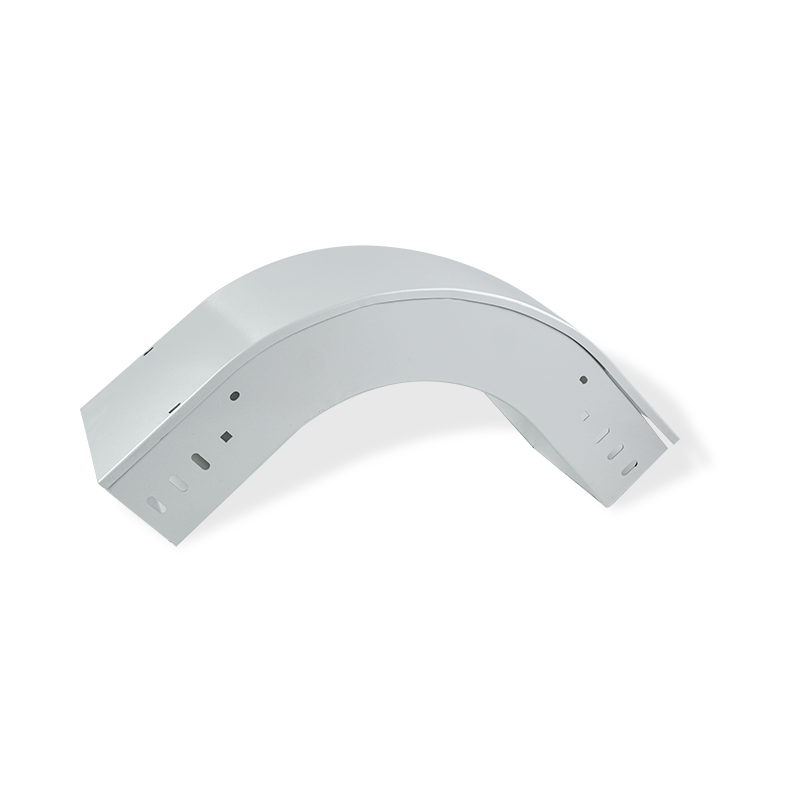
- Bends and Elbows: For changing direction (horizontal and vertical).
- Crosses and Tees: For creating branch connections.
- Reducers: For connecting trays of different widths.
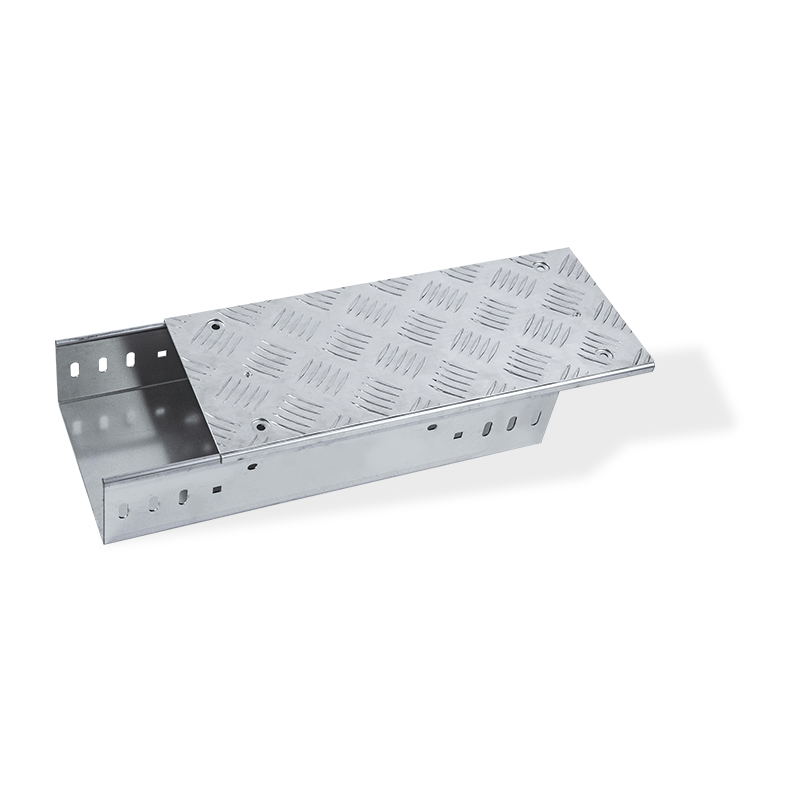
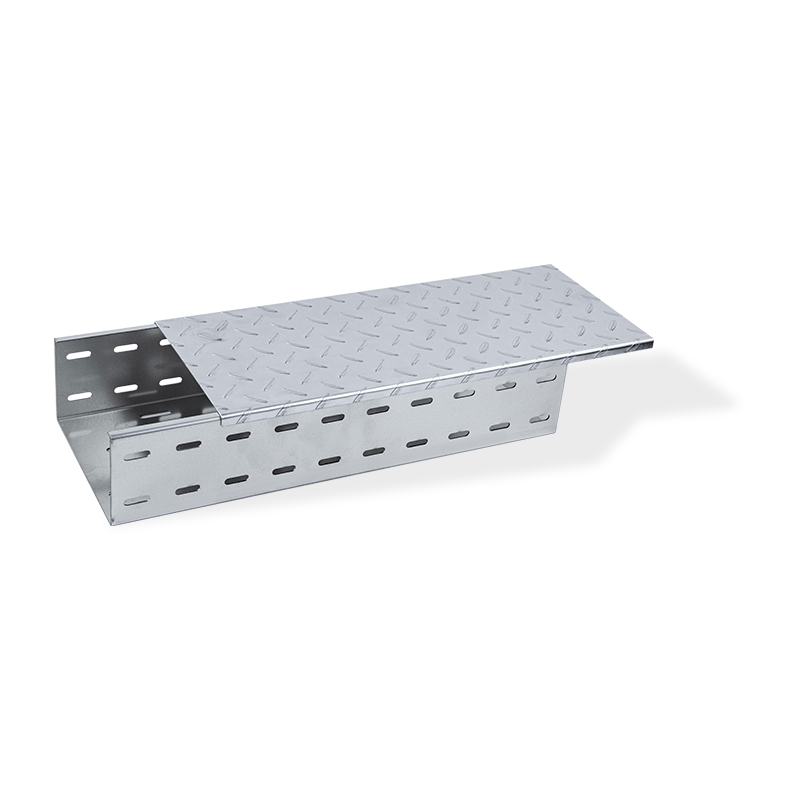
- Covers: To provide additional protection from dust, moisture, and unauthorized access.
FAQ
What is the maximum support span for a trough type cable tray?
The maximum support span is not a fixed number; it is dynamically determined by the tray's load capacity, which in turn depends on its material, width, depth, and gauge thickness. For a standard 300mm wide, 1.5mm thick steel trough type cable tray, a common support span is between 3 to 4 meters. However, for heavier cable loads or wider trays, this span must be reduced. It is absolutely critical to consult the specific load-span charts provided by the manufacturer, such as those from Jiangsu Youming Group Co., Ltd., for every project to ensure the support structure is designed safely and avoids potential overloading and sagging.
Can I mix trough and ladder type cable trays in the same run?
Yes, it is a common and often practical practice to mix tray types within a single cable run. This approach allows you to leverage the specific advantages of trough cable tray over ladder type in areas where they are most needed. For instance, you might use a ladder tray in a long, open ceiling space with large power cables for optimal heat dissipation and then transition to a trough tray as the run enters a more sensitive or hazardous area to provide superior cable protection and containment. The key is to use appropriate reducers and transitions to ensure a smooth and safe passage for the cables between the different tray types.
How do I calculate the fill capacity of a trough cable tray?
Calculating the fill capacity is governed by electrical codes and standards like the NEC (National Electrical Code). It is not merely about physical space but also about heat dissipation and future accessibility. A fundamental rule from the NEC is that the sum of the cross-sectional areas of all cables should not exceed 50% of the interior cross-sectional area of the trough type cable tray for signal or control cables. For power cables, the fill is often calculated based on cable diameter and tray width. For precise calculations, especially with mixed cable types, it is strongly recommended to use engineering software or consult the detailed guidelines in the applicable standards to ensure code compliance and prevent overheating.
What are the fire safety standards for cable trays?
Fire safety is paramount. Cable trays themselves must be manufactured from non-combustible materials like steel or aluminum. The critical aspect is the use of fire-rated cables and, if necessary, fire-stop systems at penetration points (e.g., through walls or floors). Manufacturers like Jiangsu Youming Group Co., Ltd. offer specialized trough type cable tray systems with fireproof coatings that can provide additional fire resistance, helping to contain a fire within a compartment for a specified period. Compliance with standards such as IEC 60332 (for cable flame propagation) and local building codes is mandatory for ensuring overall fire safety in the installation.

Youming Group is a manufacturing group company mainly engaged in the research and development of new high-strength cable tray
Product
- Wire Type Cable Tray Series
- Punched Type Cable Tray Series
- Trough Type Cable Tray Series
- Cable Rack Ladder Series
- Ladder Type Cable Tray Series
- Marine Cable Ladder Tray
- Strut Channel Cable Tray Series
- Accessories
- Fiber Cable Tray/Optic Cable Tray
- Photovoltaic Stents
- Stainless Steel Cable Tray Series
- Aluminum Alloy Cable Tray System
Contact information
-
No.36, Taidong Industrial Zone Shiyan Town, Dongtai City, Jiangsu Province
