


 Language
 English
 русский
 Español
 Português
 Deutsch
 عربى
عربى italiano
 Türk
Türk हिंदी
हिंदी Indonesia
 Tiếng Việt
If you need any help, please feel free to contact us

The Critical Guide to Corrosion Resistance: Selecting the Right Ladder Rack Cable Tray for Specific Environments
Content
- 1 Technical Analysis of Corrosion Protection in Ladder Rack Systems
- 2 Advanced Engineering Considerations
- 3 Frequently Asked Questions (FAQ)
- 3.0.1 1. What is the difference between "Ladder Type" and "Trough Type" trays in corrosive environments?
- 3.0.2 2. How does the NEMA load class for ladder cable trays affect my project costs?
- 3.0.3 3. Why should I choose an aluminum ladder rack cable tray specifications over steel for a coastal project?
- 3.0.4 4. Can I use a powder coated ladder rack cable tray benefits in an outdoor environment?
- 3.0.5 5. How does Jiangsu Youming Group ensure the quality of its hot dip galvanized ladder cable tray outdoor use?
Technical Analysis of Corrosion Protection in Ladder Rack Systems
1. Material Science and Environmental Suitability
The selection of a Ladder Rack Cable Tray must begin with an analysis of the atmospheric corrosivity category (C1 to C5). For instance, aluminum ladder rack cable tray specifications often highlight the material's natural oxide layer, making it ideal for marine environments where salt spray is prevalent. In contrast, carbon steel requires robust secondary treatments.
When comparing materials, engineers must weigh the strength-to-weight ratio against chemical reactivity. Aluminum offers superior portability and resistance in humid areas, while stainless steel is reserved for the most aggressive acidic or alkaline conditions.
| Material Type | Corrosion Resistance Level | Typical Application | Weight Factor |
| Aluminum Alloy | High (Self-healing) | Coastal/Marine | Lightweight |
| Stainless Steel (316L) | Extreme | Chemical Processing | Heavy |
| Carbon Steel | Low (Requires Coating) | Indoor Commercial | Moderate |
2. The Role of Hot-Dip Galvanization in Outdoor Infrastructure
For external deployments, hot dip galvanized ladder cable tray outdoor use remains the industry standard. The process involves immersing the fabricated Ladder Rack Cable Tray into molten zinc at approximately 450°C, creating a metallurgical bond. This provides "sacrificial protection," where the zinc corrodes preferentially to protect the underlying steel.
Compared to pre-galvanized sheets, hot-dip galvanizing (HDG) coats all edges, welds, and holes, ensuring no vulnerable points are left exposed to the elements. This is vital for maintaining the NEMA load class for ladder cable trays over a 25-year service life.
| Feature | Pre-Galvanized (PG) | Hot-Dip Galvanized (HDG) |
| Coating Thickness | ~20 Microns | 65 - 85+ Microns |
| Edge Protection | Exposed after cutting | Fully encapsulated |
| Longevity (Outdoor) | Short-term / Sheltered | Long-term (20+ years) |
3. Powder Coating and Aesthetic Functionality
In data centers or commercial facilities, powder coated ladder rack cable tray benefits go beyond aesthetics. The epoxy or polyester coating provides an extra layer of insulation and chemical resistance. Jiangsu Youming Group utilizes automatic spraying lines to ensure a uniform finish that prevents "zinc whiskers"—a phenomenon in plated trays that can short-circuit sensitive electronics.
While HDG is superior for raw corrosion, powder coating offers better resistance to specific chemical vapors found in indoor industrial settings.
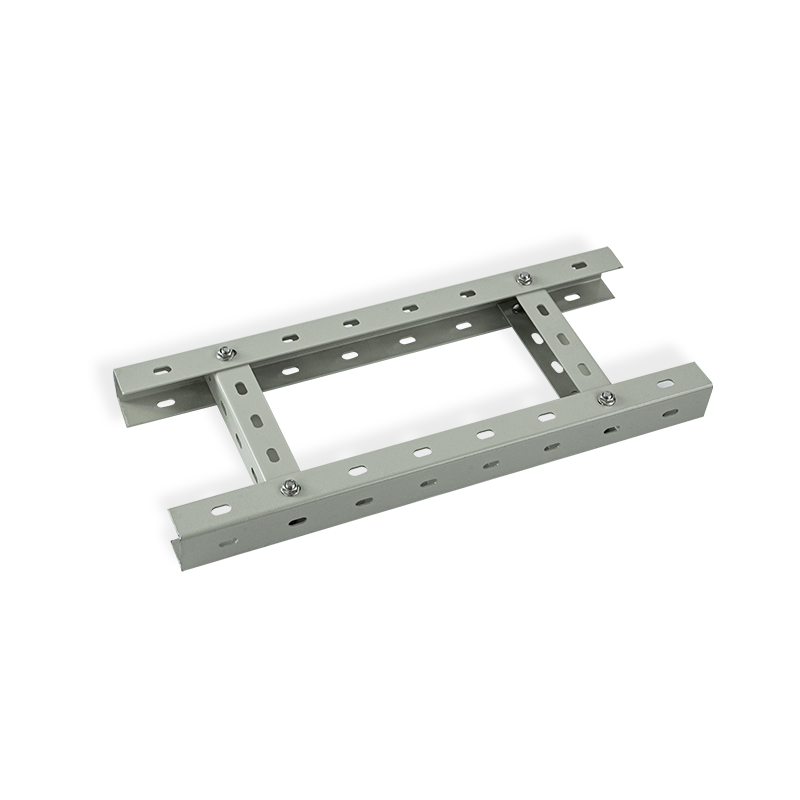
U-strunt channel cable ladder with heavy duty
4. Specialized Solutions: Corrosion Resistant Cable Tray for Chemical Plants
In environments involving heavy sulfur or chloride exposure, a standard Ladder Rack Cable Tray will degrade rapidly. A corrosion resistant cable tray for chemical plants usually utilizes 316-grade stainless steel or high-spec aluminum alloys. These systems must maintain structural integrity under the NEMA load class for ladder cable trays even when subjected to frequent chemical washdowns.
Our R&D team ensures that every Ladder Rack Cable Tray produced undergoes rigorous testing in our in-house center, verifying that the welding points and joints do not become points of galvanic corrosion.
Advanced Engineering Considerations
Load Capacity and Support Spacing
- Always verify the NEMA load class for ladder cable trays (e.g., Class 12C, 20B) to match the total cable weight plus a safety factor.
- Support spacing directly influences the deflection ratio; shorter spans increase the effective load capacity.
- For aluminum ladder rack cable tray specifications, consider the thermal expansion coefficient, which is higher than steel.
Grounding and Electrical Continuity
- A Ladder Rack Cable Tray must be properly bonded to the building's grounding system.
- Powder-coated systems require the removal of coating at connection points or the use of specialized grounding washers.
- Stainless steel has higher electrical resistance; additional copper jumpers may be required for fault current paths.
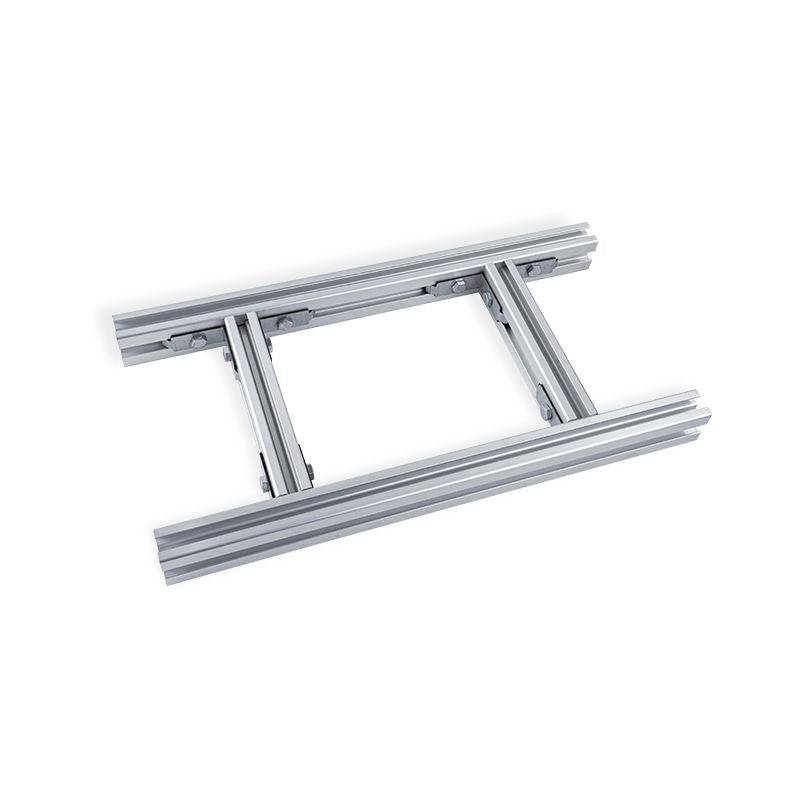
Frequently Asked Questions (FAQ)
1. What is the difference between "Ladder Type" and "Trough Type" trays in corrosive environments?
Ladder types provide maximum ventilation, which prevents heat buildup and allows moisture to evaporate quickly, reducing the time the metal stays in contact with corrosive electrolytes. Trough types provide better physical protection and EMI shielding but can trap moisture and debris if not properly drained.
2. How does the NEMA load class for ladder cable trays affect my project costs?
Choosing a higher NEMA class (e.g., Class 20C) allows for longer spans between supports (up to 20 feet). While the tray itself may be more expensive, you significantly reduce the cost of support hardware and labor, which often results in a lower total installed cost for your Ladder Rack Cable Tray system.
3. Why should I choose an aluminum ladder rack cable tray specifications over steel for a coastal project?
Aluminum is naturally resistant to salt-air corrosion because it forms a tough, transparent oxide film. Additionally, aluminum is approximately 50% lighter than steel, making installation easier on high-altitude or difficult-to-access coastal platforms without sacrificing the required NEMA load class for ladder cable trays.
4. Can I use a powder coated ladder rack cable tray benefits in an outdoor environment?
Standard powder coating is typically intended for indoor use to provide color coding or extra insulation. For outdoor use, you must specify a UV-resistant polyester powder over a galvanized base (Duplex Coating) to prevent the coating from chalking and peeling under sunlight exposure.
5. How does Jiangsu Youming Group ensure the quality of its hot dip galvanized ladder cable tray outdoor use?
We operate fully automatic production lines and an integrated testing center. Each batch of Ladder Rack Cable Tray undergoes thickness testing (magnetic method) and adhesion testing to ensure compliance with ISO and CE standards. Our ISO 9001:2015 certification guarantees that from raw material procurement to final laser cutting, every step is documented for traceability.

Youming Group is a manufacturing group company mainly engaged in the research and development of new high-strength cable tray
Product
- Wire Type Cable Tray Series
- Punched Type Cable Tray Series
- Trough Type Cable Tray Series
- Cable Rack Ladder Series
- Ladder Type Cable Tray Series
- Marine Cable Ladder Tray
- Strut Channel Cable Tray Series
- Accessories
- Fiber Cable Tray/Optic Cable Tray
- Photovoltaic Stents
- Stainless Steel Cable Tray Series
- Aluminum Alloy Cable Tray System
Contact information
-
No.36, Taidong Industrial Zone Shiyan Town, Dongtai City, Jiangsu Province
