Language
 English
 русский
 Español
 Português
 Deutsch
 عربى
عربى italiano
 Türk
Türk हिंदी
हिंदी Indonesia
 Tiếng Việt
How Cable Trays Actually Work
A cable tray is an open, rigid structural system used to route and support electrical cables, power conductors, and communication lines across buildings, industrial plants, and data centers. Unlike conduit — which encloses cables inside a sealed tube — a cable tray leaves cables exposed to ambient air, which dramatically improves heat dissipation and simplifies maintenance.
The system operates on a straightforward principle: cables rest in or on the tray, held in place by gravity, tie-wraps, or clamps. There is no pulling or threading required. Engineers route new cable simply by laying it in the tray alongside existing runs. This open architecture is why cable trays dominate in petrochemical plants, power stations, and large commercial buildings where cable volumes are high and future modifications are expected.
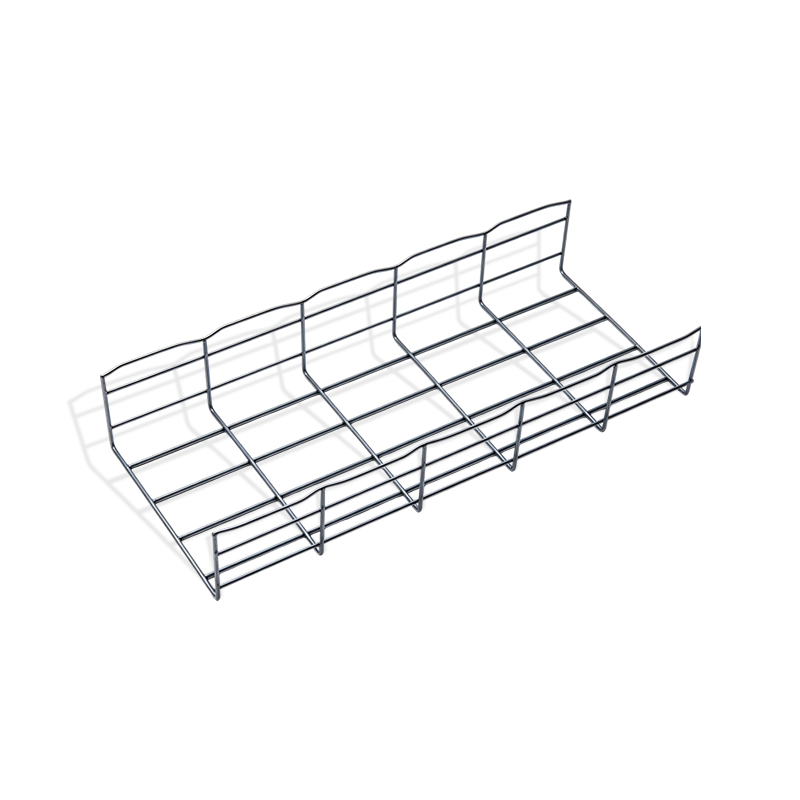
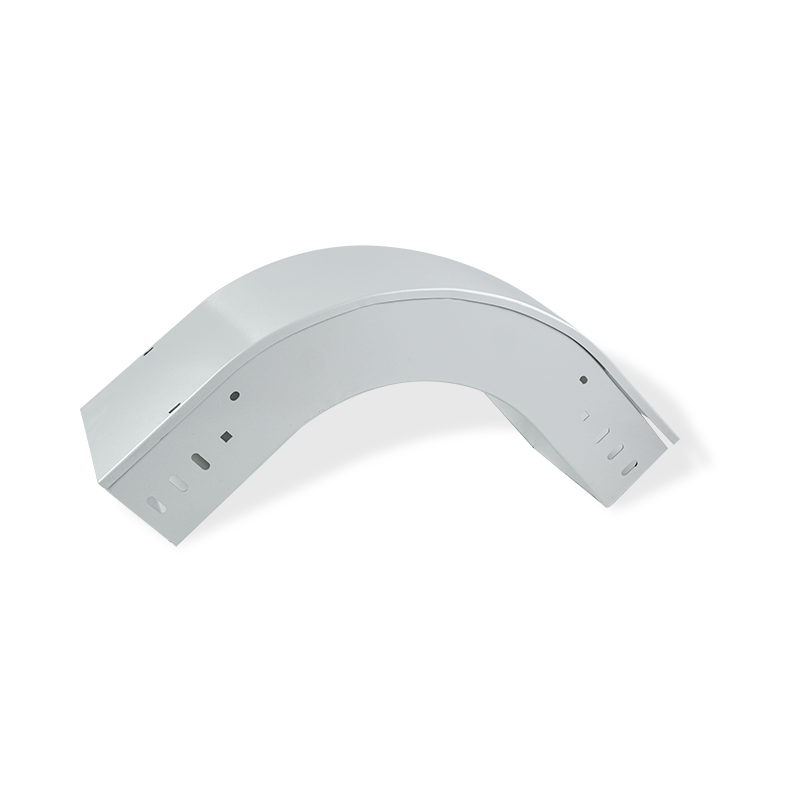
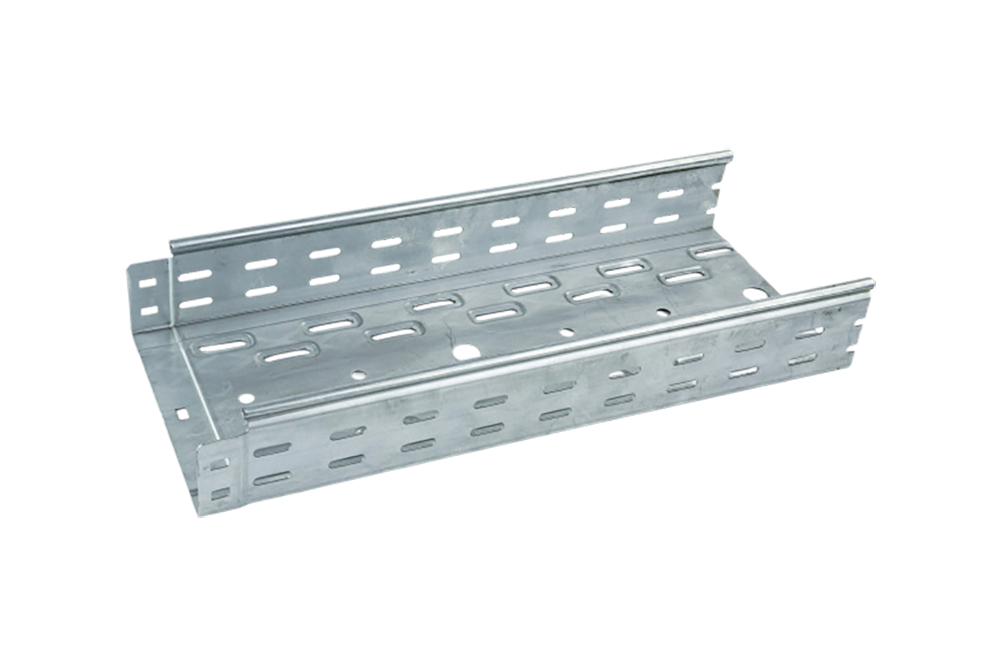
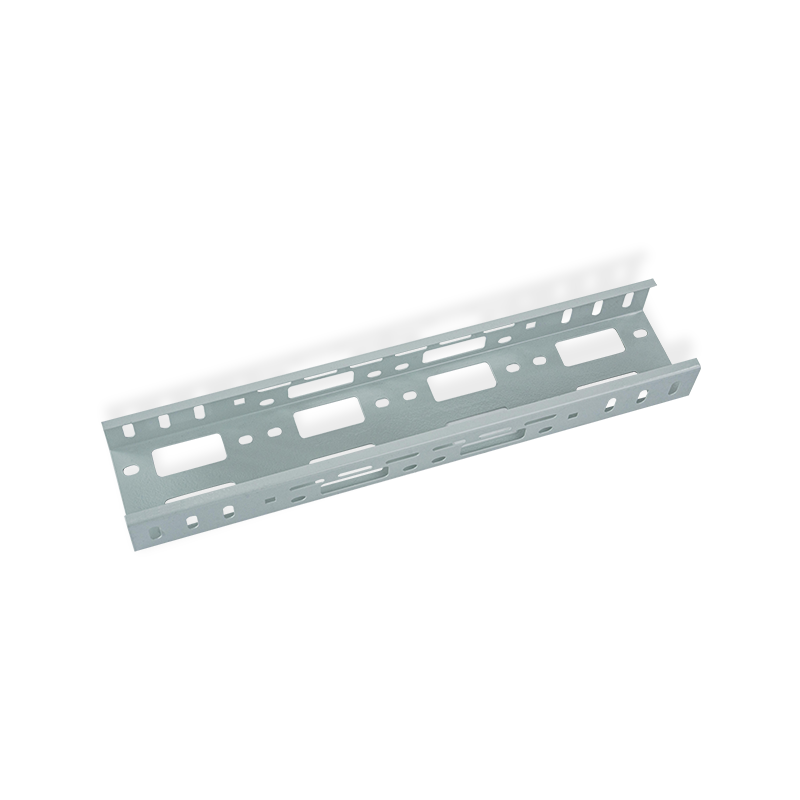
The Four Main Cable Tray Styles
How to Do Cable Tray Sizing Correctly
Correct sizing prevents overheating, code violations, and future headaches. The process has three steps: calculate cable fill area, apply a spare-capacity factor, and select standard width and depth.
Sum the cross-sectional area of every cable to be installed. For a ladder tray, NEC 392.22(A) limits fill to the product of: usable tray width (inches) × the allowable fill depth. For a 24-inch wide ladder tray with a 6-inch fill depth, maximum fill area = 24 × 6 = 144 sq in. Single-conductor cables ≥1000 kcmil follow a 50% fill rule of tray width.
Industry practice reserves 20–40% of tray fill for future cables. A project filling a 144 sq in tray to only 86 sq in (60%) is well-positioned for growth. This spare factor is not mandated by NEC but is strongly recommended by IEEE 422 and most facility engineering standards.
Standard tray widths: 6, 9, 12, 18, 24, 30, and 36 inches. Always verify the manufacturer's structural load rating (lbs/ft) against your calculated cable weight. A typical 24-in steel ladder tray rated at 150 lbs/ft can safely carry roughly 300 lbs of cable over a 2-ft span between supports — confirm actual values per manufacturer data sheets.
| Tray Width | Max Fill (Ladder, 6" depth) | Typical Application | Recommended Spare Capacity |
| 6 in (152 mm) | 36 sq in | Branch circuits, small runs | 30% |
| 12 in (305 mm) | 72 sq in | Medium power distribution | 25% |
| 24 in (610 mm) | 144 sq in | Main power feeders | 20–25% |
| 36 in (914 mm) | 216 sq in | Large industrial plants | 20% |
Can Tray Cable Be Used in Residential?
Yes, but with significant restrictions. The National Electrical Code (NEC) Article 336 covers Type TC (Tray Cable), and Section 336.10 lists permitted uses. In residential occupancies, TC cable is allowed only in specific circumstances:
- In one- and two-family dwellings where the cable is installed in a cable tray system listed for the purpose
- In accessible areas such as unfinished basements, crawl spaces, or utility rooms — not inside finished walls
- Where the tray system is continuous from origin to termination with no unsupported lengths exceeding 6 feet
Most residential inspectors will look for MC (Metal Clad) or NM-B (Romex) cable as the standard. Using TC cable in a home is technically possible but uncommon and often questioned during inspection if not meticulously documented.
Can Tray Cable Be Installed in Conduit?
Yes — NEC 336.10(7) explicitly permits TC cable to be installed in conduit, provided the cable is listed as suitable for that installation method. This is often printed directly on the cable jacket as "TC-ER" (Tray Cable — Exposed Run) or marked "Conduit" on the listing label.
Conduit installation is typically used where the tray system transitions to an enclosed area (e.g., passing through a fire-rated wall or entering a panel enclosure). The conduit protects the cable mechanically and limits exposure in areas not accessible to the open tray.
Key rules when running TC cable in conduit:
- The conduit fill limit still applies — calculate per Chapter 9, Table 1 of the NEC (40% fill for 3 or more conductors)
- The TC cable jacket counts as part of the cable diameter when calculating conduit fill
- Transitions from tray to conduit must use a listed fitting or adapter to protect against abrasion at the entry point
- Length of conduit run is not specifically restricted, but heat buildup in long sealed runs requires ampacity de-rating per NEC 310.15
When transitioning TC cable from open tray into EMT conduit, use a listed tray-to-conduit fitting. A bare conduit edge can abrade the TC jacket under vibration, causing insulation failure over time — a common and often overlooked failure mode in industrial facilities.
Cable Tray Materials at a Glance
Grounding the Cable Tray System
A metallic cable tray system can serve as an Equipment Grounding Conductor (EGC) under NEC 392.60, but only when the tray is constructed of steel or aluminum and meets the minimum cross-sectional area requirements in Table 392.60(A). This eliminates the need for a separate ground wire in many installations — a significant material and labor saving.
| Largest Phase Conductor in Tray | Min. Steel Tray Cross-Section | Min. Aluminum Tray Cross-Section |
| Up to 250 kcmil | 0.40 sq in (258 mm²) | 0.20 sq in (129 mm²) |
| 251–500 kcmil | 0.70 sq in (452 mm²) | 0.35 sq in (226 mm²) |
| 501–750 kcmil | 1.00 sq in (645 mm²) | 0.50 sq in (323 mm²) |
| Over 750 kcmil | Separate EGC required | Separate EGC required |
Sections spliced with expansion joints or non-conductive fittings must be bonded with a listed bonding jumper. Continuity is verified with a low-resistance ohmmeter — typical acceptable resistance across a bond is under 0.1 ohm.
Putting It All Together
A well-designed cable tray system reduces installation time, simplifies future modifications, and — when properly sized and grounded — meets all NEC requirements for power, control, and data circuits. Tray cable can be used in residential settings under defined conditions, and it runs cleanly through conduit when properly listed. Whether you are sizing a 36-inch ladder tray for a refinery or specifying wire mesh for a data hall, the principles are the same: calculate fill accurately, reserve spare capacity, verify load ratings, and never skip grounding continuity testing.