


 Language
 English
 русский
 Español
 Português
 Deutsch
 عربى
عربى italiano
 Türk
Türk हिंदी
हिंदी Indonesia
 Tiếng Việt
If you need any help, please feel free to contact us

Wire Cable Tray: Types, Uses, Burial & Conduit Rules
Content
Quick Answer
A wire cable tray is an open, rigid support system that organizes and routes electrical cables through commercial and industrial facilities. Tray cable (TC) is a multi-conductor cable rated for use inside these systems. It can be buried only when specifically rated TC-ER-JP, and it generally does not require conduit when installed within a listed cable tray — but exceptions apply.
Foundation
What Exactly Is a Wire Cable Tray?
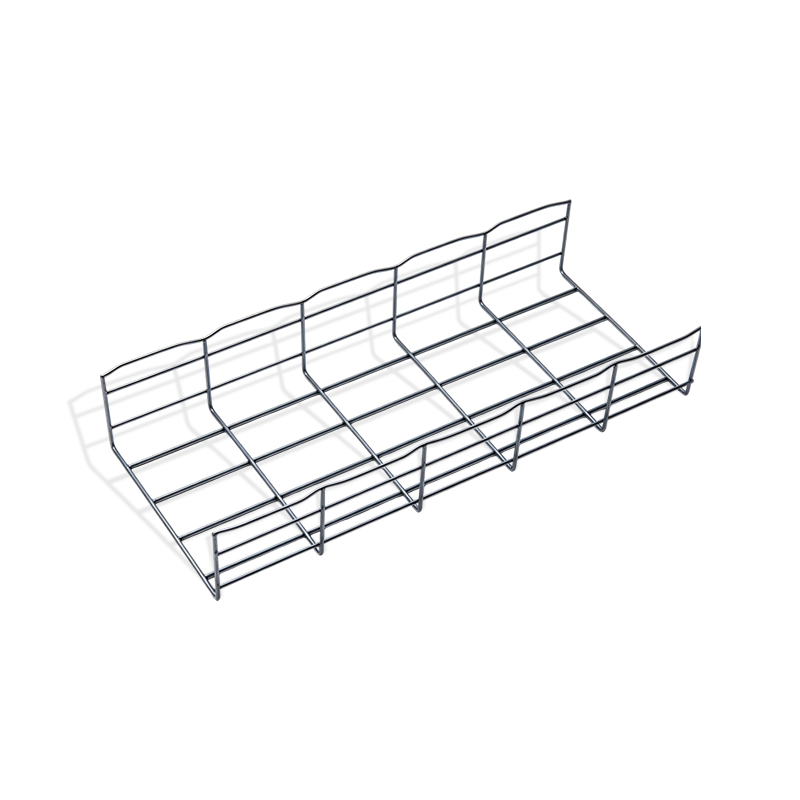
A wire cable tray — often called a wire mesh tray or wire basket tray — is fabricated from welded steel wire in a grid pattern, forming an open-bottomed channel that suspends cables above ceilings, along walls, or beneath raised floors. Unlike solid-bottom trays, the open mesh allows passive ventilation, which reduces heat buildup in densely routed runs.
Wire mesh trays are governed by NEMA VE 1 (Metal Cable Tray Systems) and IEC 61537 internationally. Standard widths run from 50 mm to 600 mm (2 in. to 24 in.), with depths from 25 mm to 150 mm (1 in. to 6 in.). Load ratings vary by wire gauge and span — a 100 mm deep, 300 mm wide galvanized wire tray at a 1.5 m span typically carries 15–30 kg/m uniformly distributed load.
Four finish types dominate the market:
Electro-Galvanized
Thin zinc coating (5–10 microns). Suitable for dry indoor environments. Most economical option for data centers and office cable management.
Hot-Dip Galvanized
85–100 micron zinc layer. Rated for outdoor, humid, and mildly corrosive industrial environments. Standard for manufacturing plants and warehouses.
Stainless Steel (304 / 316)
316 grade withstands chloride-rich and chemical environments — food processing, coastal installations, pharmaceutical plants. Price premium of 3–4x over galvanized.
PVC / Epoxy Coated
Color-coded by system (power vs. data vs. AV) and adds moderate chemical resistance. Popular in healthcare facilities with color-coded infrastructure standards.
Cable Type
What Type of Wire Is Tray Cable?
Tray cable (TC) is a factory-assembled, multi-conductor cable classified under NEC Article 336 and UL 1277. It is specifically engineered for use in cable trays, conduit, direct burial (certain variants), and open wiring in industrial settings. The defining characteristic is its heavy-duty outer jacket — typically PVC or chlorinated polyethylene (CPE) — rated to withstand the mechanical stress of long horizontal runs without continuous support.
TC cables carry a minimum of two insulated conductors, ranging from 18 AWG to 1000 kcmil, and their voltage rating is 600V or 1000V. The table below compares tray cable subtypes:
| Designation | Key Feature | Typical Application | Direct Burial |
|---|---|---|---|
| TC | Standard multi-conductor tray cable | Power & control in industrial trays | No |
| TC-ER | Exposed Run — no conduit needed outside trays | Runs between tray and equipment | No |
| TC-ER-JP | Jacketed, power-limited, burial-rated | Underground feeder to remote panels | Yes |
| TC-FPLR | Fire alarm tray cable, riser-rated | Fire detection wiring in vertical shafts | No |
| TC Shielded | Foil or braid over individual pairs | Instrumentation, signal cables in EMI environments | No |
Instrumentation TC cables — used heavily in oil and gas facilities — often feature individual shielded pairs plus an overall shield, giving two levels of EMI protection. These are distinct from standard power TC and must be selected based on the signal type and interference environment.
System Purpose
What Is the Purpose of a Cable Tray?
Cable trays serve five concrete engineering functions that conduit systems cannot replicate cost-effectively at scale:
01
Organized, accessible routing
Trays group cables by system type — power, data, control — along defined pathways. Maintenance teams can identify, add, or remove cables without breaking into conduit runs. In a 50,000 sq ft manufacturing facility, this cuts planned maintenance time by an estimated 30–40% compared to conduit-only installations.
02
Thermal management
NEC 310.15 requires cable ampacity derating when cables are bundled in conduit. Open wire trays permit natural convection, which significantly reduces derating requirements. A 4/0 AWG THHN in a conduit with 9 conductors requires a 0.70 derating factor; the same conductor in an open tray may need only 0.85 — allowing a smaller conductor size to carry the same load.
03
Installation cost reduction
Tray systems eliminate the labor of cutting, threading, and bending conduit. Industry estimates place tray installation at 25–50% lower labor cost per linear foot versus rigid conduit in long, straight horizontal runs — the savings are greatest in large warehouses and data centers.
04
Scalability and future-proofing
Adding new circuits to a tray requires only pulling cable — no additional conduit pathways, no demolition. Facilities that anticipate expansion (manufacturing lines, server rooms) standardize on tray systems to preserve that flexibility. NEC 392.22 specifies fill limits (typically 50% of tray cross-sectional area for single-conductor cables) so future capacity is preserved by design.
05
Mechanical protection without enclosure
Wire mesh trays protect cables from incidental contact, tools, and overhead debris while maintaining visual inspectability. In pharmaceutical cleanrooms, this visibility is a regulatory advantage — cable routing can be verified in audits without removing covers or opening conduit boxes.
Burial Rules
Can Tray Cable Be Buried?
Standard TC cable cannot be directly buried. Only cables carrying the TC-ER-JP listing or an additional direct-burial (DB) rating on their UL label are permitted underground without conduit. This is a common and costly field error — general-purpose TC is often mistakenly used underground, resulting in jacket degradation within 2–5 years and potential insulation failure.
When burial is required, the applicable rules under NEC Article 300 and Table 300.5 specify minimum cover depths:
| Installation Condition | Minimum Cover Depth | Cable Type Permitted |
|---|---|---|
| Direct burial under general areas | 600 mm (24 in.) | TC-ER-JP (burial-rated) |
| Under 50mm concrete slab | 450 mm (18 in.) | TC-ER-JP or RMC conduit |
| Under streets, roads, driveways | 600 mm (24 in.) minimum | Rigid conduit strongly preferred |
| Under residential driveways only | 300 mm (12 in.) | TC-ER-JP in conduit |
| Airport runways and taxiways | 450 mm (18 in.) | Rigid conduit required |
For burial in corrosive soils — common in coastal areas, areas with high sulfur content, or near industrial waste sites — even TC-ER-JP should be installed inside non-metallic conduit (PVC Schedule 40 or 80) as an additional layer of jacket protection. A soil pH below 5.5 or above 9.0 is generally considered aggressive for bare jacket materials.
Conduit Requirements
Does Tray Cable Need to Be in Conduit?
Inside a listed cable tray, standard TC cable does not require conduit — the tray itself serves as the mechanical protection system. This is explicitly permitted by NEC 392.10. However, conduit becomes mandatory in five specific situations:
Vertical risers and drops from tray to equipment: Where TC cable leaves the tray and runs exposed to physical damage — particularly the first 1.8 m (6 ft) from the floor — conduit protection is required unless the cable is TC-ER rated. TC-ER may run exposed for distances up to 1.8 m without conduit per NEC 336.10(7).
Through walls, floors, and fire-rated assemblies: Penetrations of fire-rated barriers require the cable to transition into conduit and use listed fire-stop fittings. NFPA 101 Life Safety Code mandates that any cable penetration of a fire barrier maintain the barrier's hourly rating.
Hazardous locations (Class I, II, III): NEC Articles 501–503 require conduit — typically explosion-proof rigid metal conduit (RMC) — in classified hazardous areas. TC cable is not permitted as the primary wiring method in Class I Division 1 locations regardless of tray availability.
Underground and direct-burial runs: As covered above, only TC-ER-JP is burial-rated, and conduit adds a required protection layer in aggressive soil conditions or under paved surfaces.
Where the AHJ (Authority Having Jurisdiction) requires it: Local amendments to the NEC — common in California, New York City, and Chicago — may impose conduit requirements beyond federal code. Always verify local electrical codes before finalizing tray-only designs.
Specification Guide
Selecting the Right Wire Cable Tray for Your Application
Choosing between tray types comes down to environment, load, and cable mix. The summary below aligns tray type to application scenario:
| Tray Type | Best For | Key Advantage | Limitation |
|---|---|---|---|
| Wire Mesh (Basket) | Data centers, offices, cleanrooms | Ventilation, light weight, fast install | Lower load capacity vs. solid-bottom |
| Solid-Bottom | Chemical plants, outdoor exposed runs | Shields cables from drips and debris | Heat accumulates; requires derating |
| Ladder (Rung) Tray | Heavy power cables, large conduit transitions | Very high load rating (up to 900 kg/m) | Not suited for small instrumentation cables |
| Perforated Channel | Branch circuits, light industrial | Low cost, easy to route small cables | Limited depth and width options |
| Stainless Wire Mesh | Food & beverage, pharma, coastal outdoor | Corrosion immunity, cleanable surface | High cost; requires stainless hardware throughout |
For mixed power and data installations, best practice is to run separate trays with a minimum 150 mm (6 in.) vertical separation between power and low-voltage signal trays, or use a divided tray with a grounded metal separator. This prevents electromagnetic interference (EMI) that can degrade data signals — a concern particularly in facilities with variable frequency drives (VFDs) or large motor loads nearby.
Explore the full range of wire cable tray configurations to match your specific load, environment, and installation code requirements.
Takeaway
Wire cable trays reduce installation cost, improve thermal performance, and make electrical infrastructure scalable. Tray cable (TC) is the matched wiring method — but only TC-ER-JP is burial-rated, conduit is still required at hazardous locations and below-tray transitions, and local code always takes precedence over NEC minimums. Specify finish, load rating, and cable fill at the design stage to avoid compliance and rework costs downstream.
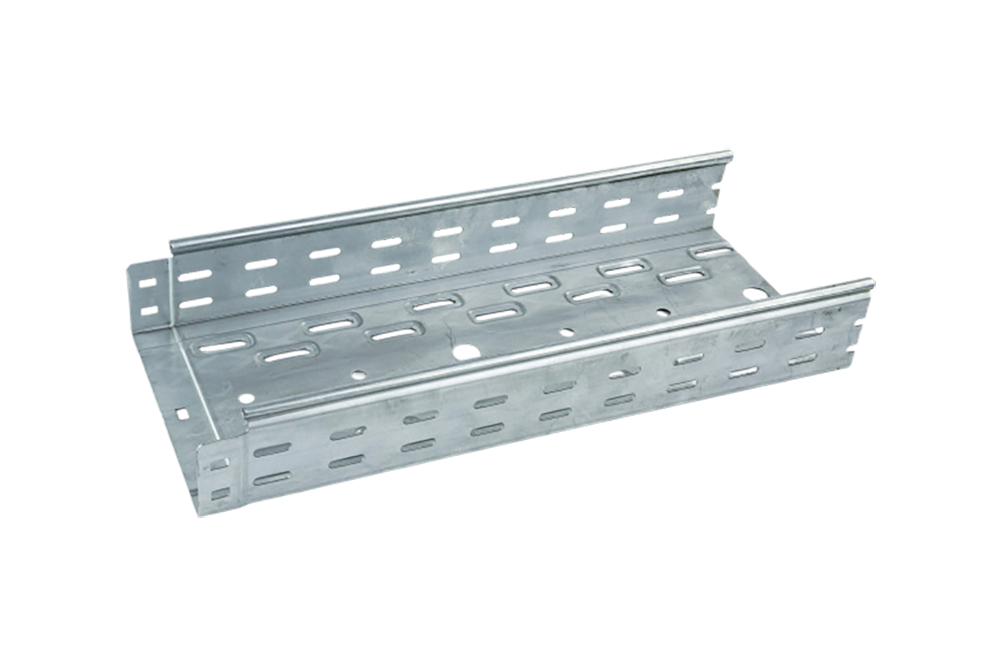

Youming Group is a manufacturing group company mainly engaged in the research and development of new high-strength cable tray
Product
- Wire Type Cable Tray Series
- Punched Type Cable Tray Series
- Trough Type Cable Tray Series
- Cable Rack Ladder Series
- Ladder Type Cable Tray Series
- Marine Cable Ladder Tray
- Strut Channel Cable Tray Series
- Accessories
- Fiber Cable Tray/Optic Cable Tray
- Photovoltaic Stents
- Stainless Steel Cable Tray Series
- Aluminum Alloy Cable Tray System
Contact information
-
No.36, Taidong Industrial Zone Shiyan Town, Dongtai City, Jiangsu Province
