


 Language
 English
 русский
 Español
 Português
 Deutsch
 عربى
عربى italiano
 Türk
Türk हिंदी
हिंदी Indonesia
 Tiếng Việt
If you need any help, please feel free to contact us

Wire Cable Tray: Uses, Types, Raceway Rules & Bending Guide
Content
Wire cable tray is an open structural support system for routing and protecting electrical cables in commercial, industrial, and increasingly residential applications. Tray cable can be used in residential settings under specific NEC conditions. Cable tray is classified as a raceway under the NEC. Wire mesh cable tray can be bent on-site using simple hand tools without cutting.
What is tray cable wire?
Tray cable (TC cable) is a factory-assembled multi-conductor cable specifically listed and rated for installation in cable tray systems. It is defined under NEC Article 336 and UL 1277, and it differs from standard building wire in several important ways:
- It contains two or more insulated conductors, often with an overall jacket of PVC, nylon, or flame-retardant thermoplastic.
- The outer jacket is rated to withstand the mechanical abuse, UV exposure, and oil or moisture that open cable tray environments present.
- It is available in control, power, and instrumentation configurations — commonly used in manufacturing plants, data centers, petrochemical facilities, and utilities.
- Conductors range from 18 AWG (control) to 1000 kcmil (power), with voltage ratings typically at 600 V or 1000 V.
Common tray cable designations include TC-ER (Exposed Run, suitable for direct exposure in cable tray without conduit), TC-ER-JP (with additional jacket and UV protection), and PLTC (Power-Limited Tray Cable, for low-energy instrumentation). The "ER" suffix is critical — it allows the cable to run exposed between cable tray and equipment without the need for a conduit transition, saving significant labor cost on large industrial projects.
Tray cable is distinct from THWN or XHHW building wire in that building wire requires a raceway enclosure (conduit, wireway, or cable tray) at all times, whereas TC-ER cable can bridge short exposed sections under NEC 336.10(7).
Can you use tray cable in residential?
Yes — but with important conditions. NEC Article 336.10 lists the permitted uses for tray cable, and residential applications are allowed when the following criteria are met:
- Type TC or TC-ER cable must be listed for the application and installed per NEC 336.10.
- In one- and two-family dwellings, TC cable is permitted only in cable trays. It cannot be run loose through walls or concealed spaces the way NM (Romex) cable can.
- In multifamily dwellings, TC cable is accepted in cable trays, conduit, or as open wiring where the voltage does not exceed 150 V to ground and conductors are not smaller than 12 AWG — per NEC 336.10(6).
- TC-ER cable may run between the tray and a connected piece of equipment for a maximum of 1.8 m (6 ft) without additional protection, provided it is not subject to physical damage.
In practice, cable tray and TC cable appear most often in residential solar installations, where homeowners and installers route PV wiring through exposed tray in garages, attics, or mechanical rooms. They also appear in high-end custom homes with structured wiring rooms, home automation systems, and exposed-industrial interior aesthetics.
For most standard residential new construction, NM-B (Romex) remains dominant because it is cheaper and faster to install without a tray system. However, for renovation projects with accessible ceilings or exposed-beam architecture, cable tray with TC cable offers a clean, organized, and code-compliant alternative that also makes future adds and changes significantly easier.
Is cable tray a raceway?
Yes — under the NEC, cable tray is classified as a raceway. NEC Article 392 governs cable tray systems, and NEC 100 defines a raceway as "an enclosed channel of metallic or nonmetallic materials designed expressly for holding wires, cables, or busbars." Cable tray meets this definition.
This classification has several practical consequences:
| Consequence | What it means on the job |
| Grounding continuity required | Metallic cable tray must be bonded and can serve as an equipment grounding conductor (EGC) if sized per NEC 392.60 |
| Fill calculations apply | NEC 392.22 limits how many cables can occupy a tray based on tray width and cable diameter — prevents overheating |
| Permitted cable types restricted | Not all cables are listed for cable tray — only TC, MC, MI, NM, AC, PLTC, ITC, and similar listed types may be installed per NEC 392.10 |
| Covers may be required | Where subject to physical damage or in wet locations, covers or solid-bottom trays may be required by the AHJ |
| Support spacing governed | NEC 392.30 requires supports at intervals not exceeding manufacturer specifications, typically 1.5 m (5 ft) for most ladder and mesh tray |
It is worth noting that cable tray differs from conduit and wireways in one key way: it is open, not enclosed. This openness improves heat dissipation (which is why fill rules are less restrictive than conduit by volume) but requires that all cables installed in it be independently rated for tray use.
Some engineers and inspectors informally treat cable tray as simply a "support system" rather than a raceway — this is technically incorrect under the NEC and can lead to improper cable selection, grounding omissions, and failed inspections. Always treat cable tray as a raceway from a code-compliance standpoint.
How to bend wire mesh cable tray
Wire mesh cable tray (also called wire basket tray or wire duct) is the most flexible cable tray type for field fabrication. Unlike ladder tray or solid-bottom tray, wire mesh can be bent, cut, and shaped on-site with basic hand tools — no special bending equipment required.
Tools you need
- Angle grinder or bolt cutters (for cutting longitudinal wires)
- Flat-nose or lineman's pliers
- Measuring tape and marker
- File or grinder for deburring cut ends
- Optional: bending jig or wooden form block for consistent radius
Horizontal bend (flat turn)
- Mark the bend centerline across the tray base using a marker.
- Identify the inside radius wires (bottom of tray) — these need to be cut to allow the tray to compress at the bend.
- Using bolt cutters or an angle grinder, cut the bottom longitudinal wires at the bend mark — typically every other wire for a 45° bend, or all wires for a 90° bend.
- Do not cut the side rails — they carry the structural load and must remain continuous through the bend.
- Gradually bend the tray by hand to the required angle. For a 90° turn, aim for a minimum inside radius of 1× the tray width (e.g., a 300 mm wide tray should have at least a 300 mm inside radius).
- Use pliers to re-close or crimp any cut wire ends against the tray frame to prevent cable snagging.
- Deburr all cut wire ends with a file — exposed wire ends are a cable jacket abrasion hazard.
Vertical bend (rise or drop)
- Mark the bend centerline on the tray side rails.
- Cut the side rail wires on the inside of the bend (the compression side) at the bend mark.
- The base wires remain uncut — they become the tension side and hold the bend shape.
- Bend upward or downward to the required angle and crimp cut ends flush.
- For drops exceeding 300 mm, use a factory-fabricated vertical tee or elbow fitting instead of field bending — this maintains load rating and aesthetics.
Key bending rules and limits
| Parameter | Guideline |
| Minimum inside bend radius | Equal to tray width for horizontal bends; 1.5× tray width for vertical bends carrying heavy cables |
| Maximum field bend angle | 90° — steeper angles compromise structural integrity; use fittings beyond 90° |
| Wire ends after cutting | Must be deburred and capped or crimped — sharp ends damage cable jackets and are a safety hazard |
| Load capacity after bending | Field bends reduce the tray's rated fill load; do not hang additional fixtures or supports from a bent section |
| Tray width above 600 mm | Recommend factory fittings rather than field bending — hand bending wide tray produces uneven radius and structural distortion |
When to use factory fittings instead
Field bending is practical for minor routing adjustments — small horizontal sweeps, gentle rises, or short drops. For the following scenarios, order factory-fabricated fittings instead:
- Tray width exceeds 450–600 mm
- The installation is in a corrosive or classified (hazardous) location where cut wire ends may accelerate corrosion or create ignition risk
- The bend will support significant cable weight (power feeders above 4/0 AWG)
- The installation requires a consistent, inspectable aesthetic (clean rooms, data centers, exposed architectural interiors)
- Multiple identical bends are needed — factory fittings are faster and more consistent when quantity justifies the cost
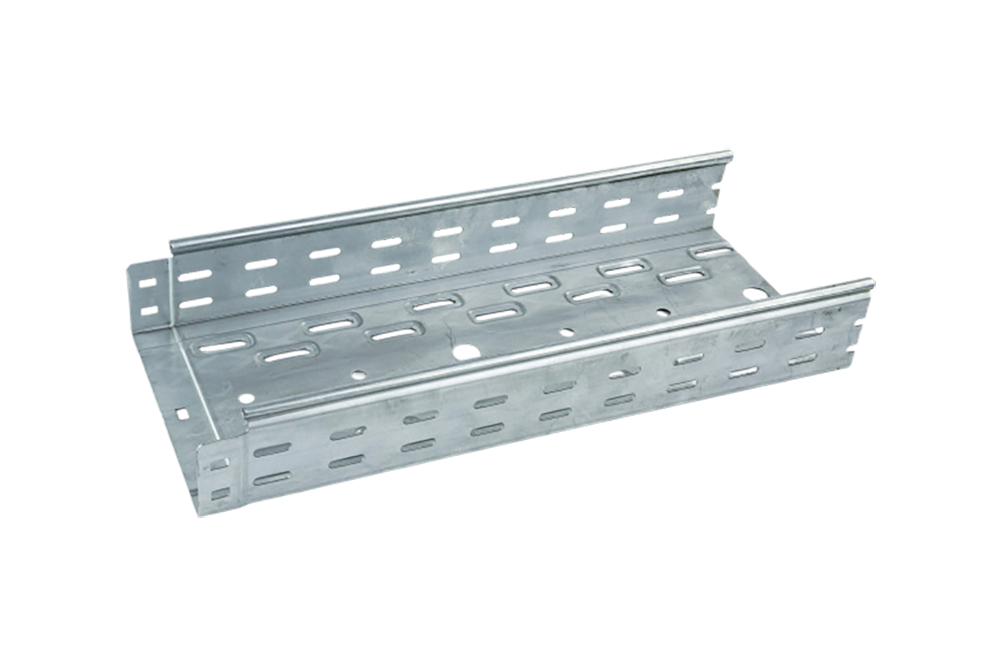
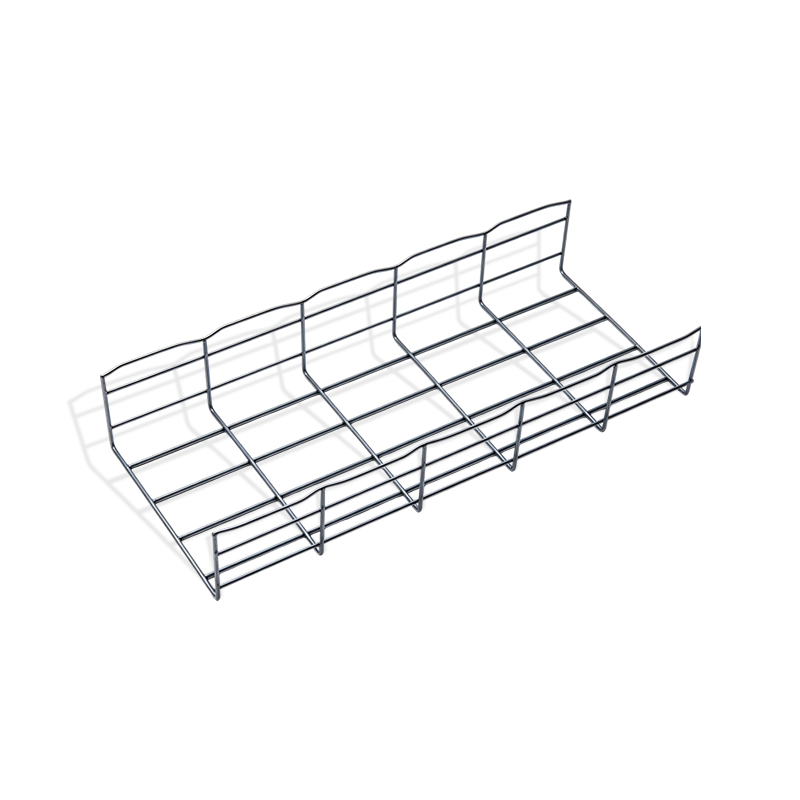

Youming Group is a manufacturing group company mainly engaged in the research and development of new high-strength cable tray
Product
- Wire Type Cable Tray Series
- Punched Type Cable Tray Series
- Trough Type Cable Tray Series
- Cable Rack Ladder Series
- Ladder Type Cable Tray Series
- Marine Cable Ladder Tray
- Strut Channel Cable Tray Series
- Accessories
- Fiber Cable Tray/Optic Cable Tray
- Photovoltaic Stents
- Stainless Steel Cable Tray Series
- Aluminum Alloy Cable Tray System
Contact information
-
No.36, Taidong Industrial Zone Shiyan Town, Dongtai City, Jiangsu Province
