Language
 English
 русский
 Español
 Português
 Deutsch
 عربى
عربى italiano
 Türk
Türk हिंदी
हिंदी Indonesia
 Tiếng Việt
Marine cable trays are purpose-built support systems designed to route and protect electrical cables in harsh, corrosive, and wet marine environments — including offshore platforms, shipyards, vessels, and coastal industrial facilities. If you're deciding on a cabling system for marine use, the short answer is: yes, tray cable can be waterproof (when rated accordingly), yes it can run in conduit, and marine cable serves critical power and control functions where standard land-based wiring would fail.
What Is a Marine Cable Tray and Why Does It Matter?
A marine cable tray is a rigid structural system — typically fabricated from hot-dip galvanized steel, stainless steel (316L), aluminum alloy, or GRP (glass-reinforced plastic) — used to support and organize cable bundles aboard ships, oil rigs, subsea platforms, and port infrastructure. Unlike standard industrial cable trays, marine-grade versions must comply with classification society standards such as DNV GL, ABS, Lloyd's Register, and IEC 60092.
The distinction matters because marine environments expose cabling systems to:
- Saltwater spray and humidity exceeding 95% RH
- Continuous mechanical vibration from engines and waves
- Temperature cycling from -40°C to +80°C in some applications
- Aggressive chemical exposure including fuel, hydraulic fluid, and biofouling agents
- Fire risk in enclosed compartments requiring flame-retardant cable tray systems
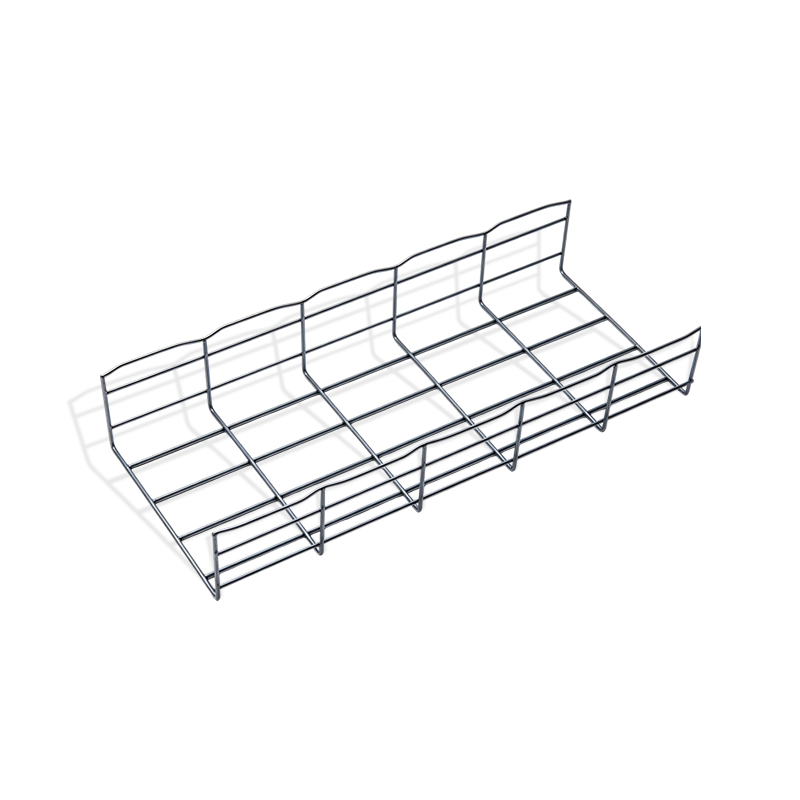
Marine cable ladder trays — featuring two side rails connected by rungs — are the most common type, offering excellent airflow, easy cable entry, and high load-bearing capacity per linear meter. Perforated tray and solid-bottom tray variants are also used depending on the application zone.
Is Tray Cable Waterproof?
This is one of the most frequently asked questions by engineers sourcing marine electrical systems. The answer depends entirely on the cable's jacket material and its listed rating — not all tray cables are waterproof by default.
Standard TC Cable vs. Marine-Rated Cable
Standard tray cable (TC cable per NEC Article 336) is listed for use in cable trays in dry, damp, or wet locations depending on its insulation type. However, "wet location" rating does not automatically mean fully waterproof or submersible. Marine-rated tray cables go further, incorporating:
| Feature | Standard TC Cable | Marine-Grade Tray Cable |
|---|---|---|
| Jacket Material | PVC or LSZH | Cross-linked polyethylene (XLPE), LSZH, or CPE |
| Water Resistance | Damp/wet location rated | IP68-capable, saltwater resistant |
| Flame Rating | UL 1277 flame test | IEC 60332-3, IEEE 1580 |
| Corrosion Resistance | Not specifically rated | Resistant to oils, fuels, seawater |
| Temperature Range | -20°C to +75°C typical | -40°C to +90°C common |
For genuinely waterproof performance — such as in cable penetrations through bulkheads, below-deck routing, or splash zones — cables must be paired with IP-rated glands, sealed conduit fittings, or waterproof cable entry systems. The tray itself provides mechanical support; the cable jacket provides the moisture barrier.
What to Look for When Specifying Waterproof Tray Cable
- IEC 60092-350/353/354 compliance for shipboard power and control cables
- IEEE 1580 listing for marine applications in the US market
- IP67 or IP68 rating when end-to-end waterproofing is required
- Tinned copper conductors to prevent oxidation in humid environments
- Drain wire and foil/braid shielding for EMI-sensitive marine electronics
A practical example: on a 120-meter offshore supply vessel, power distribution cables running through open cable ladder trays in the engine room are typically XLPE-insulated, LSZH-sheathed, and rated to 0.6/1kV per IEC 60092-353. Above-deck signal cables exposed to spray are routed in GRP perforated tray with UV-stabilized LSZH jackets and IP68-rated glands at terminations.
Can Tray Cable Go in Conduit?
Yes — tray cable can be installed in conduit, and this combination is commonly used in marine electrical installations. The NEC (National Electrical Code) Section 392.10 and IEC marine standards both permit tray cable to transition into conduit runs. In fact, conduit is often required at specific points in a marine system even when the primary routing uses open cable tray.
When Conduit Is Used Alongside Cable Tray in Marine Systems
- Bulkhead and deck penetrations: Cables passing through structural divisions must be protected and sealed; conduit or cable transit frames are used here.
- Drop-outs to equipment: The final 1–3 meters from tray to a motor, switchboard, or junction box are typically run in metallic or liquid-tight flexible conduit.
- Exposed zones: Areas with high mechanical risk, such as near winches or crane bases, require conduit for physical protection.
- Regulatory compliance zones: Hazardous areas (Ex zones) on tankers and FPSOs require Ex-rated conduit sealing systems regardless of tray routing elsewhere.
Key Installation Rules When Running Tray Cable in Conduit
When transitioning tray cable into conduit, the following practical rules apply:
| Rule | Requirement |
|---|---|
| Conduit fill | Do not exceed 40% fill ratio per NEC Chapter 9 for multi-cable runs |
| Conduit type | Use RNMC, IMC, or stainless steel conduit in saltwater zones |
| Support spacing | Horizontal runs: support every 1.5m; vertical: every 2m minimum |
| Sealing | IP-rated conduit glands at tray-to-conduit transitions in wet areas |
| Bend radius | Maintain minimum 8x cable OD for multi-conductor cables |
A common design pattern on naval vessels uses cable ladder tray as the main distribution highway along passageways and machinery spaces, with stainless steel conduit drops feeding individual equipment stations. This hybrid approach reduces total installed cost while maintaining full compliance with class society rules.
What Is Marine Cable Used For?
Marine cable is a broad category covering any cable specifically engineered for use in maritime and offshore environments. The applications span power distribution, control, instrumentation, data, and safety systems — each with precise performance requirements.
Primary Application Categories
| Application | Cable Type | Voltage / Standard |
|---|---|---|
| Main power distribution | Armored or unarmored XLPE/LSZH power cable | 0.6/1kV – 6.6kV, IEC 60092-353/354 |
| Motor and drive circuits | Flexible VFD-rated marine cable | Up to 1kV, low capacitance |
| Navigation and bridge systems | Screened instrumentation cable | Low voltage, IEC 60092-350 |
| Fire detection and alarm | Fire-resistant (FP) cable, E90 rated | IEC 60331, circuit integrity 90 min |
| Dynamic positioning (DP) | Redundant armored multicore cable | Segregated A and B circuits |
| Offshore umbilicals | Integrated hydraulic/electrical umbilical | Subsea rated, MIL-DTL or API 17E |
| Lighting circuits | LSZH sheathed, tinned copper | 230V/400V, SOLAS compliant |
| Communication and data | Marine Ethernet, fiber optic | IEC 60092-376, IP67 rated |
Fire Safety: A Non-Negotiable Requirement
SOLAS (Safety of Life at Sea) regulations under Chapter II-1 mandate that all cables on passenger vessels and cargo ships must meet defined fire performance criteria. This means marine cable trays must be engineered to accommodate fire-resistant cables while maintaining segregation between critical systems. For example, on a 200-cabin cruise ship, emergency power cables feeding fire pumps, evacuation lighting, and the general alarm system are routed in separate, fire-rated cable ladder trays physically segregated from non-essential circuits by at least 500mm or a fire barrier.
Offshore and Subsea Applications
On floating production, storage, and offloading (FPSO) vessels and fixed platforms, marine cable trays handle extreme conditions. A single FPSO may carry over 2,000 km of installed cable. GRP (fiberglass) cable ladder trays are preferred in chemical zones due to their immunity to chloride-induced corrosion, zero conductivity (important in Ex hazardous areas), and low maintenance cost over a 25-year asset life. Hot-dip galvanized steel trays are standard in non-hazardous, non-chemical zones where load capacity and cost are the driving factors.
Choosing the Right Marine Cable Tray System
Specifying a marine cable tray system requires balancing material selection, load capacity, installation zone, and regulatory compliance. The following decision factors apply to most projects:
- Material: 316L stainless steel for high-corrosion areas (deck, splash zone); hot-dip galvanized for interior machinery spaces; GRP for Ex zones and chemical-resistance requirements
- Tray type: Ladder tray for power cables (good airflow, high fill); perforated tray for instrumentation and smaller cables; solid bottom with covers for sensitive signal cables
- Width and depth: Standard marine ladder trays range from 100mm to 600mm wide, with 50mm to 150mm sidewall depths; sizing is based on cable fill calculations per IEC 60092 or class rules
- Surface treatment: Minimum 85 microns zinc coating for galvanized trays per ISO 1461; electrolytic polishing for stainless steel in saline environments
- Certification: Ensure trays carry DNV, ABS, LR, or BV type approval certificates for the intended vessel classification
For projects requiring documentation, most reputable marine cable tray manufacturers supply material traceability certificates (MTC), weld inspection reports, and hot-dip galvanizing certificates as part of the standard delivery package.