


 Language
 English
 русский
 Español
 Português
 Deutsch
 عربى
عربى italiano
 Türk
Türk हिंदी
हिंदी Indonesia
 Tiếng Việt
If you need any help, please feel free to contact us

Wire Cable Tray: Material, Size & Type Selection Guide
Content
Specifying the wrong wire cable tray adds cost at every stage — over-engineered supports, rework during installation, and premature replacement in corrosive environments. This guide answers the four decisions that matter most: project fit, material durability, correct sizing, and which tray type genuinely reduces your labour bill.
Which Cable Tray Type Suits Your Project?
Cable tray selection starts with the environment and cable type, not with price. Four tray types dominate commercial and industrial projects, each with a defined role.
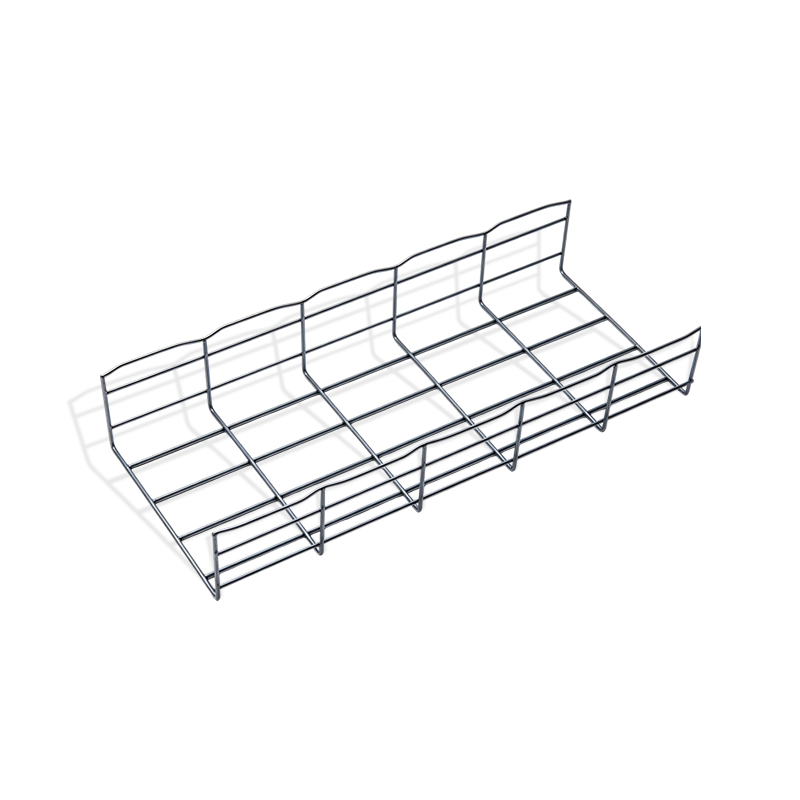
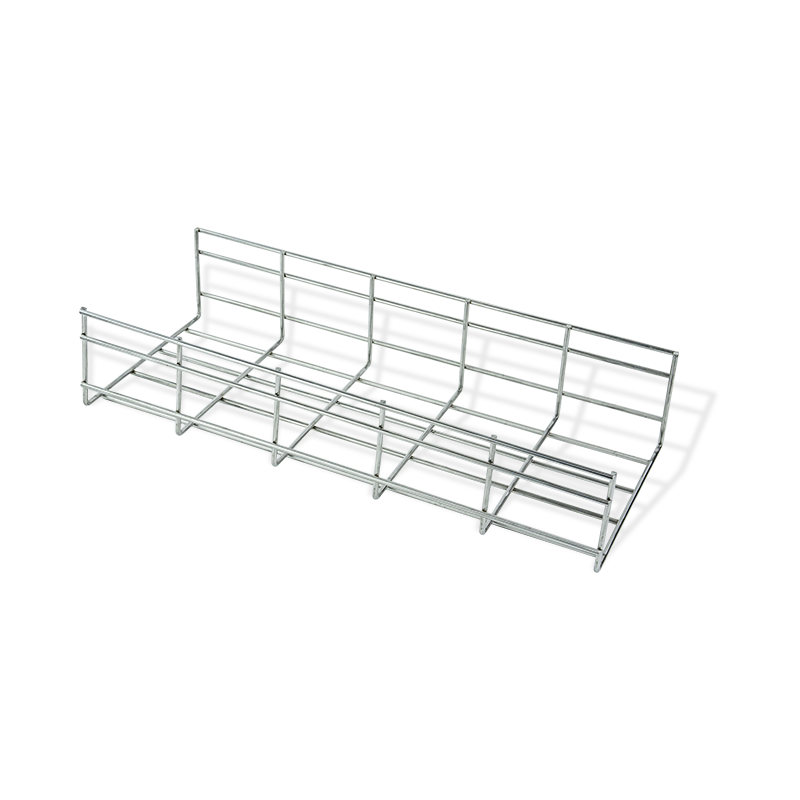
Wire Mesh Tray
Best for: data centres, offices, light commercial
Open wire basket construction allows maximum airflow around cables, simplifies visual inspection, and accepts cable additions without dismantling. Ideal for low-voltage data, fibre, and communications cabling where heat dissipation matters.
Ladder Tray
Best for: power cables, industrial plants, long runs
Two longitudinal rails bridged by rungs. The open structure supports heavy power cables across spans of 1.5–3 m without intermediate supports. The industry standard for MV and HV power distribution in manufacturing and utilities.
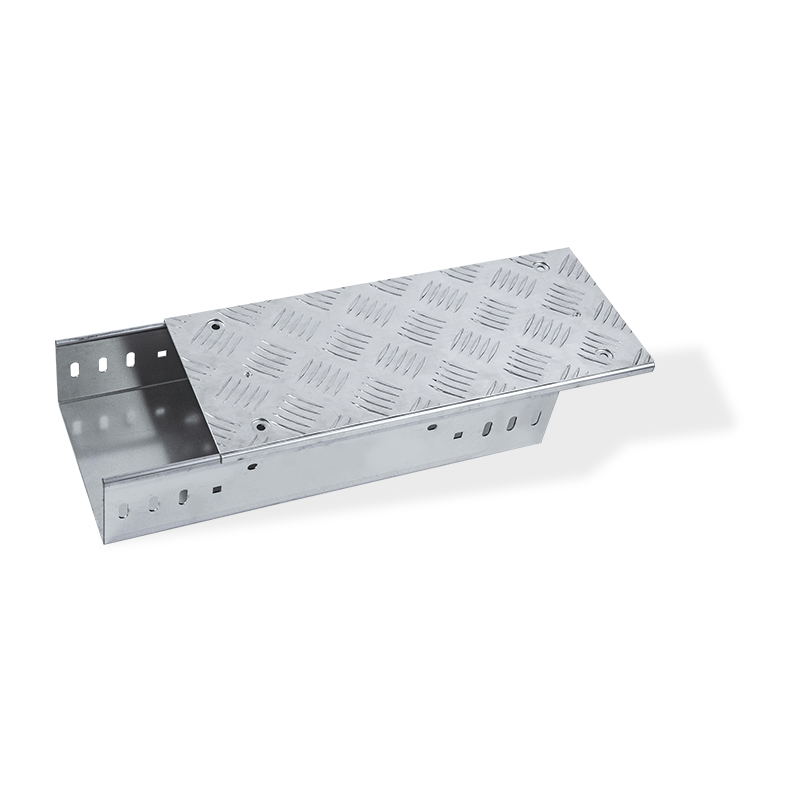
Solid Bottom Tray
Best for: sensitive instrumentation, chemical plants
Fully enclosed base protects cables from dripping liquids, falling debris, and EMI. Required in food processing, pharmaceutical, and petrochemical environments where contamination or signal integrity is critical.
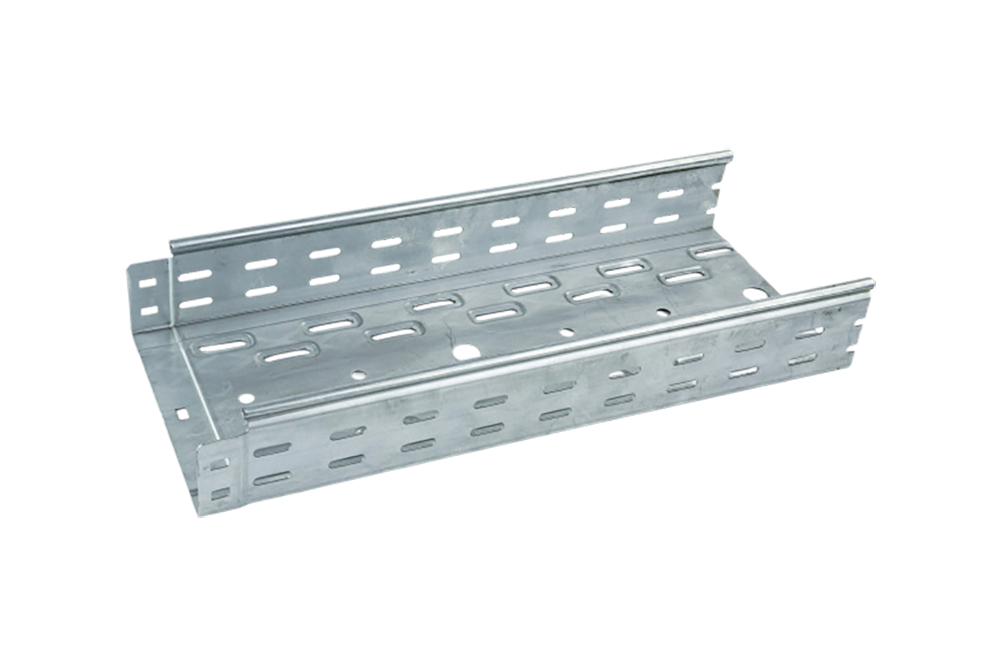
Perforated Tray
Best for: mixed cable types, general industrial
Punched base provides partial support and moderate ventilation. The most versatile choice for buildings carrying both power and signal cables on the same run, offering a practical balance between protection and airflow.
A wire cable tray is a rigid structural system designed to support and route electrical cables in a safe, organised, and inspectable pathway — replacing conduit in applications where flexibility, airflow, and ease of modification are priorities.
What Material Is Most Durable for Cable Tray?
Material choice determines corrosion resistance, load capacity, and total cost of ownership. The four primary materials used in wire cable tray manufacture each suit a different environment.
| Material | Corrosion Resistance | Load Capacity | Best Environment | Relative Cost |
| Hot-Dip Galvanised Steel | High (zinc barrier) | Very high | Outdoor, industrial, coastal | Medium |
| Electro-Galvanised Steel | Moderate | Very high | Dry indoor, light commercial | Low |
| Stainless Steel (304/316) | Excellent (316 for marine/chemical) | High | Chemical, food, marine | High |
| Fibreglass (FRP) | Excellent (non-metallic) | Medium | High-chemical, explosive zones | High |
Hot-dip galvanised steel delivers the best balance for the majority of industrial and outdoor installations. The zinc coating applied at 45–85 microns provides a self-healing barrier — if the surface is scratched, surrounding zinc migrates to protect the exposed steel. In coastal or chemical environments where salt spray or acid vapour is present, grade 316 stainless steel outperforms all alternatives and justifies its premium over a 20–30 year installation life.
45–85 microns
Zinc coating thickness on hot-dip galvanised wire cable tray — the primary factor determining corrosion service life. EN ISO 1461 specifies a minimum of 45 microns on steel sections above 3 mm thick. Trays rated below this threshold are not suitable for outdoor or humid environments.
How to Choose the Right Cable Tray Size
Tray sizing is governed by two independent calculations: fill ratio and structural span. Both must be satisfied — a tray that fits the cables but sags between supports, or one that is structurally adequate but overfilled, is incorrectly sized.
Fill Ratio: The 40% Rule
The National Electrical Code (NEC) and IEC standards both specify that cable tray fill must not exceed 40% of the usable tray cross-section for power cables, and 50% for signal and control cables. This allowance provides airspace for heat dissipation and room for future cable additions without rerouting.
1
Sum cable cross-sections
Calculate the total cross-sectional area of all cables to be installed, including anticipated future additions. Add 25% to the current total as a future-proofing allowance.
2
Apply fill ratio
Divide the adjusted cable total by 0.40 (power cables) or 0.50 (signal cables) to determine the minimum required tray cross-section in mm2.
3
Select width and depth
Standard tray widths run 50, 100, 150, 200, 300, 450, and 600 mm. Select the narrowest standard width that satisfies your calculated cross-section. Common depths are 50 mm and 100 mm — deeper trays suit heavy power cables.
4
Check span load rating
Confirm that the selected tray's rated distributed load (kg/m) at your support spacing exceeds the calculated cable weight per metre. Reduce support spacing or increase tray gauge if the span rating is exceeded.
Which Tray Type Reduces Installation Cost Most?
Wire mesh tray — the open basket construction — consistently delivers the lowest installed cost per metre on low-voltage and data cable projects. Three factors drive this advantage.
Wire Mesh Tray
- Cut to length with side cutters — no power tools or cutting discs required
- Couplers and bends snap or bolt together without specialist fittings
- Lighter weight reduces structural support requirements and scaffold load limits
- Cables drop in from any point along the run without removing covers
- No cover panels to install, store, or replace after cable changes
Labour saving vs ladder tray: 20–35% on typical data or communications runs
Ladder Tray (for comparison)
- Requires angle grinder or hack saw for field cuts
- Heavier sections need more support brackets at closer centres
- Dedicated fittings (elbows, tees, reducers) required at every change of direction
- Better suited to large power cable installations where rigidity is essential
- Higher individual component cost offset by wider rung spacing on long spans
Preferred choice for power distribution over 50 mm2 cable cross-section
For projects combining both power and data routing, a split-tray strategy reduces total installed cost: wire cable tray (mesh) for the data and communications layer, ladder tray for the power distribution backbone. Maintaining a minimum 200 mm separation between the two runs satisfies EMI segregation requirements without additional shielding cost.
Quick Selection Summary
Data centre / office Wire mesh, electro-galvanised, 100–200 mm wide
Industrial power run Ladder tray, hot-dip galvanised, 300–600 mm wide
Chemical / marine plant Solid bottom or ladder, 316 stainless or FRP
Mixed power + signal Perforated tray, hot-dip galvanised, segregated runs

Youming Group is a manufacturing group company mainly engaged in the research and development of new high-strength cable tray
Product
- Wire Type Cable Tray Series
- Punched Type Cable Tray Series
- Trough Type Cable Tray Series
- Cable Rack Ladder Series
- Ladder Type Cable Tray Series
- Marine Cable Ladder Tray
- Strut Channel Cable Tray Series
- Accessories
- Fiber Cable Tray/Optic Cable Tray
- Photovoltaic Stents
- Stainless Steel Cable Tray Series
- Aluminum Alloy Cable Tray System
Contact information
-
No.36, Taidong Industrial Zone Shiyan Town, Dongtai City, Jiangsu Province
